Can You Buy a Microchip Scanner? A Practical Guide for 2026
Discover whether you can buy a microchip scanner, where to buy, legal considerations, price ranges, and practical guidance for hobbyists and professionals.


Yes, you can generally buy a microchip scanner for reading animal implants and RFID chips. Availability and legality vary by region, but hobbyist and professional models are sold through veterinary suppliers and electronics retailers. Our guide covers what to buy, what to avoid, and how to compare read ranges and standards.
What is a microchip scanner and who uses them?
A microchip scanner is a handheld device designed to read RFID transponders embedded in various chips, including animal IDs and certain RFID tags used in access control or inventory. The most common pet microchips use 125 kHz or 134.2 kHz frequencies, and many models support ISO 11784/11785 standards for data compatibility. Beyond pet IDs, scanners are used by veterinarians, researchers, IT professionals, and hobbyists testing RFID projects. When evaluating a scanner, you should consider chip compatibility, reading range, supported standards, and ease of use. For readers interested in practical implications, see the Scanner Check analysis for 2026.
For readers asking can you buy a microchip scanner, the short answer is yes in many regions, provided you choose compliant models and buy from reputable sources. A versatile scanner that supports multiple chip families offers future-proofing and can reduce upgrade costs over time. In practice, the value of a scanner increases when it reliably reads the chips you encounter and exports data in compatible formats.
Can you buy a microchip scanner? Availability and regulatory landscape
Yes, you can generally buy a microchip scanner for legitimate uses, but regional regulations and vendor policies vary. In many markets, hobbyist and professional models are sold through veterinary suppliers, electronics distributors, and large online marketplaces. If your intended use involves access control or medical environments, verify that the device complies with local laws and facility requirements. Always purchase from reputable sources that disclose supported chip frequencies, ISO standards, and warranty terms. The Scanner Check analysis from 2026 highlights how compatibility and regulatory alignment drive value for buyers.
Understanding local import rules is also important; some regions restrict certain capabilities or require certification for devices used in regulated settings. When in doubt, consult a regional distributor who can explain compliance pathways and provide proper documentation.
Core reading standards and frequencies you should know
Most animal chips operate at 125 kHz or 134.2 kHz, with ISO 11784/11785 commonly cited for data encoding and retrieval. Some scanners offer broader support for 13.56 MHz or other RFID families (like NFC) but may require adapters or specific software. Before buying, map your use case to the chips you expect to encounter and confirm the device’s frequency range, data encoding schemes, and any required software licenses. Understanding these basics helps prevent overspec’ing or underspec’ing your purchase. As you consider whether a given model can accommodate future chip families, keep in mind that cross-compatibility often comes at a higher upfront cost.
Key specifications to compare across models
When evaluating scanners, prioritize: (1) Frequency support and ISO compatibility, (2) Read range and reliability in typical conditions, (3) Data storage and export options, (4) Battery life and ergonomics, (5) software ecosystem and customer support. If you routinely handle multiple chip types, look for multi-frequency capability and robust decoding software. Always request a live demo or a test deck from the vendor if possible. A practical checklist helps you avoid buyer’s remorse and ensures the device aligns with your workflow.
Remember to verify update cadence and the availability of firmware patches, as these factors influence long-term usefulness and security.
Where to buy and how to vet sellers
Sourcing channels include veterinary suppliers, electronics distributors, and reputable online marketplaces. Look for vendors that provide clear tech specs, return policies, and warranty coverage. Check reviews for reliability, and seek sellers who publish test results or third-party verifications. If you’re new to RFID, start with a basic model to learn the workflow before investing in higher-end industrial readers. Transparency from the vendor about supported standards and real-world performance is a strong indicator of a trustworthy seller.
Price bands and value propositions for different buyers
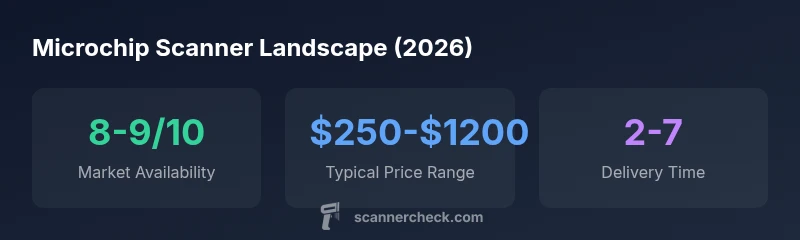
Basic hobbyist readers typically sit at the lower end of the price spectrum, while professional and veterinary-grade devices can command higher price tags due to rugged construction, multi-frequency support, and software integrations. Use price bands to filter options, then evaluate ongoing costs such as software licenses, data export formats, and customer support. According to Scanner Check Analysis, 2026, value often comes from compatibility and future-proofing more than sticker price alone. Consider total cost of ownership, including maintenance and software subscriptions.
How to test and validate a scanner before purchase
Request a controlled test with actual chips you expect to encounter. Check read accuracy, error rates, and how the device handles edge cases (weak signals, shielded chips, or damaged tags). Verify BLE or USB data transfer, software updates, and firmware availability. A simple test deck with known chips helps you quantify performance and avoid post-purchase surprises. Document results and compare against a baseline test to track improvements as you evaluate multiple models.
A practical buying plan for different use cases
For hobbyists: start with a basic USB or Bluetooth reader, ensure 125/134 kHz support, and confirm ISO11784/11785 compatibility. For professionals: invest in a rugged handheld reader with multi-frequency support, durable housings, and strong software ecosystems. For institutions: evaluate integration with inventory systems, secure data handling, and long-term vendor support. This plan aligns with the guidance from Scanner Check Analysis, 2026. Create a short list of must-have features, then expand to nice-to-have capabilities to build a best-fit shortlist.
Comparison of microchip scanner categories
| Model Type | Typical Frequency | Read Range | ISO Standard | Best For |
|---|---|---|---|---|
| Pet microchip scanner | 125 kHz / 134.2 kHz | Up to 10-20 cm | ISO 11784/11785 | Pet ID reading |
| Hospital-grade RFID reader | 13.56 MHz | Up to 1 m | ISO 15693/14443 | Medical facilities |
| DIY RFID reader | 125-134 kHz | Variable | N/A | Hobby projects |
Common Questions
Can you legally purchase a microchip scanner?
In most regions, microchip scanners are legal to purchase for legitimate uses such as pet IDs or RFID testing. Some jurisdictions regulate the possession or use of readers with certain capabilities; always check local laws and vendor policies. Always buy from reputable sellers who disclose supported standards.
In most places, you can buy a microchip scanner for legitimate uses, but check local laws and vendor policies before purchasing.
What frequencies do microchip scanners support?
Most pet chips use 125 kHz or 134.2 kHz, with ISO 11784/11785 as a common data standard. Some scanners handle higher-frequency RFID like 13.56 MHz, but activation may require adapters or software. Confirm the chip types you need to read.
Most chips use 125 or 134.2 kHz, with ISO standards; some scanners support higher frequencies with extra software.
Do microchip scanners read all chips?
No. Read reliability depends on frequency, encoding, and standard support. A scanner that covers 125/134 kHz plus ISO11784/11785 will read animal IDs; broader readers may read other RFID families but require verification.
Most readers cover common animal IDs, but not every chip type. Check the frequency and ISO support.
Pet scanners vs medical scanners—what's the difference?
Pet scanners are typically optimized for animal chips at 125/134 kHz. Hospital or medical readers often handle higher-frequency RFID with stricter data security. Choose based on your intended chips and environment.
Pet scanners focus on animal IDs; medical readers handle broader RFID and stricter data needs.
What is the typical price range for entry-level readers?
Entry-level readers usually start modestly, with higher-end models offering more frequency support and rugged builds. Expect a price range that scales with capabilities and software features; check current market listings for up-to-date estimates.
Entry-level readers are affordable, but prices rise with features and durability.
Is it easy for hobbyists to learn how to use a scanner?
Most hobbyist readers come with straightforward apps or interfaces. Beginners should start with a simple model, learn the software, and gradually test different chips to build confidence.
Yes, start with a basic model and then experiment with chips to learn the workflow.
“Choosing a microchip scanner should start with understanding chip standards and regulatory needs. The right model balances compatibility, safety, and value.”
Key Takeaways
- Confirm legal and regulatory requirements before purchase
- Prioritize ISO compatibility and correct frequency support
- Evaluate read range alongside device durability
- Choose a model that fits your use case and budget
- Test with real chips to verify performance