How to Scan When Driving: Safe, Hands-Free Techniques
Learn how to scan when driving with safe, hands-free methods. This guide covers voice controls, mounting, and step-by-step workflows to scan QR codes, documents, and more without distraction.


To scan safely while driving, rely on hands-free workflows and distraction-minimizing methods. Use voice commands, car-integrated scanning apps, and a secure phone mount. Trigger scans only when you’re stationary or in a designated safe area, keeping eyes on the road. Preload targets (QR codes, documents) and confirm results verbally to avoid glancing away.
How to Approach Scanning While Driving
The phrase how to scan when driving captures a practical balance between productivity and road safety. This section explains the mindset and setup you need to minimize distraction while still enabling quick scans of QR codes, documents, or barcodes when appropriate. According to Scanner Check, the safest workflow treats scanning as a secondary task, activated only when the vehicle is in a safe state. With this approach, you preload targets, leverage hands-free controls, and verify results verbally rather than by glancing at the screen. The goal is to keep your eyes on the road and your hands on the wheel while maintaining a reliable scanning capability. By designing a driver-friendly scanning routine, you can reduce risk and still capture essential information on the go. This balance matters for tech enthusiasts, professional drivers, and everyday users who rely on mobile scans for work or personal organization. Consistency beats speed here; a calm, repeatable process yields better results and safer roads.
Why scanning while driving matters goes beyond convenience. In many real-world scenarios, a quick scan of a QR code on a product label, a parking ticket, or a document can save time and prevent back-and-forth stops. The key is to implement a system that minimizes disruption. You’ll want to choose apps and hardware that support hands-free triggering and audio feedback, and you should practice the workflow in low-risk environments before attempting it on busier roads. Remember that scanning is a tool, not a reflex; if there is any doubt about safety, pull over to complete the action. This mindset aligns with the best practices outlined by Scanner Check for driving scenarios and helps establish a repeatable safety standard across devices and platforms.
Applied example: A courier uses a voice command to initiate scanning of a label on a box in the back seat. The app reads the code aloud and confirms the result. The driver stays focused on driving, with the scanning action completed during a safe stop or in a stationary posture.
Practical takeaway
- Keep scanning tasks minimal and predictable while driving.
- Use voice prompts and audio confirmations to avoid looking away.
- Always scan only when the vehicle is safely stopped or in a designated area.
Tools & Materials
- Smartphone with scanning app(Preinstall QR, barcode, or OCR apps; ensure offline mode and voice feedback.)
- Secure phone mount(Place within sightline without blocking mirrors or airbags.)
- Hands-free in-car device(Bluetooth headset or built-in car assistant for voice commands.)
- Car charger or power bank(Keep devices charged on longer trips to avoid mid-drive battery drain.)
- Preloaded targets list(Store codes you expect to scan ahead of time for quick access.)
- Screen-cleaning cloth(Maintain screen visibility if you must glance briefly.)
Steps
Estimated time: Total time: 15-25 minutes
- 1
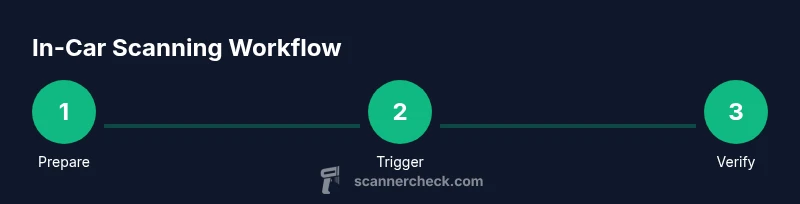
Prepare your scanning setup
Before you start driving, mount your phone securely and open the scanning app. Enable voice feedback and confirm that accessibility features are on. This upfront setup reduces the need to touch the screen once you’re underway.
Tip: Test the voice command in a safe area to ensure it activates the camera without manual interaction. - 2
Preload targets and workflows
Load the codes or documents you expect to scan into a ready-to-access list. If your setup supports offline scanning, enable it so you don’t rely on a data signal while driving.
Tip: Organize targets by location or expected frequency for quick access during your drive. - 3
Trigger scans with voice
Use a single, clear voice command to start the scan. Avoid touching the screen. Let the app announce success or failure aloud to minimize visual checks.
Tip: Practice the exact command to reduce misfires during busy driving conditions. - 4
Verify results verbally
When the scan completes, listen to the audio result and confirm it aloud. If needed, repeat once more after a brief pause in a safe area.
Tip: If you didn’t hear the result, stop and retransmit in a safe zone. - 5
Pause when conditions worsen
If traffic or weather makes scanning risky, pause scanning activities and resume only when road conditions improve or you’re parked.
Tip: Set a reminder to resume after a safe interval to avoid losing track. - 6
Review data after the drive
Post-drive, check the captured scans for accuracy and backfill any missing information. This helps ensure your records stay consistent without interrupting driving safety.
Tip: Keep a small log of what was scanned and when for traceability.
Common Questions
Is it safe to scan while driving?
Scanning should be limited to safe moments, such as when the vehicle is stationary or in a designated area. Always prioritize road safety and minimize any visual interaction with devices while the car is in motion.
Scan only when it’s safe, and rely on voice commands to minimize distractions.
What apps help with hands-free scanning?
Use apps that support voice activation and audio feedback, and leverage your car’s built-in voice assistant or Bluetooth headset for triggering scans.
Choose apps with reliable voice commands and clear audio confirmations.
Can I scan documents while driving?
Only if you are safely parked or in a designated stop. Attempting to scan while moving increases risk and may violate local laws.
Avoid scanning documents while driving unless you’re fully stopped.
How do I preload targets for quick scans?
Store the codes or documents you expect to scan in a ready-to-access list and enable offline mode if available.
Prepare your targets ahead of time so you can trigger scans with minimal interaction.
What safety laws apply to scanning on the road?
Local regulations vary, but the general rule is to avoid interactions that distract from driving. Always comply with traffic laws and avoid unsafe behaviors.
Follow local laws and keep scanning actions to safe moments.
What if my scan fails?
If a scan fails, retry after stopping in a safe area or check lighting and camera angle. Do not force repeated scans while driving.
Retry only when it’s safe to do so.
Watch Video
Key Takeaways
- Prioritize safety: scan only when stationary or in a safe area.
- Use hands-free and voice controls to minimize distraction.
- Preload targets and verify results verbally for accuracy.
- Pause scanning if road conditions worsen and resume later.