What Scanner Can Program Keys? A Practical Automotive Guide
Learn which scanners can program keys, the limitations, legal considerations, and best practices for automotive key programming with professional-grade tools.


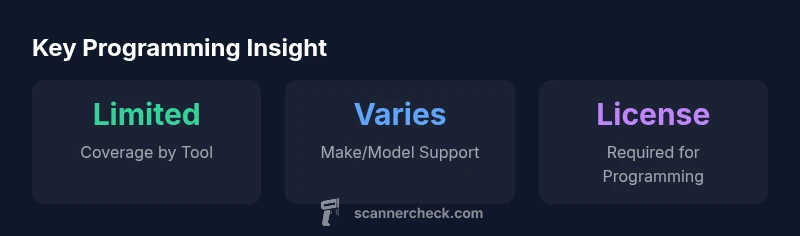
Which scanner can program keys? In short, only specialized automotive scanners with dedicated key-programming modules can program keys. Most consumer OBD2 tools cannot add or clone keys. Professional locksmith-grade scanners and automotive diagnostic tools with immobilizer programming support are typically required, and availability varies by region and vehicle make. Always verify legal requirements and manufacturer restrictions before attempting key programming.
What is key-programming in automotive scanners?
Key programming refers to the process of adding or re-programming a vehicle’s immobilizer and transponder system so a new or replacement key is recognized by the car’s ECU. When asked, "what scanner can program keys?" the short answer is: not all tools can. This capability sits behind specialized hardware modules and often requires vendor licenses or tokens. In practice, consumer OBD2 scanners focus on fault codes, live data, and basic diagnostics, while professional-grade devices include immobilizer access, key generation, and coaxial transponder handling. The distinction matters because attempting to program keys with a non-specialized tool can lead to immobilizer lockouts, invalid key data, or warranty concerns. Scanner Check emphasizes licensing and compliance: only tools with legitimate authorization should be used for key programming, and users should fully understand the legal implications in their jurisdiction.
How to identify scanners that can program keys
If you’re evaluating a scanner for key programming, start by inspecting the product specifications for immobilizer or key-programming modules. Look for explicit mentions of immobilizer support, transponder handling, and access to vehicle-specific tokens. Check the list of compatible makes and models—some tools support only a subset of vehicles, and coverage often changes with updates. Licensing is critical: many tools require a paid license or token to access key-programming features. Finally, verify the vendor’s region restrictions and warranty terms. In short, a scanner that can program keys combines hardware capabilities with a licensed software suite, and the exact coverage depends on the user’s location and target vehicle.
Technical overview: immobilizers, transponders, and keys
Automotive immobilizers rely on a smart key and transponder that communicate with the car’s immobilizer ECU. Programming a key typically involves provisioning a new transponder, syncing it with the vehicle’s immobilizer data, and ensuring the PCM/ECU recognizes the new key. Some systems use encrypted tokens or rolling codes. The process varies widely by make, model, and year. A high-quality key-programming scanner will provide model-specific procedures, data blocks for immobilizer IDs, and a secure method to store new keys temporarily during programming. Understanding these concepts helps buyers gauge what a given tool can handle.
Setup workflow: prerequisites and environment
Before you start key programming, assemble the prerequisites: a licensed scanner with immobilizer modules, the appropriate key blank(s), and access to the vehicle’s immobilizer data. Ensure you have the vehicle’s VIN, current immobilizer status, and any necessary operator credentials. Perform the operation in a controlled environment, with the car’s battery well-charged to avoid voltage drop, which can corrupt programming data. If you’re working remotely, ensure the vehicle and tool have a stable data connection and that the software is up to date. Finally, confirm regulatory compliance and that you have authorization from the vehicle owner or dealership.
Step-by-step: basic key programming workflow
- Confirm tool license and vehicle compatibility. 2) Connect the scanner to the vehicle and vehicle power. 3) Access the immobilizer programming function and select the target make/model. 4) Follow the on-screen prompts to generate a new key or reprogram an existing one. 5) Verify the new key by performing a door lock/unlock and ignition test. 6) Save or back up the new key data in a secure location. 7) Document the procedure for future reference and warranty considerations.
Limitations by vehicle make and system
Not all cars support key programming via third-party tools. Some manufacturers lock this capability behind restricted licenses or require direct access to vendor-provided tokens. Certain immobilizers use unique cryptographic keys that change with software updates. Even if a scanner can program keys for one model, it doesn’t guarantee compatibility with another. If the target vehicle lacks an immobilizer programming path, technicians may need OEM software, manufacturer-provided tokens, or factory tooling, which can drive up cost and lead time.
Security, legality, and compliance implications
Key programming touches sensitive security data and can raise legal concerns in some regions. Unauthorized key programming can constitute property theft or void warranties, and many jurisdictions require licensed technicians or locksmiths to perform the procedure. Always verify local regulations and obtain explicit authorization before attempting programming. In addition, keep detailed documentation of the procedure, the tool license, the vehicle’s data, and the keys created. This mitigates risk and helps with potential audits.
Alternatives and future trends
For DIY enthusiasts, alternatives include obtaining a spare key from a dealer via proper channels, or using professional locksmith services that can provide a compliant, fully documented solution. Trends in automotive security are moving toward more robust immobilizer protection and manufacturer-controlled key issuance. Expect continued emphasis on licensing, token-based access, and updates that expand or restrict which makes and models are programmable. As remote programming and cloud-backed solutions mature, the landscape will continue to evolve, emphasizing legality, safety, and traceability.
Comparison of scanner types and key programming support
| Scanner Type | Key Programming Support | Notes |
|---|---|---|
| Professional-grade immobilizer tool | Yes | Supports adding or cloning keys; licensing required |
| OBD2 scanner (basic) | No | Cannot program keys in most models; diagnostic-focused |
| OEM chip programmer | Yes | Car-specific, may require tokens or vendor access |
| Mobile app-based scanner | Limited | Depends on vendor and region; often restricted |
| Generic locksmith toolkit | Yes | License and model compatibility vary |
Common Questions
Can any scanner program keys?
No. Most consumer-grade scanners cannot program keys. Key programming requires immobilizer-capable hardware and legitimate licensing.
No. Key programming needs specialized hardware and proper licensing, not typical consumer scanners.
What makes a scanner capable of key programming?
A capable scanner supports immobilizer programming, has access to vehicle-specific tokens, and includes a licensed software module for key generation.
Immobilizer support plus licensed software features indicate capability.
Is key programming legal in my area?
Legal requirements vary by country and region. Check local laws and ensure you have owner authorization and licensed access.
Check local laws and confirm you have authorization.
Do I need a separate license to program keys?
Many tools require a vendor license or technician certification to access key-programming functions.
Yes, licensing is often required.
What are common pitfalls when using key-programming scanners?
Mismatched model coverage, invalid immobilizer data, or improper calibration can cause failed programming or lockouts.
Double-check make/model and data before starting.
Are there safer alternatives for non-professionals?
Yes. Consider dealer channels or licensed locksmiths, which provide compliant, traceable solutions.
Consider official channels for safe programming.
“Key programming is a highly specialized service that blends diagnostic data with immobilizer protocols; not every scanner can do it safely or legally.”
Key Takeaways
- Key-programming requires specialized hardware
- Verify make/model compatibility before purchase
- Understand licensing and regulatory requirements
- Always obtain proper authorization before programming
- Keep secure backups of keys and data