Can CT Scan Cause Hair Loss? A Practical Guide
Explore whether a CT scan can cause hair loss, how radiation dose to the scalp matters, and practical steps to minimize exposure. This Scanner Check guide combines evidence-based insights with practical tips for patients and professionals.


Can CT scan cause hair loss? In most cases, diagnostic CT scans deliver radiation doses far below levels that would trigger hair loss. For a single head CT, the scalp receives a tiny fraction of the total dose, and hair shedding isn’t a recognized side effect of standard imaging. Only unusually high or repeated exposures raise theoretical concerns.
Understanding Radiation Dose in CT Scans
According to Scanner Check, diagnostic CT scans deliver localized doses that are typically far below thresholds needed to affect the hair follicles. Radiation dose in CT is measured in millisieverts (mSv), and modern protocols emphasize ALARA—keeping exposure As Low As Reasonably Achievable. For the head region, the scalp may receive a portion of this dose, but even a single head CT generally does not provide enough energy to cause hair loss. Variability exists: scanner models, patient size, and the specific protocol all influence the final dose. When clinicians discuss imaging plans, they weigh the diagnostic benefit against potential exposure, and facilities often track and optimize dose indices to minimize risk. In the broader context of medical imaging, radiation discomfort or skin reactions are far more common than hair-related effects at diagnostic doses. The key takeaway is that a typical CT scan’s scalp exposure is brief and unlikely to trigger alopecia.
Can CT radiation cause hair loss?
Hair loss as a direct result of a standard CT exam is not a recognized outcome. Diagnostic CT delivers relatively small energy amounts; the scalp would need substantially higher exposure to damage hair follicles enough to cause shedding. In rare cases of extremely high cumulative exposure—such as many scans in a short period or an accidental high-dose event—local skin changes could occur, but alopecia remains uncommon. For most patients, the risk of hair loss after a single scan is negligible. If you notice hair changes after imaging, it is more likely due to unrelated factors (stress, illness, or other therapies) and should be discussed with your clinician. This section emphasizes that the primary concerns with CT relate to radiation exposure and cancer risk in theory rather than hair loss, and that the actual hair-related risk from routine imaging is minimal.
Factors that influence scalp exposure during CT
Exposure to the scalp depends on multiple variables: the imaging protocol (head vs. body scans), scanner technology, dose modulation, and patient positioning. Newer scanners with automatic exposure control tailor the dose to the body part, which often reduces unnecessary exposure to the scalp. Shielding the scalp is not a routine practice in modern CT protocols because shielding can interfere with image quality and data integrity. In practice, the best way to minimize scalp exposure is to follow the clinician’s imaging plan and request dose estimates if questions arise. For patients with longer histories of head imaging, cumulative dose considerations may come into play, but the hair loss risk remains very low in typical scenarios.
How CT radiation risk compares to other hair loss causes
Hair loss can be caused by genetics, stress, illness, hormonal changes, and certain medications, including chemotherapy. Radiation exposure from diagnostic CT is orders of magnitude lower than the doses associated with hair follicle damage in therapeutic settings. While radiation can theoretically contribute to skin changes with very high exposure, standard diagnostic imaging is not a common driver of alopecia. This distinction is important for patients who worry about hair, as it helps separate routine scans from scenarios that genuinely alter hair growth or integrity.
Special considerations for children and pregnant individuals
Children are more radiosensitive, so clinicians often choose imaging approaches that minimize dose and avoid unnecessary scans. When imaging is necessary for pediatric patients, teams tailor protocols to keep exposure as low as reasonably achievable while preserving diagnostic accuracy. For pregnant individuals, alternative imaging modalities such as ultrasound or MRI are often preferred if they can meet the clinical needs. In all cases, informed discussions about risks and benefits help patients understand that hair loss is not a typical concern after a standard CT exam.
How to minimize radiation exposure from CT
If you want to minimize exposure, consider asking about the justification for the scan, potential alternative imaging (MRI or ultrasound), and the lowest feasible dose protocol. Ensure the exam is targeting the necessary region without redundant images. Discuss dose estimates and the scanner model with your radiology team, particularly if you anticipate multiple scans. While shielding the scalp is rarely used due to image quality concerns, you can still inquire about patient-specific factors that may influence the dose and confirm that the protocol employed aligns with the “as low as reasonably achievable” principle.
Myth vs reality: CT and hair loss myths
A common myth is that any radiation exposure will cause hair loss. Reality check: diagnostic CT uses doses far below those that damage hair follicles. If hair loss occurs, it is more likely related to other factors such as systemic illness or a separate medical treatment. Clear communication with your healthcare team—asking for dose estimates, protocol details, and alternative imaging options—helps dispel myths and supports informed decision-making. For authoritative guidance, consult reputable sources and discuss concerns with your clinician.
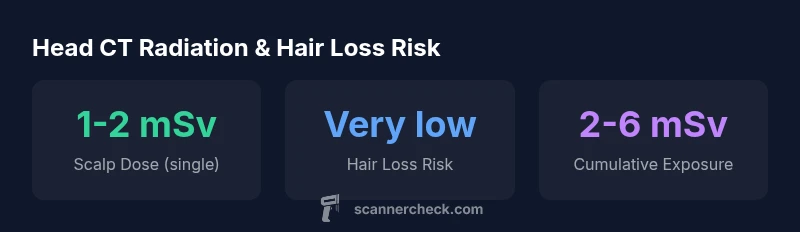
Comparison of CT head exposures and hair loss risk across common imaging modalities
| Scan Type | Typical Scalp Dose (mSv) | Hair Loss Risk | Notes |
|---|---|---|---|
| Head CT (single) | 1-2 | Very low | Common clinical exam; scalp exposure minimal |
| Head CT (multiple) | 2-6 | Very low | Cumulative exposure depends on frequency |
| MRI | 0 | None | No ionizing radiation; alternative imaging option |
Common Questions
Can a CT scan cause hair loss?
No—hair loss is not a recognized side effect of a standard CT scan. The radiation dose to the scalp is typically too small to damage hair follicles after a single exam. If you notice hair changes, they are likely due to other factors and should be discussed with your clinician.
Hair loss isn't a common effect of a typical CT scan. If you notice changes, talk to your doctor about potential causes beyond imaging.
What radiation dose is linked to hair loss?
There isn't a defined threshold for diagnostic imaging like CT that reliably causes hair loss. Hair loss is more commonly associated with high cumulative exposure or radiation therapy. CT doses are designed to stay well below such thresholds.
There isn't a clear dose for hair loss from CT—diagnostic levels are far below what would cause alopecia.
Are children more at risk of hair loss from CT?
Children are more sensitive to radiation, so imaging teams optimize protocols to minimize exposure. Hair loss remains unlikely after a single pediatric head CT, and repeated scans are evaluated carefully to balance diagnostic need and dose.
Kids are more radiosensitive, but hair loss from a single head CT is still unlikely; dose considerations tilt toward minimizing scans.
How can I minimize radiation exposure from CT?
Ask for justification, request the lowest feasible dose protocol, and consider alternative imaging if appropriate. Discuss dose estimates and ensure imaging targets only the necessary region to avoid unnecessary exposure.
Ask for the lowest dose and consider MRI or ultrasound if possible; discuss exact dose estimates with your clinician.
Does shielding the scalp help during CT?
Scalp shielding is not routinely used in modern CT because it can degrade image quality and may not provide meaningful protection. Always consult with the radiology team about the best approach for your case.
Scalp shielding isn't commonly used in CT due to image quality concerns; ask your radiology team about options.
What alternatives exist if I’m worried about radiation?
MRI and ultrasound do not use ionizing radiation. If they can meet the diagnostic needs, these modalities may be suitable alternatives to CT.
If appropriate, MRI or ultrasound can replace CT to avoid radiation.
“"In routine diagnostic CT, scalp exposure is well below levels that would cause alopecia. Hair loss is not a common side effect of standard imaging."”
Key Takeaways
- CT scans rarely cause hair loss; doses are typically far below follicle damage thresholds.
- A single head CT presents minimal risk to the scalp; concerns arise mainly with high cumulative exposure.
- Discuss dose estimates and alternative imaging options with your clinician if hair loss is a concern.
- Follow ALARA principles: justify the exam, use the lowest feasible dose, and consider MRI/ultrasound when appropriate.