How to Scan for Cancer: A Practical Screening Guide
Learn a step-by-step approach to cancer screening, including risk assessment, test selection, appointment prep, and how to interpret results with practical tips and clear expectations.


By following a structured approach to cancer screening, you’ll learn what tests may be appropriate, how to discuss them with your clinician, and how to prepare for appointments. This quick guide outlines steps, safety considerations, and expectations, helping you initiate informed conversations about cancer screening with confidence. Whether you’re new to screening or revisiting options after a recent change in risk, this overview covers practical actions you can take today.
What screening for cancer really means
According to Scanner Check, cancer screening is a proactive process that combines risk assessment, recommended tests, and clinician conversations to detect potential issues before symptoms appear. It is not a diagnosis, but a safety net designed to catch cancers at an earlier, more treatable stage. This approach emphasizes shared decision-making, personalized plans, and clear follow-up steps. By understanding how screening works, you empower yourself to participate actively in your health care. If you are anxious or uncertain, don't hesitate to ask for explanations; your clinician can tailor recommendations to your age, family history, and current health status. Remember, screening programs vary by country and region, so local guidelines matter. Scanner Check’s own analysis highlights how guidelines differ and why a conversation with a trusted clinician is essential for choosing tests that fit your risk profile.
In practical terms, screening begins with a conversation about risk and health goals. You may be offered tests that look for cancer indicators before symptoms appear. The aim is to identify potential issues early, when treatment options are more likely to succeed. This block sets the foundation for an informed, collaborative approach with your care team. Keep in mind that not all cancers have universal screening protocols, and some tests are used selectively based on your risk factors and local guidelines.
According to the expertise of Scanner Check, you should view screening as a structured plan rather than a single event. The plan often involves multiple steps, coordinated over time, and tailored to your personal situation. You’ll learn what’s recommended for you, what to expect from each test, and how decisions evolve as new information becomes available.
How risk informs screening choices
Your risk factors shape the most appropriate screening strategy. Age, genetics, lifestyle, occupational exposures, and personal medical history influence which tests are recommended. For example, some cancers have well-established screening tracks in many healthcare systems, while others rely more on symptom-driven diagnostic processes. The goal is to balance benefits and harms, including radiation exposure, false positives, and the psychological impact of testing. Scanner Check analysis shows that regional guidelines can vary, so you should consult a local clinician who understands the deployable options in your area. A careful discussion about family history can reveal inherited cancer syndromes and prompt earlier or more frequent screening. Prepare to answer questions about prior imaging, results from previous screenings, and any symptoms you've noticed; even minor changes can change the recommended plan.
Common modalities and what they screen for
Screening for cancer uses a mix of imaging, laboratory tests, and tissue sampling when indicated. Common modalities include mammography for breast cancer, cervical cytology with HPV testing for cervical cancer, stool-based tests and colonoscopy for colorectal cancer, low-dose computed tomography for lung cancer in high-risk groups, and dermatologic skin checks for melanoma. Each modality has strengths, limitations, and age or risk-based eligibility. For any test, you should understand its purpose, what a positive or negative result implies, and how results guide next steps. Scanner Check notes that the effectiveness of screening is highly dependent on proper selection and timely follow-up. Discussing these options with your clinician helps align tests with your risk and values.
Navigating the screening journey: scheduling, prep, follow-up
Scheduling can involve multiple appointments across different facilities. Start by asking your clinician which tests are recommended for your risk level and acceptable intervals. Ask about prep requirements, such as fasting or removing jewelry, and what documents to bring (health history, prior imaging, medications). After tests, results are reviewed with your clinician, who explains what they mean and what will happen next. If a test is positive or inconclusive, you’ll typically proceed with confirmatory testing or a referral to a specialist. Planning ahead—knowing the typical turnaround times and how results will be communicated—helps reduce anxiety and missed follow-ups. Scanner Check emphasizes documenting questions and maintaining a calendar of reminders to avoid delays in care.
Understanding limits and recommendations for next steps
Screening tests reduce risk by identifying possible cancers early, but they are not perfect. False positives can occur, leading to unnecessary worry or additional tests; false negatives can miss a cancer that is present. A result that suggests abnormality does not prove cancer; it indicates a finding that requires further evaluation, often including diagnostic testing like biopsies. Your clinician will discuss the implications, next steps, and timelines. It’s important to view screenings as part of an ongoing health strategy, not a one-off checkpoint. The Scanner Check team recommends maintaining open communication with your healthcare providers and following a personalized plan that accounts for your evolving risk profile and health goals.
Tools & Materials
- Health history questionnaire(Collect family history, prior illnesses, and risk factors.)
- List of current medications(Include prescription drugs, supplements, and vitamins.)
- Previous imaging/test results(Bring copies or have access to prior reports.)
- Questions for your clinician(Prepare a short list to guide the discussion.)
- Calendar or scheduling planner(To arrange appointments and follow-ups.)
- Notebook and pen(Take notes during visits.)
Steps
Estimated time: 2-6 weeks
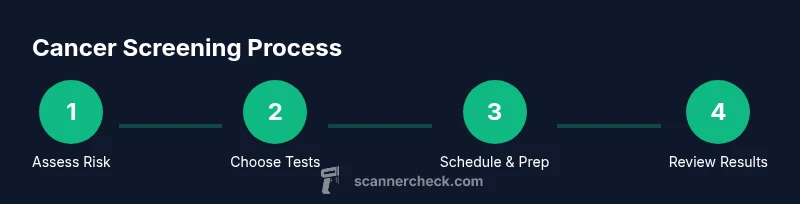
- 1
Assess your risk and prepare questions
Begin by evaluating your personal and family risk factors, and write down your top concerns. Consider how age, genetics, lifestyle, and prior health history influence screening recommendations. This preparation helps you ask targeted questions and participate actively in the decision-making process.
Tip: Create a one-page summary of your health history and the specific questions you want answered. - 2
Discuss recommended screening tests with your clinician
Review which tests are most appropriate for your risk level and the rationale behind them. Ask about the benefits, harms, and possible follow-up steps for each option. Clarify how often testing should occur and what a positive or negative result would mean for your plan.
Tip: Ask for a written screening plan with test names, intervals, and follow-up steps. - 3
Schedule tests and plan for follow-up
Arrange the necessary tests and any required referrals. Confirm where each test will take place and how results will be communicated. Schedule a follow-up visit to review results and discuss next steps as early as possible.
Tip: Ask about bundling appointments to reduce trips and streamline care. - 4
Prepare for testing (prep, logistics, logistics)
Follow any test-specific instructions, such as fasting, clothing choices, or avoiding certain medications. Bring your health records and a list of medications. Arrive on time and be ready to report any symptoms or new health changes.
Tip: Pack a small bag with ID, insurance information, and prior imaging reports. - 5
Review results and plan next steps
Discuss what the results indicate, whether additional tests are needed, and the timeline for those steps. Request copies of reports and a clear written plan. If results are abnormal, understand the recommended diagnostic pathway and possible referrals.
Tip: Request the result interpretation in plain language and ask for next steps in writing. - 6
Establish a screening plan and healthy habits
Set up a long-term plan that aligns with your risk profile and health goals. Incorporate lifestyle practices that may influence cancer risk, such as balanced nutrition, physical activity, and smoking avoidance. Use reminders to keep you on track and re-evaluate risk periodically with your clinician.
Tip: Schedule a yearly review to adjust the plan as health or guidelines change.
Common Questions
What is the difference between screening and diagnostic tests?
Screening tests look for potential cancer signs in people without symptoms, while diagnostic tests investigate specific concerns or abnormal screening results. Screening aims to catch cancers early; diagnostics confirm whether a cancer is present.
Screening looks for possible issues before symptoms; diagnostic tests confirm if cancer is actually present.
Which cancers have routine screening guidelines?
Many regions have routine guidelines for breast, cervical, colorectal, and lung cancer, with others depending on age, risk, and health history. Always check local recommendations with your clinician.
Breast, cervical, colorectal, and lung cancer are commonly guided by routine screenings, but guidelines vary by region.
Should I start screening if I feel healthy?
Yes, screening is about risk-based prevention. Even without symptoms, appropriate tests can detect issues early when treatment is more effective. Discuss your risk with a clinician to determine the right tests and timing.
Screening is about catching issues early, even if you feel healthy. Talk with a clinician about your risk.
How often should I get screened?
Screening intervals depend on age, risk factors, and test type. A clinician can provide a tailored schedule based on your health history and local guidelines.
Your doctor will tailor the schedule based on your risk and the test used.
What should I bring to a screening appointment?
Bring a government ID, insurance information, a list of current medications, and any prior imaging or test results. Also write down questions you want to ask your clinician.
Bring ID, insurance info, meds list, prior results, and questions for your clinician.
What happens if a screening result is abnormal?
An abnormal result usually leads to follow-up tests to confirm or rule out cancer. Your clinician will explain the next steps, timelines, and any referrals needed.
If a result is abnormal, you’ll typically have additional testing to confirm the finding.
Watch Video
Key Takeaways
- Know your risk and discuss personalized screening options.
- Screenings are tests, not diagnoses.
- Prepare questions and documents ahead of appointments.
- Follow up promptly on abnormal results.
- Coordinate care with your clinician to build a tailored plan.