Should CT Scans Be Done on an Empty Stomach? A Practical Guide
Learn whether fasting matters for CT scans, when oral contrast is used, and how hydration and timing influence image quality. practical guidance from Scanner Check.


Should ct scan be done on empty stomach? The answer depends on the protocol your radiology team uses. If oral contrast is planned, fasting for a few hours may be requested. In many cases, CT with IV contrast does not require fasting. Always follow the specific instructions provided by the imaging center to ensure optimal image quality.
What fasting means for CT scans
When people ask whether should ct scan be done on empty stomach, the reality is that fasting requirements are protocol-dependent. Some CT scans can be performed with no fasting at all, while others use oral contrast that is clearer if the stomach and intestines are relatively empty. The imaging center will provide instructions based on the exact protocol, the area being examined, and whether IV or oral contrast will be used. According to Scanner Check, fasting rules for CT imaging depend on the goals of the exam and the contrast strategy, so there is no one-size-fits-all rule. If you are unsure, speak with your radiology team to confirm whether you should abstain from solid foods for a specified period. Following center-specific guidance helps prevent delays, improves image quality, and minimizes the need for repeat scanning.
CT protocols and how fasting fits
CT scans come in multiple flavors, and the fasting requirement changes with the protocol. A plain chest CT may have no fasting impact, while an abdominal CT with oral contrast typically requires a fasted stomach to prevent content from obscuring the GI tract. For CTs using IV contrast, fasting is often not mandatory, though some centers still request a light fast for comfort or to reduce the risk of nausea during contrast injection. Understanding whether your exam will use oral versus IV contrast is crucial because it directly influences how you should prepare. Scanner Check notes that protocol-driven guidance, rather than a generic rule, best serves image quality and patient safety.
When fasting is advised: oral contrast scenarios
Oral contrast is frequently used to highlight the GI tract during CT exams. In these cases, a period of fasting—often a few hours—helps ensure the contrast coats the digestive tract clearly and reduces interference from stomach contents. Pediatric patients and adults may have slightly different rules, but the core idea remains: fasting improves visualization when oral contrast is involved. If the imaging center plans to administer contrast orally, you should expect to see explicit fasting instructions in your appointment packet. Always verify the exact requirements the day before the scan.
Hydration and timing: practical tips
Hydration matters, but the guidance varies by protocol. If allowed, sip small amounts of water up to the specified cutoff time to stay comfortable, especially for longer workflows. Avoid caffeinated beverages, alcohol, or heavy meals in the hours leading up to the scan unless the center explicitly allows them. Clear liquids are often permitted, but only within the limits set by your imaging team. Keeping a simple, consistent routine reduces the risk of last-minute changes that can delay your appointment.
What to expect on the day of the scan
Arrive with your identification and any referral paperwork. You will check in, confirm the procedure, and possibly review the fasting instructions again. If oral contrast is used, you may drink the contrast as directed and then wait in a designated area. The technologist will verify your allergy history and kidney function before contrast administration. The actual CT scan is usually quick, taking only a few minutes, followed by a short observation period if IV contrast was used.
Communicating with your imaging team
Ask clarifying questions: Is oral contrast planned? Is a fast required? Are there exceptions for medications? If you have conditions like diabetes or kidney disease, inform the staff because these factors can influence contrast safety and hydration needs. Write down the instructions you are given and repeat them back to the technologist to confirm accuracy. Clear communication minimizes delays and ensures you meet all safety requirements.
Common myths vs facts about fasting for CT scans
Myth: Fasting guarantees better image quality for all CTs. Fact: It depends on the protocol; many scans use IV contrast and do not require fasting. Myth: A small bite or sip can ruin the scan. Fact: Most centers allow tiny sips or clear fluids if instructed. Myth: Fasting is dangerous. Fact: When guided by a healthcare professional, following fasting instructions is usually safe and improves diagnostic clarity.
Safety considerations and risks
Allergies to contrast material and preexisting kidney function are important safety factors. If you have a history of kidney disease or prior reactions to contrast, discuss premedication or alternative imaging with your doctor. Do not alter medications or fasting instructions without approval. If you feel unwell or suspect dehydration, contact the imaging center promptly.
Putting it all together: a practical checklist
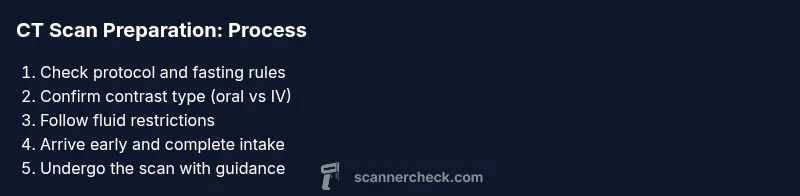
- Confirm whether the exam uses oral contrast and whether fasting is required.
- Note the exact fasting window and permitted fluids.
- Bring documentation, including medical history and medication list.
- Arrive early to complete intake steps and hydration checks.
- If you have any uncertainties, call the imaging center before your appointment.
Tools & Materials
- Appointment details (date, time, protocol)(Include whether oral or IV contrast is planned)
- Photo ID(Bring a government-issued ID)
- Insurance card(If applicable)
- List of medications(Include prescription and over-the-counter meds)
- Hydration plan(Only if allowed by the center's instructions)
- Comfort items(Headphones, water bottle (if permitted))
Steps
Estimated time: 60-120 minutes
- 1
Review fasting instructions
Check the exact fasting and fluid guidelines provided by the imaging center for your protocol. If anything is unclear, call ahead to confirm. This step ensures you are not inadvertently noncompliant, which could delay or cancel the scan.
Tip: Write down the specific instructions and the time window. - 2
Determine contrast type
Ask whether the exam uses oral contrast, IV contrast, or both. The presence of oral contrast often drives fasting rules, while IV-only studies may have different preparation requirements.
Tip: If a contrast plan changes, get an updated instruction sheet. - 3
Plan fasting window
Set a clear window for solid foods and beverages as instructed. Do not eat during this window if oral contrast is planned, and avoid large meals that could complicate imaging.
Tip: Avoid chewing gum or smoking, which can affect GI activity. - 4
Hydration and fluids
Follow the center’s guidance on fluids. If allowed, maintain light hydration up to the cutoff time to stay comfortable during the procedure.
Tip: Sip water only if permitted; heavy liquids may affect imaging. - 5
Prepare documents
Gather ID, referral, insurance information, and a list of medications. Having everything ready minimizes check-in delays and helps staff confirm safety details quickly.
Tip: Bring copies of prior imaging studies if available. - 6
Arrive early
Arrive with time to check in, answer safety questions, and complete any required screening. Early arrival reduces stress and improves the flow of the appointment.
Tip: Bring a hydration option if permitted by the center. - 7
During the scan
Follow operator directions; stay still during the imaging, and report any symptoms such as itching or shortness of breath. IV contrast may cause a brief sensation but is typically well tolerated.
Tip: Inform staff immediately if you have a reaction or feel unwell. - 8
Post-scan steps
Depending on the study, you may be asked to wait briefly after IV contrast or resume normal activity. Hydrate as advised and monitor for any delayed side effects.
Tip: If you have kidney concerns, ask about post-scan hydration and follow-up.
Common Questions
What does fasting mean for CT scans?
Fasting rules depend on the protocol. Some CT exams require no fasting, while others with oral contrast require a period without solid food. Always follow the center's instructions to ensure optimal imaging.
Fasting depends on the protocol. Some CT scans require no fasting, while others with oral contrast require a period without solid food. Follow the center's instructions.
Do I need to fast if IV contrast is used?
Often no fasting is required for IV contrast CT scans, but some centers still provide specific guidelines. Always check your appointment packet or call the center.
Usually not, but always check the center's guidance for IV contrast.
Can I drink water before my CT scan?
Water is commonly allowed in small sips if the center permits it. Avoid other drinks unless explicitly advised.
Water is often fine in small sips if allowed; check guidelines for other drinks.
What happens if I eat before the scan?
Eating before an oral-contrast CT can interfere with imaging or require rescheduling. Contact the imaging center to adjust your plan.
Eating before an oral-contrast CT can ruin the imaging, so contact the center if you’ve eaten.
How long does a CT scan take?
The actual scan is usually a few minutes, with total appointment time ranging from 30 to 60 minutes depending on the protocol and preparation.
The scan itself is quick, but total time varies by protocol and prep.
Is fasting safe for kidney patients?
Fasting itself is generally safe, but kidney function and contrast safety require medical guidance. Discuss individual risk with your clinician.
Kidney considerations matter; discuss risks with your clinician before fasting.
Watch Video
Key Takeaways
- Check the protocol before your appointment.
- Fasting depends on the contrast protocol; oral contrast requires fasting more often.
- Hydration helps unless instructed otherwise.
- Ask clear questions to the radiology team.
- Follow center-specific instructions to ensure a successful scan.