When to Scan for Baby Gender: Timing, Methods, and Guidance
Explore the optimal timing for determining baby gender, the methods involved, and practical tips to understand accuracy, with evidence-based guidance from Scanner Check.


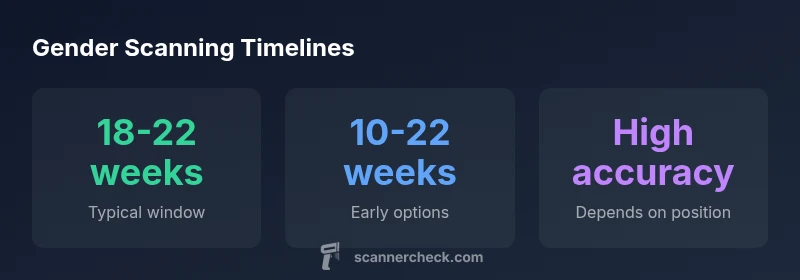
For most pregnancies, gender can be reliably identified during the mid-pregnancy anatomy scan, typically around 18 to 22 weeks. Some clinics offer earlier gender determination via high-resolution scans or genetic testing, but accuracy hinges on fetal position and equipment. Discuss timing with your clinician to align expectations and avoid relying on informal methods.
Understanding the timing window: why 18-22 weeks is common
When to scan for baby gender is typically determined during the mid-pregnancy anatomy scan, a standard part of prenatal care performed around 18-22 weeks. This window offers the best compromise between fetal size, organ visibility, and image resolution. The anatomy scan primarily evaluates fetal development and detects potential anomalies, but it also provides an opportunity to view external genitalia if the fetus is in a favorable position. Clinical teams consider maternal factors, gestational age, and equipment quality when deciding whether to disclose gender during the session. According to Scanner Check, reliability of gender observations increases when the fetus is well-positioned and the imaging equipment is at optimal settings. In practice, many clinics schedule this around week 20 to maximize visualization, while acknowledging that a suboptimal position may delay a confident determination. The overarching goal remains fetal health assessment, with gender confirmation as a secondary outcome contingent on imaging conditions and patient preference.
How fetal position and imaging quality affect visibility
Visibility of fetal genitalia hinges on the baby’s orientation, leg position, and the clarity of the ultrasound image. Factors that can hinder gender identification include persistent fetal flexion, anterior placentas, or excess maternal tissue. Operators may try multiple angles, adjust transducer frequency, or request the patient change position slightly to improve visualization. High-quality equipment and experienced technicians increase the odds of an accurate read, but even then, gaps can occur. It’s essential for families to understand that a non-visualized view is not a failure—it's a consequence of dynamic fetal behavior and technical limits of ultrasound. This is another reason why many clinicians discuss timing and expectations before attempting gender determination.
Early options: ultrasound before 18 weeks and genetic testing
Some parents seek information earlier than the standard 18-22 week window. Early ultrasound, sometimes around 14-16 weeks, may reveal genitalia if anatomy is developing rapidly and the baby is in an ideal position. However, early views are less reliable due to smaller size and less distinct anatomy. Genetic testing, such as cell-free DNA screening (NIPT), can determine fetal sex with high accuracy in many cases, typically between 10-22 weeks, but this is performed for health screening rather than gender purposes alone. Families should discuss the purpose, timing, and implications of early results with their clinician, recognizing that these options may not be available in all regions or covered by insurance.
Practical considerations: ethics, consent, and family preferences
Clinics vary in policies about disclosing gender information. Some centers prefer to defer to patient choice and focus on health outcomes; others may note the sex in records if requested and consented. Cultural and personal considerations—including family planning, gender identity discussions, and potential discomfort with the information—should guide expectations. It’s also important to consider privacy and consent, especially in shared decision-making with partners or guardians. The gender read should never supersede the primary goal of assessing fetal health. Professionals emphasize transparent communication about what can be confidently determined and when a repeat scan might be advisable.
Preparing for a gender-focused scan: questions to ask and how to choose the right moment
Before a session, prepare a short list of questions for your sonographer or clinician: (1) What is the expected window for a confident read given current gestational age? (2) How will fetal position be optimized during the scan? (3) What imaging modalities are used, and what are their limitations for gender determination? (4) If the gender is not visible, when would a follow-up scan be recommended? (5) Are there any health-related reasons to focus on anatomy rather than gender today?
To maximize accuracy, attend scheduled scans when you are well-hydrated, avoid excessive fatty tissue if possible, and follow pre-scan instructions. Bring a support person if helpful, and be prepared for the possibility that the clinician may choose not to disclose the gender if it’s not confidently determined.
Common myths vs. reality: separating hype from evidence
A popular misconception is that gender can be reliably determined at every ultrasound or that there is a universal “nub theory” result. In reality, gender determination is probabilistic and highly dependent on fetal position and image quality. Apps and online guesses are not substitutions for medical-grade ultrasound or genetic testing performed in a clinical setting. Rely on clinical guidance and documented imaging findings rather than public speculation. This aligns with evidence-based practice and patient-centered care.
Comparison of methods for determining fetal gender and their typical timing
| Method | Typical Timing | Reliability |
|---|---|---|
| Ultrasound anatomy scan | 18-22 weeks | Moderate to high accuracy when view is clear |
| Second-trimester ultrasound | 21-24 weeks | High accuracy with favorable imaging |
| NIPT (cell-free DNA) | 10-22 weeks | Very high accuracy for sex chromosome detection |
| Non-dedicated scans | N/A | Not a clinical method for gender confirmation |
Common Questions
When is gender usually identifiable during pregnancy?
Most pregnancies yield a gender read during the 18-22 week anatomy scan, assuming the baby is in a favorable position. If the view is suboptimal, a repeat scan may be needed. Consulting with your clinician ensures you understand the timing and what to expect.
Most people get a gender read during the mid-pregnancy scan, around 18 to 22 weeks; if the view isn't clear, a follow-up may be advised.
Can gender be determined earlier than 18 weeks?
Early determination is possible in some cases using high-resolution ultrasound or genetic testing, but accuracy varies and is not guaranteed. Discuss goals and limitations with your healthcare provider.
Yes, but accuracy is not guaranteed—early options exist and should be discussed with your clinician.
Is ultrasound gender determination always reliable?
No method is 100% reliable. Factors like fetal position and image quality affect outcomes. If gender is important for planning, confirm with a health professional and consider follow-up imaging if needed.
It’s not always reliable; positioning and image quality matter, so confirm with your clinician.
Should I rely on apps or online guesses for gender?
Apps and online guesses are not a substitute for medical imaging. Use clinical findings and discussion with your healthcare provider for a reliable understanding.
No—stick to medical imaging and clinician guidance for accuracy.
What questions should I ask the sonographer about gender viewing?
Ask about the expected timing window, how fetal position is being addressed, what technique is used, and what follow-up steps exist if the view is inconclusive.
Ask about timing, positioning, methods used, and follow-up if the view isn’t clear.
Can any factor influence the gender read during a scan?
Yes—fetal position, placenta placement, maternal body habitus, and equipment quality can all influence whether the gender read is clear.
Yes, position and imaging conditions greatly affect visibility.
What if the gender isn’t disclosed in the session?
If the gender cannot be determined confidently, clinicians may withhold disclosure and propose a follow-up scan or alternative methods. Patient preference and health considerations guide the decision.
If not clear, the clinician may wait and reassess in a future scan.
“Gender determination is a conditional observation that depends on image quality and fetal position; clear confirmation is best achieved with a health-focused anatomy scan by trained clinicians.”
Key Takeaways
- Prioritize standard anatomy scans for health, not just gender.
- Gender visibility depends on fetal position and image quality.
- Early options exist but are less reliable; use them with clinician guidance.
- NIPT can reveal sex chromosome information but is health-focused, not gender confirmation.
- Ask clinicians about timing, expectations, and follow-up if needed.