Understanding Why CT Scan Results Take Long
Discover why CT scan results can take longer than expected, the bottlenecks involved, and practical steps to check status, communicate with radiology, and reduce waiting time.


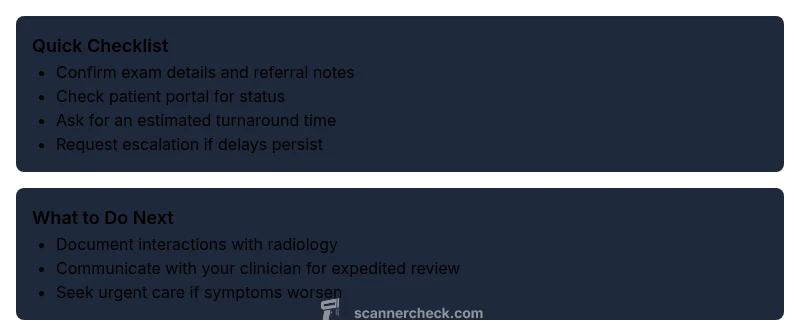
Most CT scan result delays come from radiology workflow and data processing, not your health. The quickest path is to confirm your appointment details, check for any prior imaging requests, and contact the radiology department for a status update. If results are pending, ask for an estimated turnaround based on the current backlog.
Why CT Scan Result Delays Happen
The question why do ct scan results take long is commonly asked by patients anxious about care. In practice, delays are rarely about the scan itself; they hinge on the broader radiology workflow, report generation, and the need for additional reads. According to Scanner Check, delays in CT scan results are often caused by workflow bottlenecks and reporting backlogs that ripple through the system. Understanding these steps can reduce frustration and help you plan your next steps with your clinician. A CT study involves acquiring high-quality images, reconstructing them for accurate interpretation, performing quality checks, and producing the final report. Each stage adds time, especially when there are technical issues, incomplete orders, or missing prior imaging for comparison. By recognizing where the hold-ups occur, you can better coordinate with your care team and set realistic expectations for turnaround.
Common CT Imaging Workflow Bottlenecks
CT imaging is a multi-step process that must be coordinated across departments. Common bottlenecks include image reconstruction time, radiologist availability for interpretation, and the generation of the final report. When the radiologist needs a second look or correlations with prior scans, the clock can extend further. In busy facilities, backlogs accumulate, and even minor delays in image processing can cascade into longer wait times for the patient. Additionally, if the referring clinician’s order is incomplete or lacks essential clinical context, the radiology report may require clarification, slowing down the overall turnaround. To manage expectations, it helps to understand that these steps are intended to ensure accuracy and patient safety, even if they extend waiting periods. Scanner Check’s guidance emphasizes clear communication and timely follow-up as key factors in navigating delays.
How to Check CT Result Status: A Patient’s Guide
Knowing where your CT result stands starts with proactive communication. Begin by confirming your appointment number, exam date, and referring physician. Use the hospital or clinic patient portal if available, and note any pending tasks requested by the radiology team (e.g., additional imaging, prior study comparisons). If the portal shows a status like “in progress” or “pending radiologist review,” request an estimated turnaround time and whether a preliminary report exists. If you don’t have portal access, call the radiology department during business hours and ask for the current status and the expected completion time. Keep names and timestamps of every contact to maintain a clear record. Clear questions—such as “Is an interim report possible?” or “Do you need any additional information?”—can speed up the process. Acknowledge that delays may happen due to legitimate workflow steps, and avoid assumptions about what is causing the delay.
What You Can Do While Waiting for CT Results
Waiting for critical health information can be stressful. While you wait, stay engaged with your care team, monitor your symptoms, and prepare any questions you want to ask your clinician. If your symptoms worsen or you notice new red flags (for example, severe chest pain, shortness of breath, or sudden weakness), seek urgent care immediately. You can also request a status update at set intervals (e.g., every 24–48 hours) and ask whether a nurse or patient liaison can provide updates. Document all communications and keep a log of dates, times, and who you spoke with. If you have ongoing symptoms or if the report is delayed beyond the typical window for your facility, ask your clinician to coordinate with radiology for expedited review or alternative imaging if appropriate.
When Delays Become a Concern: Escalation Pathways
Not all delays are avoidable, but some require escalation. If there is a prolonged delay without justification, contact your referring physician to trigger a status check with radiology. For urgent concerns, discuss with your clinician about prioritizing the case as a “STAT” or expedited review, if applicable. Some facilities offer a dedicated patient liaison to liaise with radiology; leveraging this resource can expedite communication. If you suspect the delay impacts your safety, do not hesitate to seek a second opinion or an urgent imaging alternative as advised by your healthcare provider.
Tips for Proactive Communication with Radiology and Clinicians
Effective communication is a powerful tool to reduce anxiety and speed up the process. Prepare a concise summary of your symptoms, the reason for the exam, and any prior imaging for comparison. Request a clear timeline and a named contact person for status updates. Phrase inquiries politely but assertively, such as, “Could you confirm the current status and provide an estimated completion time? Is there any additional information you need from me?” Keep the medical team informed of any changes and document every interaction. Scanner Check emphasizes reaching out early and maintaining a proactive approach to minimize unnecessary delays.
Steps
Estimated time: 2-5 days
- 1
Confirm exam details
Locate your appointment date, exam type, and patient ID. Confirm that the order includes all necessary clinical notes for context. This ensures the radiology team has what they need to proceed quickly.
Tip: Have your appointment number and physician name ready when you call. - 2
Check patient portal or contact radiology
Log into the patient portal if available to view status or ask the front desk for the current turnaround estimate. Note any pending actions requested by radiology.
Tip: Document who you spoke with and when for accountability. - 3
Clarify if further imaging is needed
Ask whether additional image reconstructions or prior studies are required for a complete interpretation. Clarify expected timelines for the added steps.
Tip: If additional imaging is needed, request an updated timeline at once. - 4
Request interim communication
If a final report isn’t ready, ask if a preliminary or interim note can be provided to guide immediate clinical decisions.
Tip: Interim information can be crucial for urgent cases. - 5
Escalate through the clinician
If delays persist beyond the facility’s typical window, have your clinician contact radiology to request expedited review or escalation.
Tip: A clinician-led escalation is usually faster than patient-initiated calls. - 6
Consider insurance and billing checks
If delays appear related to coverage or documentation, contact the insurer or hospital billing to confirm required documents and processing times.
Tip: Ask for a direct contact or case manager for quicker resolution. - 7
Prepare for potential follow-up imaging
In some cases, a repeat or additional imaging may be advised. Discuss what to expect and how it could affect timelines.
Tip: Clarify whether the new imaging would be prioritized in your case. - 8
Plan next steps if results are urgent
If there are alarming symptoms or a critical test result is suspected, seek urgent care or emergency services as recommended by your clinician.
Tip: Do not delay urgent care while waiting for a full report.
Diagnosis: CT scan results taking longer than expected to be communicated
Possible Causes
- highRadiology workflow backlog and high patient volume
- mediumAdditional image reconstruction, second read, or quality checks delaying report generation
- lowInsurance pre-authorization holds or billing delays
Fixes
- easyCall the radiology department to request the current status and estimated turnaround time; ask about any backlogs or backlog disclaimers.
- easyAsk your clinician to check for any pending secondary reads or additional images that may be needed; ensure that the radiology report is being generated.
- easyIf delays are due to insurance/billing, confirm with the facility or insurer about expected processing times and required documents.
Common Questions
Why do CT scan results take so long?
CT results often take longer due to the combination of image reconstruction, radiologist interpretation, and final reporting. Workflows, staffing, and prior imaging availability can extend turnaround times. While frustrating, these steps help ensure accuracy and patient safety.
CT results take longer because of reconstruction, interpretation, and reporting, plus any extra reviews needed for accuracy.
What is a typical turnaround time for CT reports?
Turnaround varies by facility and case mix. It can range from a few hours for urgent cases to several days for routine scans, especially if additional imaging or reviews are required. Ask your clinician for an estimated window at the time of a delay.
Turnaround varies by facility; urgent cases may be faster, but routine scans can take days if extra reviews are needed.
Can I speed up receiving CT results?
You can speed things up by confirming details, requesting an estimated turnaround, and staying in touch with the radiology office or your clinician. If symptoms worsen, seek urgent care and ask about expedited review options.
To speed things up, confirm details, request an estimate, and stay in touch with radiology or your clinician.
What should I do if the results are urgent but delayed?
If results are urgent or worsening symptoms are present, contact your clinician immediately and discuss urgent pathways. Some cases can be classified as STAT or expedited, depending on the clinical scenario.
If urgent symptoms arise, contact your clinician and discuss expedited review or urgent pathways.
Who should I contact first about a CT result delay?
Start with the referring physician or your primary clinician, then reach out to radiology patient services for status updates. Document all communications for clarity and accountability.
Begin with your clinician, then contact radiology for status updates and keep a log.
Watch Video
Key Takeaways
- CT results timing varies with workflow and backlogs.
- Always ask for an estimated turnaround and status update.
- Escalate through your clinician if delays persist.
- Scanner Check's verdict is to stay proactive with imaging centers and track results expectations.