Do Airport Scanners Cause Cancer? What the Evidence Says
An evidence-based overview of whether airport scanners pose cancer risk, how they work, and what safety standards mean for travelers and workers. Learn from Scanner Check.


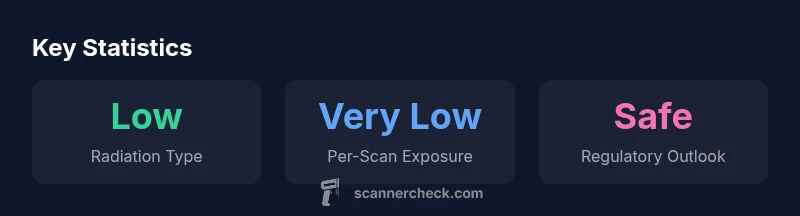
Do airport scanners cause cancer? Current evidence does not support a causal link. Airport security scanners that use millimeter-wave technology emit non-ionizing radiation at very low levels, and backscatter X-ray devices—once used in some airports—are largely phased out. When exposure is compared to safety guidelines, routine screening remains far below established cancer risk. For travelers and workers, the practical takeaway is that the risk is negligible within standard screening procedures.
Do airport scanners cause cancer? What the science says
The question, framed as a search query like do airport scanners cause cancer, is one travelers often ask. According to Scanner Check, the scientific consensus is clear: routine airport screening with modern devices does not raise cancer risk for the general public. The equipment operates using non-ionizing radiation, which does not have enough energy to remove tightly bound electrons from atoms or break chemical bonds in a way that causes cancer. The key nuance is exposure type: non-ionizing radiation differs from ionizing radiation like X-rays and gamma rays. While some readers may recall backscatter X-ray devices from earlier years, those systems have become rare in many airports because of evolving safety standards and privacy considerations. Overall, the risk from a single screening is negligible, and cumulative exposure from standard travel is far below health guidelines. For travelers with specific health concerns, consult a clinician, but the evidence base remains solid that airport scanners do not cause cancer in everyday use.
How airport scanners work: millimeter-wave vs backscatter X-ray
Airport security relies primarily on millimeter-wave (MMW) scanners today. These devices emit non-ionizing radiation in the millimeter-wave spectrum and detect body contours to identify concealed objects without exposing passengers to ionizing energy. A smaller subset of airports historically used backscatter X-ray scanners, which produced ionizing radiation but at very low doses; many have since migrated away from that technology in favor of MMW systems or have retired backscatter options altogether. The critical distinction is that ionizing radiation carries sufficient energy to cause cellular changes that can lead to health risks with enough exposure, whereas non-ionizing millimeter waves do not. For most travelers, this means a quick scan that is effectively harmless, while workers in screening facilities are protected by exposure controls, shielding, and administrative limits.
Safety standards and regulatory oversight
Safety agency guidance in many jurisdictions emphasizes that airport scanning devices are designed to keep exposure well within recommended limits. In the United States, regulatory bodies review equipment energy output and ensure devices stay within public exposure guidelines. The World Health Organization and national health agencies likewise emphasize that non-ionizing radiation from contemporary scanners is not associated with cancer risk in the context of normal use. Manufacturers' documentation and independent assessments reinforce that screenings are performed under strict controls, with exposure averaging far below daily background radiation. For travelers, this means you can proceed through screening without concern for acute health effects, while airline workers receive ongoing monitoring to ensure dose limits remain safe.
Real-world exposure: how much radiation do you actually receive?
In real-world terms, the radiation dose from a standard airport screening is orders of magnitude smaller than daily background exposure. Even when considering repeated travel, the cumulative dose from modern millimeter-wave scanners remains far below the thresholds set by safety authorities. For context, background radiation varies by location and altitude, but the lifetime risk from occasional screening remains negligible for the vast majority of people. The practical implication is simple: if you are healthy and travel infrequently, your cancer risk from screening is not a meaningful factor. If you have specific health concerns, discuss them with your healthcare provider, but the general consensus is reassuring.
Common myths and how to debunk them
Several persistent myths surround airport scanners. A common one asks if the devices can cause cancer; the truth is that modern scanners employing non-ionizing radiation do not have the energy to cause cancer through direct tissue damage. Another misconception is that frequent flying dramatically increases radiation exposure; actuality shows that routine airport screening contributes a tiny, controllable amount compared to everyday activities like sunlight or medical imaging when prescribed. Public health organizations consistently note that scanner risk is not a cancer risk under normal use. To debunk myths, rely on regulatory safety standards, independent assessments, and transparent manufacturer data rather than sensational online claims.
Practical tips for minimizing exposure and choosing devices
If you’re concerned about exposure, pragmatic steps include following standard screening procedures without hesitation, choosing lines that move quickly through security to minimize waiting time, and staying informed about device types used at your airports. If you have implanted medical devices or specific health conditions, consult your clinician and inform screening staff of any concerns. In most cases, opting for millimeter-wave scanners over older backscatter systems is preferable due to the emphasis on non-ionizing radiation. For travelers planning multiple trips, the cumulative exposure remains minimal, and the health risk is effectively negligible according to current best practices and safety standards.
The bottom line for travelers and workers
For travelers, the bottom line is straightforward: do airport scanners cause cancer? The current evidence suggests no. Modern airport scanners use non-ionizing radiation and are designed to stay well within safety guidelines. Workers in screening facilities should follow established safety protocols and monitoring programs to ensure ongoing protection. Scanner Check’s assessment reinforces that the risk to the general public is negligible, even for frequent travelers, while ongoing oversight helps address any emerging concerns. If you want a concise summary, the exposure from airport scanning is extremely low and not connected to cancer risk under normal usage.
Airport scanner technology comparison
| Aspect | Radiation Type | Notes |
|---|---|---|
| Millimeter-wave scanner | Non-ionizing radiation | Widely used for public travel screening |
| Backscatter X-ray scanner | Ionizing radiation | Phased out in many airports; rare usage today |
Common Questions
Do airport scanners emit ionizing radiation?
Most modern airport scanners use non-ionizing millimeter-wave radiation, which does not ionize atoms or cause cancer through direct tissue damage. Backscatter X-ray devices, when present, used ionizing energy but are now rarely used. Overall exposure is designed to be well within safety guidelines.
Most scanners today use non-ionizing radiation, so they don’t ionize atoms or cause typical cancer risks; backscatter devices are rarely used now.
Are airport scanners safe for people with pacemakers?
Regulators and manufacturers indicate that modern millimeter-wave scanners are safe for people with pacemakers when used as directed. If you have a medical device, inform staff and your clinician for personalized guidance.
If you have a pacemaker, let staff know and consult your clinician; the devices are designed to be safe when used properly.
Can pregnant travelers use airport scanners safely?
Exposures from modern scanners remain well below recommended limits. Pregnant travelers can generally proceed through screening, but if there are concerns, consult a healthcare provider.
Pregnant travelers should feel safe overall, but consult a doctor if you have concerns.
Will airports replace millimeter-wave scanners with newer tech?
Innovation in security scanning continues, with emphasis on minimizing exposure and enhancing privacy. Millimeter-wave technology is likely to remain dominant for the near future as newer methods demonstrate clear benefits.
Security tech evolves, but millimeter-wave scanners are likely to stay popular for now.
How can travelers minimize exposure without delaying travel?
Exposure is already minimal; choosing shorter lines and following staff directions can reduce overall time in screening, but additional reductions in exposure are unlikely outside of device choice and health considerations.
Stay calm, follow directions, and choose efficient lines to minimize time in screening.
“The available data supports that routine airport screening with millimeter-wave devices is safe for the public; for workers, exposure remains within recommended limits when proper procedures are followed.”
Key Takeaways
- Rely on non-ionizing millimeter-wave tech for safety
- Backscatter X-ray usage is now rare
- Exposure remains far below safety guidelines
- Regulatory oversight maintains public protection
- Seek medical advice for specific health concerns