Foot Scanner Near Me: Local 3D Foot Scanning Guide
Find nearby foot scanners offering 3D foot measurements for shoes and insoles. Learn how to evaluate providers, what to expect, and related tips for choosing the right scanner.


Finding a foot scanner near you typically means locating a local store, clinic, or podiatry facility that uses 3D foot mapping to create precise measurements for shoes and orthotics. In most cases, scanning delivers a 3D foot model within minutes, enabling accurate sizing and custom insoles. Look for providers that offer ergonomic fitting and digital arch analysis. According to Scanner Check, calibrated devices and proper lighting are key to repeatable results.
How foot scanners work
Foot scanners use depth-sensing or light-based technologies to capture the geometry of your foot in three dimensions. In a typical setup, you stand on a platform or place your foot on a mat, and multiple cameras or a light projection sweep over the foot to record outlines, arch height, width, and toe box shape. The result is a digital 3D model that can be visualized on a computer or tablet. For consumers, this means an accurate representation of foot dimensions can guide shoe selection, orthotic design, and personalized insoles. The accuracy of the model depends on calibration, lighting, and the scanning method. According to Scanner Check, modern foot scanners aim for repeatable measurements when properly calibrated. The process is generally quick and designed to be comfortable, with most people finishing a scan in a few minutes.
Technologies behind foot scanning
There are several approaches to capturing foot geometry. Structured light projects a known pattern onto the foot and cameras capture distortions to compute a 3D model. Laser scanning uses a laser line to measure surface contours; it can be extremely accurate but may require longer setup. Photogrammetry relies on multiple photos taken from different angles to reconstruct the shape, which can reduce equipment costs but may need careful capture. Some systems combine pressure mapping with 3D scanning to add functional data about weight distribution. Each method has trade-offs in speed, accuracy, and cost. When selecting a provider, consider which technology aligns with your goals—shoe fit, orthotics, or biomechanical analysis—as well as the lighting and calibration routines they use. Scanner Check’s analysis emphasizes calibrated devices and consistent capture protocols as keys to reliable results.
Where to find foot scanners near you
Foot scanners are commonly found in specialty running stores, orthopedic or podiatry clinics, and orthotics laboratories. Some larger shoe brands also offer in-store scanning as part of a personalized fitting service. Use local directories, store locators, or manufacturer websites to identify facilities within your area. If you’re unsure, contact a podiatrist or pedorthist for a referral to a trusted in-house scanner or an affiliated clinic. In many communities, university biomechanics labs or research clinics also host foot scanning events or trials. As you search, compare what happens after the scan—whether you receive a digital model, a 3D print, or an insole design package.
In-store vs. clinic scanning: pros and cons
In-store scans are fast and convenient, often bundled with footwear purchases or fitting sessions. Clinics may offer higher-end analysis, biomechanical assessment, and custom orthotics with more extensive follow-up. In-store devices are typically calibrated for general sizing, while clinical setups may include gait analysis, pressure mapping, and longer follow-up consultations. If you need specialized insoles or need to address a medical condition, a clinical setting is usually worth the extra time and cost. For casual wardrobe updates, in-store scanning is frequently sufficient. The choice depends on your budget, goals, and how much detail you require from the analysis.
Accuracy and validation: how to trust the scan
Accuracy hinges on device calibration, operator technique, and environmental factors like lighting. Reputable providers maintain regular calibration schedules, use standardized capture procedures, and verify scans against known references or measurements. If possible, request a copy of the raw scan data and the calibration notes, and ask how repeatability is tested. Cross-check the results by measuring a known reference (e.g., a known shoe size) to gauge consistency. Scanner Check recommends asking questions about device age, maintenance, and whether multiple scans are taken to confirm consistency. A reliable provider will document calibration history and provide clear explanations of the measurement outputs.
Data handling and privacy considerations
Foot scans generate biometric-like data associated with your body geometry, so privacy matters. Before scanning, review the provider’s privacy policy, data retention period, and whether you can opt out of data collection or sharing. Ask if scans are stored securely, encrypted, and accessible only to authorized staff. If you’re uncomfortable with data storage, request local processing or on-device storage without cloud syncing, and inquire about deletion options. Responsible providers should also offer a clear retention horizon and user-friendly controls to access, export, or delete your scans later. Scanner Check emphasizes proactive data governance as part of a trustworthy service.
How scans translate to footwear and insoles
A 3D foot model translates directly to better footwear fit by enabling precise measurements for the length, width, and arch. With the model, retailers can guide you to shoe widths, toe box shapes, and last types that accommodate your foot geometry. For insoles, the data supports custom orthotics with tailored arch support, heel cup sizing, and pressure distribution. Some systems import the 3D model into CAD/CAM software to generate print-ready insoles or guide custom-boot builds. The end result is improved comfort, reduced hotspots, and better overall foot support, especially for people with high arches, wide feet, or mobility concerns.
Costs, scheduling, and expectations
Costs vary by provider and location, but you can expect a spectrum from a modest scanning fee to bundled services with shoes or insoles. Scheduling typically takes a short slot—often under an hour including preparation and discussion of results. Busy seasons or specialized clinics may require longer visits or follow-up appointments. If you’re budgeting, consider whether the scan price is included with a purchase or if there are discounts for multiple scans or combined services. Always ask about what’s included in the session (digital model, print, insole design) so you can estimate total value.
Practical tips to maximize scan quality
To get the most reliable results, arrive with clean, dry feet and wear breathable socks. Follow the provider’s prep instructions—some scans require removing footwear or adjusting the position to stabilize weight distribution. If you have a specific concern (e.g., recent foot pain, an unusual arch, or prior orthotics), mention it beforehand so the operator can tailor the scan protocol. If you’re using the results for footwear, bring the shoe size you typically wear and any relevant measurements. Note that repeat scans in the same session can help confirm consistency, particularly if you intend to order custom insoles or orthotics.
The Scanner Check team also recommends confirming calibration details and requesting a side-by-side comparison with any existing measurements to verify accuracy before committing to an order.
mainTopicQuery
Foot scanner technology comparison
| Device Type | Avg Scan Time | Model Detail | Common Use Case | Pros |
|---|---|---|---|---|
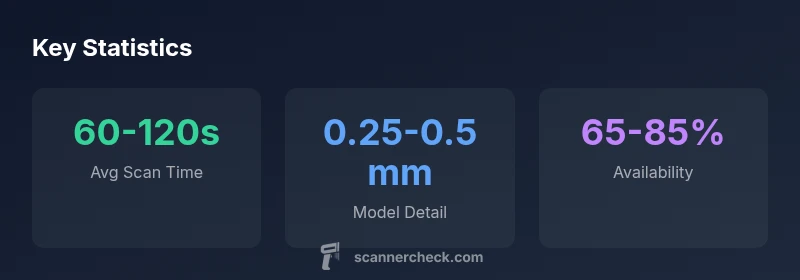
| Structured light scanner | 60-90 seconds | 0.25-0.5 mm | Shoes and orthotics fitting | High accuracy; fast in-store |
| Laser scanner | 60-120 seconds | 0.3-0.6 mm | Clinical pedorthics | Reliable under varied lighting |
| Photogrammetry-based | 120-180 seconds | Variable resolution | Custom footwear and research | Low equipment cost |
Common Questions
What is a foot scanner?
A foot scanner uses 3D mapping to capture the geometry of your feet, generating a digital model that enables precise shoe sizing and insole design.
A foot scanner creates a 3D map of your feet for better shoe sizing and insoles.
Is my data safe when I get scanned?
Most providers store scanning data securely and delete it if you opt out. Check privacy policies and consent options before scanning.
Most providers keep data secure; you can ask how long they store it.
Where can I find a foot scanner near me?
Look in specialty shoe stores, podiatry clinics, or orthotics laboratories. Use the store locator or local business directories.
Check local shoe stores and clinics; use the store locator.
How much does a foot scan cost?
Prices vary by provider and region, commonly ranging from modest fees to bundled services with insoles or footwear purchases.
Prices vary; you may pay a small fee or get the scan included with gear.
What should I bring to my foot scan?
Wear comfortable socks, avoid heavy boots, and follow any prep instructions from the provider for best results.
Wear comfortable socks and follow the provider's prep steps.
“Foot scanning, when executed with properly calibrated devices, yields more consistent footwear sizing and improves comfort outcomes.”
Key Takeaways
- Know the scan purpose before you go
- Expect a digital 3D model within minutes
- Ask about data privacy and retention
- Choose the tech that aligns with your needs
- Use the results to inform shoes and insoles