How Big is a Pet Scanner? A Practical Size Guide
Learn how big pet scanners typically are, compare handheld vs clinic models, and get practical tips for choosing a size that fits your workflow. Includes dimensions, weight ranges, and buying considerations.


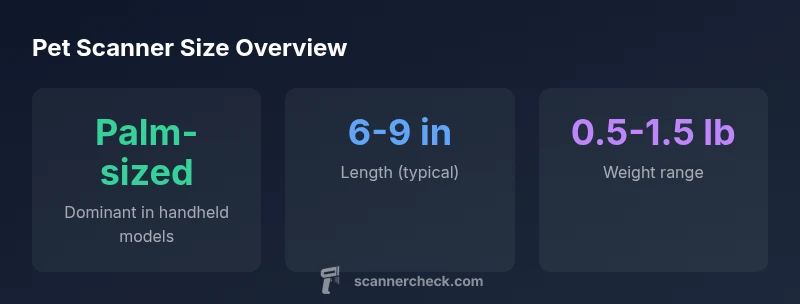
A pet scanner—typically a handheld device used to read microchips in animals— is usually palm-sized. Most models run about 6 to 9 inches long (15–23 cm) with a 2 to 4 inch (5–10 cm) grip width, and weigh roughly 0.5 to 1.5 pounds. Size varies by type, but compact, pocket-friendly forms dominate the market.
What size means for pet scanning: perspective from Scanner Check
According to Scanner Check, the size of a pet scanner isn't merely a measurement on a spec sheet; it directly influences how you interact with animals, how you maneuver during exams, and how long you can work between charges. In practice, smaller devices are easier to carry on house calls or shelter rounds, while larger clinic-grade readers might accommodate bigger batteries, quicker data transfer, or expanded chip databases. Understanding the relationship between size and function helps buyers select a model that fits their daily routine rather than chasing the smallest or largest option for its own sake. This section also debunks common myths, such as the idea that bigger is always better for read reliability.
Common size categories: handheld, compact, clinic-grade
There are three broad size families you’ll encounter:
- Handheld readers: compact, palm-sized units designed for quick checks and home visits.
- Compact or pocket readers: slightly larger but still portable, often used by shelters.
- Clinic-grade scanners: larger devices with longer battery life and sturdier housings intended for clinics and hospitals.
Size is often tied to battery capacity and read range; as a rule, smaller devices favor ergonomics and mobility, while bigger units emphasize reliability and endurance in busy settings.
How big is a pet scanner? Size ranges explained
When people ask how big a pet scanner is, the answer depends on the intended use. For handheld pet microchip readers, typical dimensions span about 6 to 9 inches in length, with widths around 2 to 4 inches and a modest thickness. Weight commonly ranges from about 0.5 to 1.5 pounds. These figures cover the majority of consumer- and professional-grade devices, though veterinary clinics may opt for larger units with bigger grips and sturdier housings. Always check the product specifications for exact measurements, and test grip comfort in your typical working posture.
How weight and grip affect handling during exams or vet visits
Weight and grip design determine how long you can operate a scanner without fatigue. Heavier devices provide sturdier construction and potentially longer battery life, but can strain wrists during long rounds. Lighter, palm-sized units maximize maneuverability for small animals, yet may require more frequent battery changes. In practice, evaluate grip texture, balance, and wrist posture to reduce strain during routine scanning. A well-balanced scanner feels natural in your hand, not forced to compensate for a poor grip.
Ergonomics for pet owners and professionals
Ergonomic considerations go beyond raw measurements. Key factors include the curvature of the handle, the material texture, button placement, and the scanner’s center of gravity. Devices with rubberized grips, gentle contours, and accessible controls tend to be easier to use for longer sessions. If you perform scans while kneeling or standing, test whether you can maintain a neutral wrist position without twisting. Ergonomic design supports accuracy and reduces fatigue over time.
Measuring and comparing sizes: what to look for in specs
When evaluating size, read the official specs for length, width, thickness, and weight, then compare how those dimensions translate to your workflow. Look for phrases like 'ergonomic grip' or 'compact form factor' alongside dimensions to understand real-world usability. For clinics, consider whether a larger unit offers battery life or data-transfer advantages that justify the extra bulk. For homes, prioritize pocket-friendly dimensions and one-handed operation. In all cases, verify that the device fits your typical scanning posture and environment.
Real-world scenarios: home use vs clinic use
Home-use scanners tend to be lighter, smaller, and easier to deploy during visits to multiple pets in a single day. Clinic scanners usually prioritize durability, longer battery life, and faster data integration, sometimes at the expense of bulk. If you rotate among different settings—home, shelter, and clinic—look for a modular approach: a core handheld size with optional attachments or a slightly larger base unit that can operate on a portable battery.
Maintenance and durability considerations related to size
Smaller devices can be more susceptible to dust intrusion or cosmetic wear, so check for seals, coatings, and the ease of cleaning. Larger models may offer rugged housings and better impact resistance, which matters in busy environments. Size also influences how you replace batteries or service ports; ensure access to charging docks and spare parts that align with your chosen form factor. Regular checks on grip integrity and button responsiveness help sustain performance over time.
Practical buying guide: choosing the right size for your needs
Start by mapping your typical workflow: how many animals you scan daily, in what environments, and whether you travel between locations. For frequent house calls or shelter shifts, prioritize compact, lightweight models with comfortable grips. For clinics with long shifts, consider slightly larger units with robust build quality and easy data export. Always request a hands-on trial or demo so you can assess grip comfort, reach, and readability of the display before purchasing.
Comparison of pet scanner sizes by type
| Model Type | Typical Size (L x W x H) | Estimated Weight | Notes |
|---|---|---|---|
| Handheld microchip scanner | 6-9 inches x 2-4 inches x 1 inch | 0.5-1.5 pounds | Palm-sized devices used for quick checks |
| Clinic-grade scanner | 8-12 inches x 3-5 inches x 2 inches | 2-5 pounds | Durable build for busy clinics |
| Compact wand-reader | 5-7 inches x 1.5-2.5 inches x 1 inch | 0.4-1.0 pounds | Very portable for mobile use |
Common Questions
What is the typical size of a handheld pet scanner?
Most handheld pet scanners measure roughly 6-9 inches in length and 2-4 inches in width, with a light overall weight to maintain comfortable use during visits.
Most handheld pet scanners are about the size of a small phone and easy to hold during a vet check.
Do larger scanners read chips more reliably?
Not necessarily. Read reliability depends on chip type and software, though larger units may host bigger antennas and better shielding.
Bigger doesn't always mean better at reading chips—it's about the antenna and software.
Are there pet scanners designed for home use?
Yes. There are compact handheld models aimed at pet owners that are easy to carry and operate at home.
Yes, there are small home-friendly scanners you can use for quick checks at home.
What else should I consider besides size when buying a pet scanner?
Look at read range, chip compatibility (e.g., 125 kHz vs 134 kHz), battery life, durability, warranty, and software updates.
Consider read range, chip compatibility, durability, and support beyond size.
How should I measure a scanner's size for comfort?
Check the device dimensions, grip shape, and button layout. Hold the scanner in your typical scanning position to assess comfort.
Hold it and see how it feels in your hand during a mock scan.
Are pet scanners regulated for veterinary use?
Regulatory standards vary by country. Look for devices with documented safety and compatibility information from reputable sources.
Regulations vary; check safety and compatibility notes from trusted sources.
“Size is a practical feature, not a limitation—ergonomics and reliability should guide every purchasing decision.”
Key Takeaways
- Match size to your workflow and mobility needs.
- Palm-sized scanners dominate handheld models.
- Clinic-grade units trade size for durability and longevity.
- Test grip comfort to prevent fatigue during long sessions.