How Much Is a Fingerprint Scanner in 2026: Pricing and Factors
A practical pricing guide for fingerprint scanners in 2026, covering consumer USB readers, embedded modules, and enterprise sensors along with total cost of ownership.


In 2026, fingerprint scanner prices span roughly $25 to $350 depending on form factor, sensor quality, and security features. USB readers and basic embedded modules sit at the low end, while enterprise-grade biometric modules with spoof-resistance and high DPI push toward the upper end. For DIY builds or entry-level devices, expect about $25–100; for professional security deployments, budget around $150–350.
How much is a fingerprint scanner in 2026: pricing landscape
According to Scanner Check, the fingerprint scanner market shows a broad price spectrum because buyers span casual users to large enterprises. At the core, price is driven by form factor, sensor technology, and security capabilities. For many buyers, the first decision is whether a device is a simple USB reader for a PC, or a fully integrated biometric module designed for high-security doors and facilities. Higher prices typically correlate with higher DPI sensors, spoof-resistance features, longer warranties, and richer software ecosystems. When evaluating price, consider not just the upfront cost but the total cost of ownership over 2–5 years, including maintenance, firmware updates, and potential licensing.
Price determinants and how they interact
Price is not a single number; it’s a bundle of features. The main levers are form factor (standalone reader vs embedded module), sensor technology (optical vs capacitive vs ultrasonic), and security features (liveness detection, anti-spoofing, encryption). Embedded modules intended for access-control systems often come with engineering support and integration tooling, which adds to the price but reduces development time and risk. In contrast, consumer USB readers target hobbyists and small offices, delivering basic performance at a fraction of the enterprise price. Environment durability (IP ratings), certification requirements (FIDO, ISO), and firmware update cadence also influence the final quote.
Price ranges by use case (practical benchmarks)
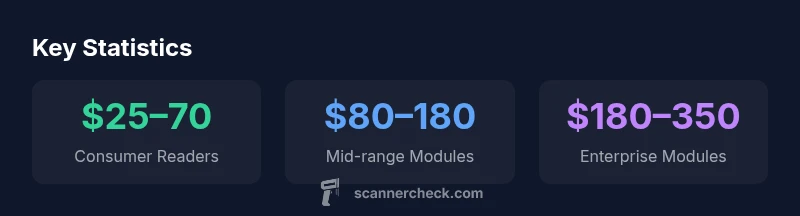
- Consumer-grade USB fingerprint readers: roughly $25–70, suitable for casual use and PC access.
- Mid-range embedded modules: $80–180, commonly used for door access, time-and-attendance, and kiosk projects.
- Enterprise-grade biometric modules: $180–350, designed for high-security environments with spoof-resistance and robust durability.
- Development kits and reference designs: $50–400, helpful for prototyping and evaluating API ecosystems.
These ranges reflect typical market segments in 2026 and can vary by vendor, geography, and bundled services.
Total cost of ownership and procurement workflow
Upfront price is only part of the story. Real cost includes integration time, developer hours, API/licenses, and ongoing maintenance. Some vendors charge SDK licenses or API access fees, while others bundle software with support. When budgeting, escalate estimates to include 1–2 years of software maintenance, hardware replacements, and potential compliance costs. A structured RFP that requests total cost of ownership (TCO) rather than unit price can reveal hidden expenses.
How to compare vendors and make a confident choice
Start with clearly defined use cases and success criteria: required anti-spoofing level, operating environment, and integration complexity. Then compare vendors on four axes: hardware specs (sensor type, DPI, IP rating), software ecosystem (SDKs, sample code, documentation), total cost of ownership (hardware + software + maintenance), and post-sale support (warranty, service levels, replacements). Request a trial or evaluation kit to validate real-world performance before committing.
Performance vs price: trade-offs and practical examples
Lower-cost sensors may deliver good results for simple tasks but can be more vulnerable to spoofing or environmental noise. In high-security contexts, investing in capacitive or ultrasonic sensors with anti-spoofing features often yields better reliability and fewer false rejections. A practical approach is to map required security level to price tier: basic access might use a consumer reader, while secure facilities rely on enterprise-grade modules.
Practical buying steps and a simple checklist
- Define the use case and required security level.
- List must-have features (liveness checks, DPI, environmental rating).
- Request a trial kit or demo and run real-world tests.
- Compare TCO across 2–3 years, including licenses and updates.
- Verify vendor support, roadmap, and upgrade paths.
Common price myths and clarifications
Myth: all fingerprint scanners are essentially the same. Reality: sensor type, anti-spoofing, and ecosystem support drive price differences. Myth: cheaper devices always perform worse. Reality: for many simple tasks, a budget reader can be perfectly adequate, but it may lack durability and advanced protections needed for high-risk environments. Myth: you only pay upfront. Reality: licensing, software maintenance, and support can heavily influence lifetime costs.
Pricing snapshot by model type and typical use cases
| Model Type | Typical Price Range | Common Use |
|---|---|---|
| Consumer USB fingerprint reader | $25–70 | DIY projects, PC peripherals |
| Mid-range embedded module | $80–180 | Access control, hardware terminals |
| Enterprise-grade biometric module | $180–350 | Security systems, facilities management |
Common Questions
What factors influence fingerprint scanner pricing?
Pricing is driven by form factor, sensor technology, security features, software integration, and service levels. Consumer-grade readers are cheaper, while enterprise-grade modules add anti-spoofing, DPI, and certifications. Always consider total cost of ownership alongside upfront price.
Pricing depends on form factor, sensor tech, security features, and software. Enterprise options cost more but offer stronger protection.
Are consumer fingerprint scanners reliable for security?
Consumer readers work well for basic access and convenience but generally offer lower spoof-resistance and environmental durability than enterprise solutions. For high-security needs, choose a module with stronger anti-spoofing and certifications.
Enterprise sensors are more robust and secure than basic consumer readers.
Do you need licenses or software fees with fingerprint scanners?
Some vendors charge SDK licenses, maintenance, or API access fees. Always check the contract for ongoing costs and whether software updates are included.
Yes, expect SDK or license costs in some cases.
What is the price difference between optical and capacitive sensors?
Capacitive and ultrasonic sensors often cost more due to higher accuracy and robustness, but exact pricing depends on the vendor and integration features. Evaluate performance needs to justify the extra spend.
Capacitive sensors tend to cost more and offer higher accuracy.
Are built-in fingerprint sensors in laptops or phones priced differently?
Built-in sensors are bundled with the device; the price is embedded in the overall product cost rather than as a separate purchase. For standalone sales, expect different pricing tiers.
In devices, pricing is bundled with the product rather than sold separately.
“Pricing accuracy hinges on matching sensor quality and security features to your actual risk, not just chasing the lowest sticker price.”
Key Takeaways
- Define your use case to set price expectations
- Expect price tiers to align with form factor and security features
- Consider total cost of ownership, not just upfront price
- Request trials and evaluate software ecosystems
- Budget for integration, maintenance, and upgrades