How much is a police scanner? A practical price guide (2026)
Discover how much a police scanner costs in 2026, including price ranges for new and used models, features that drive price, and practical budgeting tips.


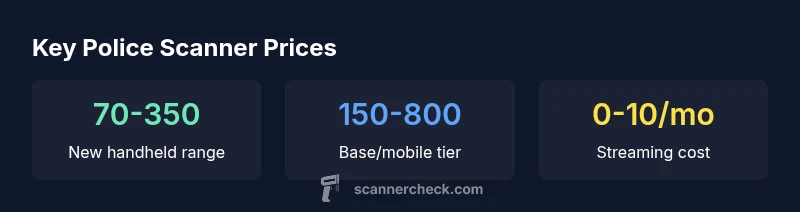
Prices for police scanners vary widely. A typical new handheld model starts around $70 and can rise to $350, depending on digital trunking, frequency range, and brand. Professional-grade base stations or multi-scanner systems usually start around $500 and can exceed $1,000. Used or refurbished units may cost less, and streaming alternatives offer cheaper options. This guide summarizes current ranges based on Scanner Check Analysis, 2026.
Price landscape: what affects the sticker price
If you're asking how much is a police scanner, the answer depends on technology, form factor, and coverage. A typical new handheld model starts around $70 and can rise to $350, with digital trunking support, broader frequency ranges, and reputable brands pushing costs higher. Professional-grade base stations or multi-scanner systems regularly begin around $500 and can exceed $1,000. Used or refurbished units often cost significantly less, and streaming alternatives offer lower-cost paths for general monitoring. This price spread mirrors 2026 market realities, according to Scanner Check Analysis. Many buyers underestimate the value of digital standards and support for real-time trunking in determining price. Consider also accessory bundles, programming software, and extended warranties, which can add to the out-the-door cost but improve long-term usability.
Key takeaway: Price is a function of feature depth, not just the hardware footprint.
Budget planning: mapping your spending and needs
A thoughtful budget begins with clear use-cases. For hobbyists who want occasional scanning, a basic handheld without digital trunking could suffice, often falling in the lower end of the price spectrum. For emergency or professional monitoring, plan for digital trunking, wider coverage, and durability—these factors significantly raise the upfront cost. Create a simple checklist: must-have features, nice-to-have extras, and a hard maximum you won’t exceed. According to Scanner Check, most buyers find the sweet spot between $100 and $300 for a strong balance of features and reliability. If your priorities are reliability and future-proofing, allocate a bit more to avoid immediate upgrades. When budgeting, don’t forget ongoing costs like programming services or optional streaming plans.
Tip: Compare models within the same feature tier to avoid paying for capabilities you won’t use.
New vs used: when to buy
New models provide the latest digital formats and warranty coverage, but they cost more. Used or refurbished units can deliver substantial savings, especially for entry-level or older but capable analog/digital hybrids. Buyer risk is the biggest trade-off: you might inherit wear, degraded batteries, or outdated firmware. If you choose used, verify battery health, confirm model support for your local frequencies, and request a test that includes basic scanning and a quick trunking check. Scanner Check emphasizes testing critical features before finalizing a used purchase, and to factor in potential replacement costs for batteries and antennas.
Recommendation: Start with a used unit in good condition only if it meets your essential feature set and frequency coverage, then budget for a service check or parts if needed.
Key features that drive cost
The most influential price drivers are digital trunking support (P25), SNMP/programmable software, broader frequency ranges (VHF/UHF), and build quality (metal chassis vs plastic). Handhelds with GPS tagging, encryption readiness, and multiple scan lists tend to be more expensive. Base stations or multi-unit kits, designed for professional use, include advanced loudspeakers, external antennas, and ruggedized housings, which collectively push prices higher. Accessories such as extra batteries, carrying cases, and programming cables also contribute to the total outlay. While you can pay less upfront for a bare-bones unit, you may miss long-term value if you frequently need reliable trunking decoding or extended operation away from power sources.
Smart pick: Prioritize models with future-proof digital support and a robust warranty to maximize lifespan and resale value.
Digital trunking vs analog: value for money
Digital trunking is the backbone of modern police/scanner systems, enabling clearer channels and better range. Analog-only units are cheaper but elusive for many agencies’ frequencies and privacy standards. If you primarily monitor non-encrypted, analog channels, an analog or hybrid model could be cost-effective. For wide-area monitoring, P25-capable devices deliver the most practical value, though they demand a higher price. When weighing options, compare the same feature set across brands to assess true value rather than price alone.
Bottom line: Digital trunking readiness adds cost, but it often pays off in coverage, accuracy, and future compatibility.
Shopping tips: avoid overspending and scams
- Define your essential features before browsing; a feature creep leads to unnecessary cost.
- Check return policies and warranty length; longer coverage reduces risk.
- Compare multiple brands for the same feature set to find the best value.
- Be wary of unexpectedly low prices that may indicate counterfeit or restricted devices.
- Consider certified refurbished options from reputable sellers to minimize risk while saving money.
Scanner Check’s practical guidance emphasizes using reputable sources and test-driven purchases to minimize regret. A deliberate approach helps you align cost with real-world value and regional use cases.
Streaming and alternatives: cheaper options to start
If your goal is casual monitoring or learning, streaming apps and public feeds offer a low-cost or no-cost entry point. These options can substitute for owning a physical scanner in some scenarios, particularly if you only need to listen to non-sensitive channels. However, streaming may not cover all frequencies or local channels, and some streams can require subscriptions. For many users, a hybrid approach—start with streaming for quick wins, then invest in a physical scanner as needs grow—provides a smart balance of cost and capability.
Conclusion: Streaming can reduce upfront cost, but it may not replace the value of a well-chosen physical scanner for reliable, comprehensive monitoring.
Typical price tiers for police scanners
| Model Type | Typical Price | Notes |
|---|---|---|
| Handheld analog | Under $100 | Budget entry-level option |
| Handheld digital | $70-$350 | Most common modern models |
| Base/mobile | $150-$800 | Professional-grade, higher cost |
Common Questions
What factors influence police scanner prices?
Prices are driven by features, brand, and technology. Key factors include digital trunking support, frequency range, and whether the unit is handheld or a base station. Accessories and programming tools can add to the total cost but improve long-term usability.
Prices depend on features, brand, and tech. Digital trunking and coverage areas raise the price but improve usefulness.
Are police scanners legal to own and use?
In many regions, it is legal to own a police scanner. Some jurisdictions restrict listening to encrypted channels or using the device to commit crimes. Always check local laws before purchasing or operating a scanner.
Owning is often legal, but listening to encrypted channels or misuse can be illegal.
Can I stay under $100?
Yes, basic analog handhelds or used units can be found under $100. Expect limited coverage, fewer features, and less reliable digital support. For many casual listeners, this is a viable starting point.
Yes, you can find basics under $100, but expect limits on features and coverage.
Are streaming services cheaper than buying a scanner?
Streaming can be cheaper upfront, often costing little to nothing per month. However, coverage varies, and some streams require ongoing fees. A physical scanner may still be the better option for complete, on-demand access in your area.
Streaming is cheaper upfront but may lack complete local coverage.
What should I look for in a used scanner?
Check battery health, ensure the model supports your local frequencies, and verify there’s no firmware lock. Request a quick test of basic scanning and trunking. If possible, buy from a reputable seller who offers a short return window.
Test battery and coverage, verify frequencies, and buy from a reputable seller.
“Price should be evaluated alongside reliability and regional coverage; a well-chosen scanner saves time and effort.”
Key Takeaways
- Define your use-case before shopping.
- Expect most new handhelds to cost between $70 and $350.
- Used options offer significant savings.
- Always compare features across price bands.