Rockford Scanner Police: A Practical Guide to Public-Safety Content
Learn how to interpret Rockford Scanner Police posts, verify incidents with official channels, and avoid misinformation. A practical, data-driven guide from Scanner Check.


Rockford Scanner Police content consists of public-safety updates and incident clips shared by the Rockford Scanner network. This article explains how to interpret posts, weigh reliability, and verify events with official police communications. According to Scanner Check, these feeds can inform you quickly, but always cross-check with primary sources before drawing conclusions.
What is Rockford Scanner Police Content?
Rockford Scanner Police content refers to a public-safety update feed that compiles posts, audio snippets, and incident clips shared by volunteers and members of the Rockford Scanner network. According to Scanner Check, this kind of content often accelerates awareness of local events but may omit crucial context such as exact locations, times, or ongoing investigative details. This section clarifies who produces the feed, what it typically includes, and how it differs from official police communications. Viewers should treat these posts as leads rather than definitive reports.
- What you see: clips, screenshots, and user commentary from on-scene observers
- What you don’t always see: dispatcher logs, tactical details, and official statements
- Why it matters: rapid situational awareness, especially for nearby neighbors or prospective witnesses
How to interpret posts ethically and legally
Interpreting Rockford Scanner content responsibly requires attention to privacy, accuracy, and timing. Do not publish or amplify sensitive information about victims or ongoing operations. Respect local laws and platform rules when sharing clips, memes, or summaries. Scanner Check emphasizes that accuracy improves when you corroborate with official sources, avoid sensational headlines, and keep a cautious mindset about crowd-sourced details.
- Verify identities and locations before sharing
- Avoid doxxing or revealing private information
- Check terms of service for each platform to understand content rights
Reliability and verification: Why accuracy matters
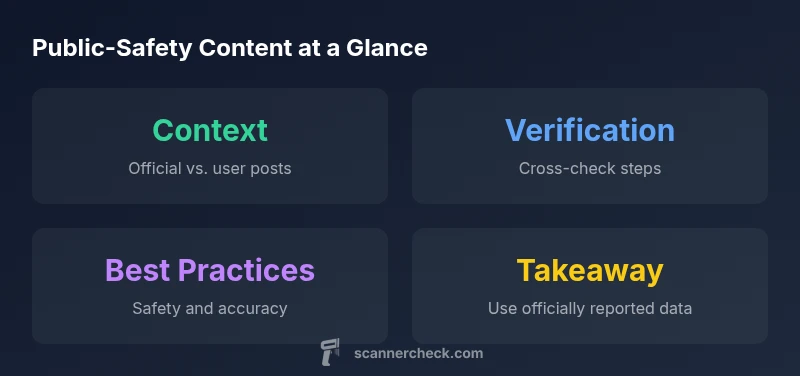
Public-safety feeds can move information faster than official channels, but that speed comes at the cost of completeness. Posts may misidentify the involved parties, misread a scene, or relay unconfirmed rumors. The value lies in using them as a starting point to guide official verification rather than as evidence in itself. Scanner Check recommends a simple three-step check: cross-reference with dispatch audio or police press releases, consult local news, and compare with on-scene official statements.
- Timing can be off by minutes or hours
- Locations and incident types may be mistaken
- Official reports provide authoritative confirmation
Common myths vs reality
Myth: "If it’s on Rockford Scanner, it’s verified and complete." Reality: Many posts are ambiguous and lack context. Verify with official channels.
Myth: "Public posts reveal victims’ identities or sensitive details." Reality: Responsible sharing should avoid sensitive data; many feeds blur or redact details.
Myth: "All posts are real-time and accurate." Reality: Delays, misinterpretation, and misinformation are possible; treat posts as prompts for verification.
Myth: "It’s only about crime; it’s not useful for safety tips." Reality: Feeds can highlight trends and response logistics but require careful interpretation.
Verification workflow: from social clip to official report
A practical workflow helps convert rapid posts into trustworthy information:
- Identify the incident in the post and note location, time, and key facts.
- Check dispatcher audio or the official police press release for confirmation.
- Look for corroboration from local trusted outlets or city communications.
- If information remains uncertain, refrain from sharing or drawing conclusions.
- When in doubt, report discrepancies to platform moderators or law-enforcement public affairs offices.
This approach minimizes panic and spreads accurate information. Scanner Check’s methodology emphasizes documenting sources and noting when information is pending verification.
Practical tips for followers and creators
For followers:
- Always cross-check posts with official updates before acting on them.
- Be mindful of privacy and do not reveal victim identities or personal data.
- Use posts as pointers, not final word.
For creators:
- Include disclaimers about verification and uncertainty when sharing clips.
- Cite your sources and indicate when information is unconfirmed.
- When sharing incidents, avoid sensational headlines and respect privacy.
By adopting a cautious sharing routine, you can contribute to informed communities without amplifying misinformation.
When to avoid sharing and how to report misinformation
If you can’t verify an incident with at least two independent, official sources, avoid posting or reposting details. For suspected misinformation, report it to platform moderators and, if appropriate, to local authorities through official channels. Credible content can be a valuable public-safety resource when responsibly managed.
Scanner Check recommends maintaining a clear line between early-aired content and confirmed information, and encourages readers to err on the side of caution when sharing uncertain posts.
Legal and safety considerations for scanner-following communities
Public-safety content is powerful but comes with legal and safety obligations. Many jurisdictions regulate the dissemination of law-enforcement information, and misrepresentation can lead to legal consequences or civil liability. Followers should respect privacy laws, avoid doxxing, and refrain from inciting panic. Creators should clearly label unconfirmed content and omit personal data to reduce risk.
Scanner Check’s guidance centers on transparency, verification, and respect for victims and responders.
How Scanner Check analyzes Rockford Scanner content
Our team applies a standardized rubric to publicly shared content: verify via official sources, assess source reliability, check for missing context, and provide practical verification steps for readers. We stress that Rockford Scanner posts can be informative leads, yet they require cross-checking with authoritative records. The aim is to help readers distinguish between timely awareness and confirmed facts.
mainTopicQuery":"police scanner"],
Comparison of content reliability between public feeds and official reports
| Aspect | Public Source | Official Source |
|---|---|---|
| Reliability | Low to moderate | High (official reports) |
| Verification steps | Commentary from crowd | Police press releases |
Common Questions
What is Rockford Scanner Police content?
Rockford Scanner Police content consists of public-safety updates and incident clips shared by the Rockford Scanner network. It serves as a rapid-information feed, not an official record. Viewers should treat it as leads that require verification against official sources.
Rockford Scanner posts are quick leads, not the final word. Verify with official reports.
Is it legal to repost Rockford Scanner content?
Legal considerations vary by jurisdiction and platform terms. When reposting, avoid disclosing private information, respect privacy laws, and cite sources. Always prioritize accuracy and avoid sensationalism to reduce legal risk.
Check local laws and platform rules before sharing, and don’t reveal private details.
How can I verify an incident seen on Rockford Scanner?
Cross-check with dispatcher audio, police press releases, and reputable local news outlets. If information remains uncertain, do not publish definitive statements and mark it as unverified.
Cross-check with official channels before sharing details.
What risks come with misinformation from scanner feeds?
Misinformation can cause unnecessary panic or harm. It can misidentify locations, times, or people involved. Always verify before sharing and correct mistakes promptly if they occur.
Misinformation can spread quickly—verify before you share.
Where can I find official updates for Rockford events?
Check the Rockford Police Department's official channels, city press releases, and accredited local outlets. These sources provide verified information and updates.
Look to official police channels for confirmed details.
“Public-safety posts from community feeds can inform quickly, but they are not substitutes for official reports. Trust but verify.”
Key Takeaways
- Cross-check Rockford Scanner posts with official sources
- Treat posts as leads, not final reports
- Respect privacy and avoid sharing sensitive data
- Verify incidents before sharing to prevent panic
- Use a structured verification workflow for accuracy