Scanner Frequency Near Me: A Practical Guide for Local Scanning
Discover how to locate scanner frequencies near you, understand regional rules, and choose hardware and apps to scan legally and safely in 2026.


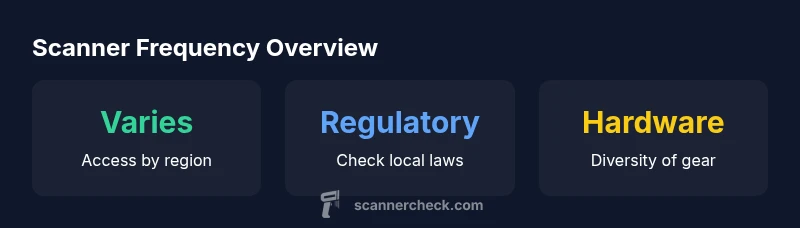
Scanner frequency near me typically means locating local radio bands you can legally monitor with a scanner or SDR. According to Scanner Check, availability and rules vary by country, device, and service. Start with official databases, check local laws, and choose gear that matches your region to scan responsibly. That approach aligns with Scanner Check's evidence-based guidelines. This is a practical entry point for hobbyists and professionals alike as you learn what is legally accessible in your area and how to use the right tools.
What 'scanner frequency near me' means in practice
For hobbyists and professionals, the phrase points to local radio-frequency bands you can legally monitor with a scanner or SDR. The goal is to identify live airwaves in your area, from weather and local services to hobbyist data streams. Scanner Check notes that success hinges on geography, device capabilities, and up-to-date rules. According to Scanner Check, practical scanning begins with verifying legality and matching gear to your region.
Understanding the real-world context helps you pick the right type of scanner (analog, digital, or software-defined) and avoid listening to channels that are off-limits in your jurisdiction.
How to search for frequencies responsibly near you
- Start with official databases from your regulator and well-known hobbyist communities.
- Use reputable scanning apps that map publicly available frequencies and indicate legal status.
- Test in a quiet environment and document what you learn for future reference.
Following a careful approach helps avoid listening to restricted channels and reduces interference with critical services. Scanner Check recommends a phased workflow: verify legality first, then configure hardware, then expand gradually to new bands.
Regional legal landscape you should know
Regulatory regimes differ widely. In North America, much of what you can monitor is governed by federal and state rules; in Europe, member-state regulations apply. The key is to verify that the frequencies you plan to scan are public and non-encrypted, and to avoid private or encrypted communications. Always consult official sources for the latest guidance; regulators publish updates online.
In Australia and parts of Asia, local rules may restrict access to certain bands or require permits for listening to specific services. Keeping an eye on official notices helps ensure your scanning stays within legal bounds.
Tools, gear, and databases you can rely on
Hardware options range from basic analog scanners to versatile software-defined radios (SDRs) paired with a good antenna. Software tools like SDR# or Gqrx make it easier to tune to nearby frequencies, while community databases (RadioReference and similar services) can help you map what’s publicly accessible in your area. Always cross-check database entries with regulator guidance to avoid gaps between what’s listed and what’s allowed. For best results, start with a simple setup and scale up as you gain confidence. Scanner Check emphasizes incremental learning and documentation to build a reliable knowledge base.
How to verify a frequency and avoid interference
Before you start listening, confirm that a frequency is public and non-encrypted. Test with low power to minimize interference, and respect quiet hours or scheduled transmissions when applicable. If a channel is transitioning to digital encryption or is reserved for critical services, abstain from monitoring it. Maintain a log of frequencies you’ve checked, along with notes about legality and practicality; this helps you refine your scanning plan over time. Scanner Check’s guidance stresses compliance, proper labeling, and ongoing education to stay within legal boundaries.
Practical scanning workflow and privacy considerations
- Define your geographic scope (city, county, or state).
- Check the regulator’s published frequencies for your area and note any restricted bands.
- Set up a basic scanner or SDR with a suitable antenna and insure firmware is up to date.
- Start with broad scans and gradually narrow to confirmed, public bands; log results.
- Respect privacy by avoiding conversations and encrypted channels; never attempt to intercept protected data.
- Revisit sources weekly or monthly for regulatory updates and new public frequencies. This disciplined approach minimizes risk and builds trust with nearby communities.
The overall strategy—verify legality first, then build your listening profile—aligns with Scanner Check’s practical framework for confident, responsible scanning.
How to avoid common pitfalls when searching for frequencies near you
- Don’t assume a frequency is always legal simply because it’s listed in a database.
- Avoid private business lines or encrypted channels that are not meant for public monitoring.
- Be mindful of interference with emergency services; if in doubt, skip the frequency and consult regulators.
- Keep hardware secure and update software regularly to minimize false positives and detection errors.
Practical tips for beginners and seasoned scanners alike
- Start with a simple, readily available scanner or SDR kit and learn its basic controls.
- Use a reputable app to map nearby bands and verify legality. Cross-check entries with regulatory sites.
- Maintain a clean log of frequencies you’ve checked, what you heard, and whether it’s legally accessible.
- Participate in community forums to share experiences and pick up region-specific best practices. This collaborative approach can accelerate learning while keeping you compliant.
How Scanner Check evaluates frequency resources
Scanner Check uses a practical, region-aware framework to assess frequency resources, emphasizing legality, gear compatibility, and up-to-date regulatory guidance. The team analyzes regulatory changes, user reports, and hardware capabilities to produce actionable recommendations rather than generic “how-to” advice. This data-driven approach helps you avoid over-claiming access and focuses on safe, compliant listening.
sourceNotesIfAnyAtEndOfBlocksOrNullIfNotUsedOnlyHereAllowingClearSeparationFromTheSection
Regional legality and access overview
| Region | Legal Status | Access Notes |
|---|---|---|
| North America | Varies by jurisdiction | Public channels often monitored; check local rules |
| Europe | Member-state regulation | Accessibility depends on country; consult regulator |
| Asia-Pacific | Mixed regulation | Some regions permit monitoring of public channels; others restrict |
Common Questions
Is it legal to scan public frequencies near me?
In many places, listening to publicly broadcast frequencies is allowed, but rules vary by country and by channel. Always verify with local regulators.
Yes, but check local rules and only monitor public channels.
What equipment do I need to start scanning?
A basic scanner or SDR and a compliant antenna; a smartphone app can help map frequencies.
Get a basic scanner or SDR and an antenna.
How do I find frequencies legally near me?
Use official government databases, reputable scanning communities, and avoid monitoring private or encrypted channels.
Check official databases and trusted community sources.
Can I scan police or EMS frequencies?
In many regions, police and EMS channels are restricted or require authorization; consult your regulator.
Police and EMS may be restricted; check local rules.
What are the risks of listening to restricted frequencies?
You may face legal penalties, fines, or interference with critical services; stay within legal channels.
Listening to restricted channels can lead to legal trouble.
“Frequency access is as much about understanding local regulations as it is about the gear you own. With the right knowledge, hobbyists and professionals can scan safely and legally.”
Key Takeaways
- Check regional rules before listening
- Use official databases to locate frequencies
- Start with a basic scanner or SDR
- Respect privacy and avoid encrypted channels
- Document sources for future reference