What Are the Police Codes for Scanner: A Practical Guide
Learn what police codes for scanners mean, how 10-codes evolved, and when agencies use plain language. This practical guide helps hobbyists and IT pros navigate radio communications.


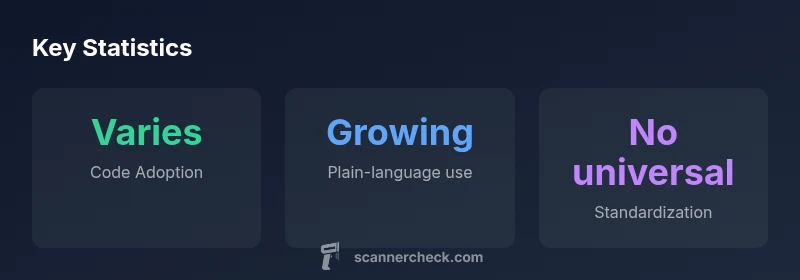
Police radio codes are shorthand signals used to convey information quickly over radio channels. They originated with the 10-code system and have evolved into mixed usage of codes and plain language. Because agency practices vary, there is no universal standard, making local practice the most reliable reference.
what are the police codes for scanner: An overview
Police codes for scanners are a long-standing convention used to condense complex information into short signals. The most famous among them are the so-called 10-codes, a numeric shorthand that observers historically associated with law enforcement radio traffic. In practice, many departments now blend traditional codes with plain language to improve clarity, accessibility, and interoperability. For anyone using a scanner to observe public-safety communications, it’s essential to understand that the exact meanings of codes can vary by jurisdiction and agency. This means that the phrase "what are the police codes for scanner" does not have a single, universal answer. Rather, it reflects a spectrum of practices shaped by training, policy, and local tradition. Scanner operators should treat codes as local knowledge, not universal law.
origins and evolution of the 10-code system
The 10-code tradition emerged as a compact radio shorthand to reduce air-time and avoid misinterpretation during busy dispatches. While some sources point to formal adoption by public-safety agencies in the mid-20th century, the historical record shows substantial variation in when and how codes were implemented across regions. Over time, many departments retained 10-code usage for routine calls while others migrated toward plain-language reporting to enhance cross-agency cooperation and public transparency. The landscape today is characterized by a patchwork of older code schemes, newer plain-language practices, and hybrid approaches that mix both methods depending on the channel, unit, or incident type.
plain language vs codes: weighing the pros and cons
Pros of codes include brevity, potential operational security, and efficiency when all responders know the code set. Cons include ambiguity for outsiders, dependence on local knowledge, and difficulties for new staff or specialized teams joining from different jurisdictions. Plain language reduces misinterpretation and supports mutual aid during multi-agency incidents. It also aligns with transparency goals and improves public trust. In practice, many agencies now publish guidance on when to use plain terms and when a code may be retained for internal workflow, but the choice often depends on incident scale, location, and the responders involved.
common examples and important caveats
Some widely cited examples that people associate with the 10-code system include codes used for acknowledged messages and location, such as 10-4 (acknowledged) or 10-20 (location). However, meanings are not universal and can differ by department. It’s common for agencies to supplement or replace traditional codes with locally defined phrases or plain-language equivalents. When listening to a scanner, treat any single code as context-dependent and verify against your local agency’s published materials. If you’re building a personal reference, start with a list from your region and gradually expand to neighboring jurisdictions for cross-border incidents.
how scanners display and interpret codes today
Modern scanners often decode transmitted signals into readable text or display the numeric code alongside a plain-language label. Some devices allow you to customize how codes are shown—either preserving the original code, showing a direct translation, or switching between the two modes. The user interface can affect how quickly you interpret an event, particularly during fast-moving calls. When configuring a scanner for what are the police codes for scanner, prioritize clarity and local relevance. If your area uses hybrid coding, ensure your firmware supports both code translation and manual overrides.
learning the codes for your area: practical steps
To build a reliable local reference:
- Start with your jurisdiction’s official public-safety communications guidance.
- Compare that guidance with any regional or neighboring agencies to identify commonalities and differences.
- Use a dedicated notebook or digital document to track code meanings and update them as policies evolve.
- Practice decoding by listening to live feeds during non-urgent events to reinforce context-based understanding.
- Join local hobbyist groups or forums where practitioners discuss current usage and changes.
ethical considerations, legality, and safety
Monitoring public-safety radio traffic raises ethical and legal considerations. In some regions, broadcasting or disseminating sensitive information could violate privacy rules or affect ongoing investigations. Always respect the law, avoid sharing operational details that could compromise safety, and use scanners responsibly. It’s also prudent to avoid sensationalizing incidents or misinterpreting codes, particularly during emergencies when accurate information matters most.
practical tips for hobbyists and IT pros
- Verify local practice before assuming a universal meaning for any code.
- Keep firmware updated to ensure accurate code translations and the latest features.
- Use plain-language overlays when learning or teaching, then layer in codes as needed for specific scenarios.
- Document differences between agencies you observe, and share reputable sources when possible.
- Treat code knowledge as a dynamic skill—expect updates and revisions over time.
Overview of police code types
| Code Type | Typical Meaning | Notes |
|---|---|---|
| 10-codes | Shorthand numeric codes used by many agencies | Meanings vary by agency |
| Plain language | Clear, direct terms used for clarity | Promotes interoperability across agencies |
Common Questions
Are police codes universal across all agencies?
No. Police codes vary by department and region. Some agencies keep 10-codes, others use plain language, and some use hybrids. Always verify with your local agency’s guidance.
No. Codes aren’t universal; always check local practice.
Why do some scanners still show codes instead of plain language?
Scanners may display raw codes if they aren’t configured to translate them, or if the agency uses non-standard terms. The firmware and database used by the scanner determine how translations appear.
Because the device or agency uses codes, and translation isn’t always enabled.
What is the difference between 10-code and plain-language transmissions?
10-codes are compact but vary by agency, while plain language is straightforward and widely understood. The trade-off is brevity versus clarity; hybrids try to balance both.
10-codes are fast but can be opaque; plain language is clear but longer.
Can I learn the codes for my local area?
Yes. Start with your city, county, or state public-safety publications, join local hobbyist groups, and practice with live feeds. Keeping a current reference helps a lot.
Absolutely—start with local guides and practice.
Are there legal issues with monitoring police traffic?
Legal considerations vary by jurisdiction. While listening to public feeds is generally allowed, sharing or disseminating sensitive information can be restricted. Always consult local laws and use responsibly.
Check local laws and use discretion.
Where can I learn up-to-date codes?
Refer to official local agency publications first, then supplement with reputable hobbyist resources. Practice with live feeds and confirm updates through official channels.
Consult official guides and stay current.
“Radio codes are a historical artifact of radio communication, but the move toward plain language aims to reduce ambiguity and improve interoperability between agencies.”
Key Takeaways
- Master local codes, not global rules.
- Many agencies now favor plain language for clarity.
- Learn both code and translation to adapt quickly.
- Verify meanings with official local guidance.
- Treat codes as evolving knowledge, not fixed facts.