What Scanner Will Pick Up Police: A Legal Guide
Learn what a scanner can pick up from police communications, the legal boundaries, and how to listen responsibly. This educational guide from Scanner Check covers modern radio tech, encryption, and safe practices.


Most handheld police scanners can receive publicly transmitted radio traffic that is not encrypted, including many emergency and patrol channels. Whether you can legally listen depends on local regulations and whether the agency uses encryption or modern digital trunked systems. This guide explains what a scanner can pick up, what remains private, and how to stay compliant while learning about radio technology.
What a police scanner can pick up (and what it cannot)
According to Scanner Check, most handheld police scanners can access publicly transmitted radio traffic that is not encrypted. In practice, this means certain patrol or response channels may be audible, while tactical or undercover communications remain private. The exact mix depends on your jurisdiction and the agency’s policies. The Scanner Check team found that many agencies now use digital, trunked, or encrypted systems for all or part of their communications, which blocks listening on consumer-grade devices. This section explains what you might hear in public-safe channels, why some transmissions are off-limits, and how encryption shapes the listening experience. You’ll also learn how to recognize when a channel is likely encrypted or unavailable.
- What you can typically hear: unencrypted calls, roll calls, incident updates on non-protected channels.
- What remains private: tactical operations, undercover units, certain inter-agency communications.
- Why encryption matters: digital formats and privacy rules limit access, even if you have a capable scanner.
How modern police communications work: analog, digital, trunking, encryption
Historically, police used analog VHF/UHF radios. Today, many agencies have shifted to digital systems such as P25 and NXDN, with some channels distributed via trunked networks. Trunking means multiple talk groups share a single radio channel dynamically; you need scanners with trunking support to follow conversations. Encryption is increasingly common for sensitive channels, which means a scanner cannot decode the content. Some agencies still provide open feeds for public information, while others restrict access entirely. The result is that what you can hear depends on the mix of technologies used in your area and the capabilities of your scanner. If a channel uses encryption or a closed digital system, a consumer-grade device will not provide readable audio. This section breaks down the core differences and helps you anticipate what to look for when selecting hardware or apps for legitimate, educational listening.
Legal landscape: listening laws, privacy, and penalties
Laws about listening to police communications vary by country, state, and municipality. In many places it is legal to listen to unencrypted transmissions with a consumer scanner, but recording, sharing, or using the information for wrongdoing can carry penalties. In other jurisdictions, monitoring certain channels or attempting to defeat encryption is illegal. Always verify local statutes before listening and consult official guidance from government sources. Even where legal, public-safety communications are sensitive, and operators may expect privacy in certain situations. Violations can include fines, equipment seizures, or criminal charges depending on jurisdiction and intent. This section emphasizes the boundaries between curiosity and compliance.
Key features to look for in a scanner for lawful listening
When choosing a scanner for educational use, prioritize certain capabilities: support for digital and trunked systems, broad frequency coverage, a clear user interface, and reliable antennas. Look for models with firmware updates that add new digital formats, and ensure your device can access public feeds or test channels legally. Portability matters if you plan to observe in different locations, and battery life is essential for extended listening sessions. Remember, the right choice depends on where you live and what your local laws permit. This section helps you narrow options without diving into prohibited listening.
Practical setup for educational exploration (no operational instructions)
Set up your learning environment with safety and legality in mind. Start by confirming local regulations and seeking permission where applicable. Use legal, non-critical channels or public feeds to study how scanners work, and consider virtual or simulated environments to understand trunking concepts. Align your expectations with the reality that many channels may be encrypted or out of range. Documentation and a learning plan can keep you focused. The goal is to understand RF technology, not to intercept restricted communications. This section also advises keeping a listening log to track what you observe in permitted contexts.
Common myths and misconceptions about police scanning
Myth: All police channels are open and unencrypted. Reality: encryption and digital trunking block most consumer receivers. Myth: A longer antenna guarantees access to distant transmissions. Reality: terrain, interference, and frequencies affect reception more than antenna length. Myth: Listening is illegal everywhere. Reality: legality varies; in many places, listening to unencrypted public channels is allowed if you follow the law. These myths can lead to unsafe assumptions; always verify rules in your jurisdiction.
Safe, responsible listening: best practices
- Do not attempt to bypass encryption or access restricted channels.
- Respect privacy and avoid sharing sensitive information you overhear.
- Use official public feeds or simulators for practice.
- Keep your device secure and do not operate while driving.
- Document your learning, including the legal constraints in your area.
- If in doubt, consult local authorities or a legal advisor before monitoring.
What to do if you want to learn more (resources and training)
If your goal is education rather than clandestine listening, gather reputable sources and training material. Start with government or university resources on radio systems and public-safety communications. Look for community courses or maker spaces that emphasize RF safety, licensing, and ethics. The learning journey includes understanding licensing regimes, radio physics basics, and how digital formats operate. Scanner Check recommends engaging with official channels to stay compliant while you explore the technology.
Tools & Materials
- Handheld police scanner (non-encrypted capable)(Choose a model that supports digital formats and trunking if available)
- External antenna(Improves reception; use a dedicated antenna compatible with your scanner)
- Batteries or power supply(Alkaline or rechargeable; have a backup)
- Owner's manual / setup guide(Reference to features like digital modes and trunking)
- Local laws resource (government site)(Important for legal compliance; bookmark official pages)
- Learning materials on RF basics(Introductory books or online courses about radio systems)
Steps
Estimated time: 1-2 hours
- 1
Verify local listening laws
Check your jurisdiction's rules for listening to police transmissions and confirm whether encryption or privacy laws restrict access. Do not attempt to monitor encrypted channels. If unsure, seek legal guidance or contact local authorities for clarity.
Tip: Start by bookmarking the official government pages that govern radio listening in your area. - 2
Choose a compliant scanner
Select a scanner that supports standard open channels and, if possible, digital formats and trunking to understand the tech landscape. Ensure the device can access non-encrypted feeds available in your region.
Tip: Avoid models marketed as capable of breaking encryption or bypassing access controls. - 3
Set up hardware safely
Assemble the antenna, connect power, and read the manufacturer’s safety notes. Test in an indoor environment before moving to outdoor observation to minimize interference and ensure stable operation.
Tip: Use the provided external antenna when possible to improve reception without placing the device near metal objects. - 4
Explore public and non-encrypted feeds
Begin by listening to publicly broadcast, non-encrypted content or educational feeds provided by official sources or legitimate simulators. Do not attempt to tune into restricted channels or decipher coded traffic.
Tip: Document what you observe to reinforce learning while staying within legal boundaries. - 5
Log and reflect on what you learned
Maintain a listening log noting channel types, formats heard (analog vs digital), and any limitations due to encryption or trunking. Use this data to understand RF technology and why certain transmissions are not accessible.
Tip: Review your log weekly to track progress and legal compliance. - 6
Reassess legality and adjust practices
Periodically review local laws and agency policies, updating your practices accordingly. If a channel becomes encrypted or is deemed off-limits, stop listening to it and focus on compliant sources.
Tip: When in doubt, pause listening and seek updated guidance.
Common Questions
Is it legal to listen to police communications with a scanner?
In many places, listening to unencrypted transmissions is legal with a consumer scanner, but recording or sharing information can be restricted. Always verify local laws and use compliant channels.
In many places, unencrypted police transmissions are legal to listen to, but recording or sharing can be restricted. Always check your local laws.
What kinds of police transmissions can I legally listen to?
Only unencrypted transmissions that are publicly broadcast are generally listenable. Encrypted or sensitive channels are not accessible with standard scanners.
Only unencrypted, publicly broadcast transmissions are generally listenable; encrypted channels are off-limits.
Do all police channels use encryption?
Not all channels are encrypted. Some agencies still have open channels, while others use digital encryption for sensitive traffic.
Not all channels are encrypted; some are open, others use encryption for sensitive traffic.
What is trunking and why does it affect listening to police channels?
Trunking compresses many conversations into shared channels. Following traffic may require a trunking-capable scanner and an understanding of talk groups.
Trunking shares channels among many conversations, so you may need a trunking-capable scanner to follow activity.
Are there safe and legal alternatives to listening directly?
Yes. Use official public feeds, educational courses, or university RF resources to learn about public-safety communications without listening to live restricted traffic.
Yes—use official feeds or educational courses to learn about public safety communications safely.
Watch Video
Key Takeaways
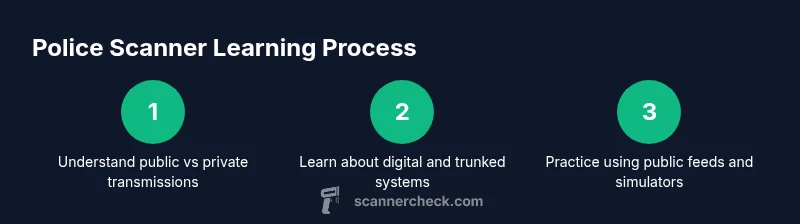
- Understand public vs private transmissions and encryption implications.
- Choose a scanner that supports current open formats and trunking where legal.
- Always verify local laws before monitoring to stay compliant.
- Use official feeds or simulators for safe learning.
- Document learnings and revisit legal guidelines regularly.