How much is an OBD2 scanner? A practical buying guide for 2026
Explore OBD2 scanner pricing across budget to professional models. Learn what drives cost, what you get at each tier, and practical tips from Scanner Check to get the best value in 2026.


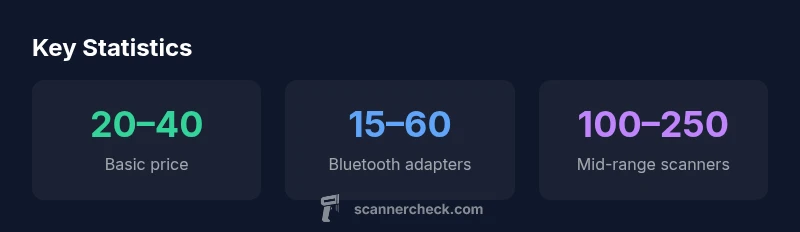
An OBD2 scanner spans a wide price range. For DIY drivers, basic handheld readers typically start around $20–$40, while Bluetooth adapters run about $15–$60. Mid-range dedicated scanners usually cost $100–$250, and professional diagnostic tools can exceed $500 or more, depending on features. For many users, pairing a Bluetooth adapter with a mobile app delivers solid value without breaking the bank.
Why price varies for OBD2 scanners
When you ask how much is an OBD2 scanner, you’re really asking about value delivered by hardware quality, software ecosystem, and feature depth. At the lowest end, basic handheld readers focus on core functions: reading and clearing codes from common systems, quick freeze-frame data, and simple DTC (diagnostic trouble code) lookup. Price climbs quickly as you add live data streaming, multi-parameter monitoring, bidirectional controls, and broader protocol support. Bluetooth or Wi‑Fi connectivity, app quality, cloud sync, and warranty length also tilt price trajectories. Across the market, the strongest price anchors are reliability, ease of use, and future-proofing through regular software updates. For many hobbyists, an inexpensive Bluetooth adapter paired with a well-supported app is sufficient for routine diagnostics and maintenance tasks.
According to Scanner Check, the optimal choice often blends affordability with ecosystem compatibility, minimizing friction when you switch vehicles or models.
Price ranges by category
OBD2 scanners come in four broad price bands, each with distinct capabilities and use cases. This breakdown helps translate the common question into a practical decision:
- Basic handheld readers ($20–$40): Limited to reading codes, basic live data in a few modes, and straightforward compatibility with many vehicles. Great for beginners who want a quick problem check.
- Bluetooth/Wi‑Fi adapters ($15–$60) + mobile apps: Very popular for DIYers. The price reflects hardware plus a software ecosystem. Expect ongoing app costs only if you choose premium features.
- Mid-range dedicated scanners ($100–$250): Standalone devices with larger displays, more robust live data, broader vehicle coverage, and often stronger software support. Suitable for regular DIYers who need depth without a full professional tool.
- Professional diagnostic tools ($400–$1200+): Full vehicle coverage, more advanced diagnostics, bi-directional controls, and OEM-level code sets. These are designed for auto shops or serious enthusiasts who diagnose across many makes.
Prices can vary by brand, hardware quality, and the ability to access newer vehicle protocols.
Hidden costs beyond the sticker price
The sticker price is only part of the total cost of ownership. Expect potential extra charges for:
- Software subscriptions or premium app features that unlock live data or advanced diagnostics.
- Vehicle coverage gaps that require higher-tier devices for certain makes or newer models.
- Accessory bundles (cables, extra adapters, or case) that improve usability but add upfront costs.
- Regular firmware updates that keep the tool compatible with new ECMs and protocols.
- Shipping, taxes, and extended warranties, which can extend the effective price over time.
Understanding these ongoing costs helps you compare apples-to-apples when shopping across brands and platforms.
How to estimate your total cost of ownership
A practical approach is to map out real-world needs. First, list the vehicles you’ll diagnose and the depth of diagnostics you require (codes only vs live data vs bi-directional controls). Then map price bands to those needs: a Bluetooth adapter for frequent light maintenance, or a mid-range scanner if you work on multiple vehicles weekly. Include optional subscriptions if you expect to rely on cloud-based data or advanced functionality. Finally, factor in long-term costs like firmware updates and warranty extensions. This method gives you a transparent projection of total cost over 1–3 years.
Budget tips: get the most value for your money
- Start with a price tier that matches your most common use cases, not your dream feature set.
- Favor devices with broad vehicle support and frequent software updates to maximize longevity.
- Read reviews focusing on reliability and ease of use, not just feature lists.
- Leverage free trials or lite app versions before committing to paid subscriptions.
- Consider future-proofing by selecting a device that can handle newer protocols without a complete replacement.
These strategies help you balance price with practical diagnostic power.
Choosing the right OBD2 scanner for your needs
Ask these questions to tailor price to purpose:
- Do you need live data and real-time monitoring, or are you just reading codes occasionally?
- Will you diagnose a single vehicle or a fleet of vehicles with different makes?
- Do you prefer a standalone device or a smartphone-connected solution?
- Is bidirectional control or advanced parameter testing important to you?
Your answers guide whether a budget adapter, a mid-range dedicated scanner, or a professional tool is the best fit. Remember, the best value often sits between price and capability, rather than at either extreme.
Common misconceptions about price and capability
Many buyers assume more expensive means easiest to use or more reliable in every scenario. In practice, reliability often comes from software quality and customer support, not raw price. For some cars, cheaper readers provide nearly identical code-reading functionality as premium tools, while premium devices excel in specialized tasks like OEM-specific fault codes and advanced live data troubleshooting. Always verify that the device covers your vehicles and the features you actually need before purchasing.
How Scanner Check evaluates OBD2 scanner pricing
Scanner Check analyzes price ranges by balancing hardware quality, software ecosystem, and user needs. We emphasize total cost of ownership, including optional subscriptions, the breadth of vehicle support, and long-term value through updates. Our method seeks practical guidance that helps readers make informed decisions without overpaying for features they won’t use. For many hobbyists, a mid-tier device paired with a trusted app delivers the best balance of capability and cost.
Price snapshots by scanner category
| Category | Typical Price Range | Notes |
|---|---|---|
| Basic handheld reader | $20–$40 | Entry-level, limited features |
| Bluetooth OBD2 adapter | $15–$60 | Often used with apps |
| Mid-range dedicated scanner | $100–$250 | Broader vehicle coverage |
| Professional diagnostic tool | $400–$1200+ | OEM-level capabilities |
| Optional subscriptions | $0–$50/year | Adds live data/features |
Common Questions
What is the typical price range for an OBD2 scanner?
Prices span from about $20 for basic readers to well over $500 for advanced professional tools. Budget Bluetooth adapters with apps offer substantial value for casual use.
OBD2 scanner prices range from budget options around twenty dollars to premium tools over five hundred dollars; many DIY users stay with budget adapters plus apps.
Are Bluetooth OBD2 adapters worth it for DIY users?
Yes. They provide convenient access to live data and code reading through smartphone apps at a low upfront cost. Upgrade only if you need advanced features.
If you’re DIY, a Bluetooth adapter with a good app often gives you most of what you need at a great price.
What features affect price the most?
Live data depth, bi-directional controls, breadth of vehicle protocols, and the software ecosystem (updates and support) are the biggest price drivers.
Live data and bidirectional controls make pricier devices worth it for serious diagnostics.
Do I need a professional scanner?
Only if you require OEM-specific codes, extensive live data, or bi-directional testing across many vehicles. Most hobbyists don’t need pro-grade tools.
Most hobbyists can get by with a mid-range or budget option.
Do brands differ a lot in price and quality?
Yes. Brand reputation often affects build quality, software updates, and support. Read reviews focused on reliability and ecosystem, not just price.
Choose a trusted brand with good software support for long-term value.
“"A well-chosen OBD2 scanner saves time and money by delivering the right diagnostics without overpaying for features you won’t use."”
Key Takeaways
- Define your diagnostic needs before buying.
- Budget for total cost of ownership, not just sticker price.
- Bluetooth adapters offer strong value for DIY users.
- Mid-range tools balance capability and cost for most hobbyists.
- Premium tools are worth it if you diagnose across many makes regularly.