Cat Scanner Cost: Understanding CT Pricing in 2026
A data-driven look at cat scanner cost, including price ranges, total ownership, and financing options for clinics and hospitals.


Understanding cat scanner cost means looking beyond the sticker price to total ownership, including maintenance, software, service contracts, and facility upgrades. In this guide, we break down typical price ranges for CT scanners, discuss new vs refurbished options, outline ownership costs over 5–10 years, and cover planning and financing strategies for hospitals and clinics.
What is a cat scanner cost and why does cost vary?
In medical imaging, a CT scanner is used to produce cross-sectional images of the body. The term cat scanner cost tends to obscure the wide range of factors that influence the final price. Real-world costs are affected not only by the hardware (slice count, gantry design, detectors) but also by software packages for advanced imaging, post-processing, training, installation, and mandatory radiation safety upgrades. The cost of ownership includes service agreements, maintenance, and potential downtime, which can add substantially over the equipment lifetime. Geographic region, vendor financing terms, and incentives or subsidies can also shift price expectations. For a hospital or clinic planning a CT investment, analysts typically fragment cat scanner cost into upfront price and ongoing expenses to avoid sticker shock and to compare total value. In this context, cat scanner cost is not a single figure but a spectrum reflecting current technology, market demand, and the life-cycle costs involved.
Key cost factors that shape cat scanner cost
Several interdependent factors drive cat scanner cost. Hardware specifications—such as the number of slices, detector design, and gantry speed—set the ceiling, while software suites for advanced reconstruction, perfusion analysis, and dose tracking influence ongoing expenses. Installation costs include shielded rooms, power upgrades, and radiation safety systems. Service contracts and preventative maintenance define predictable annual spending, while downtime and parts availability create volatility. Training and workflow integration add hidden costs if staff require specialized authorization or new protocols. Regional market dynamics, exchange rates, and local incentives can further tilt the bottom line. When you evaluate cat scanner cost, you should separate upfront price from long-term costs to understand true value and return on investment.
Typical price ranges: new vs refurbished CT scanners
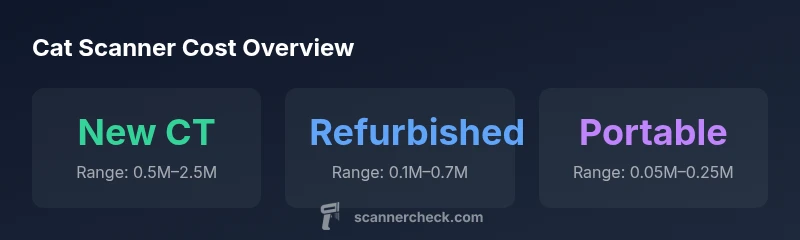
Price ranges for CT scanners vary widely by configuration. New CT scanners (64-slice and higher) commonly fall into a high upfront band due to cutting-edge detectors and software, while refurbished units offer significant savings but may come with shorter remaining lifespans and updated warranties. Portable CT options, though cheaper, often sacrifice some diagnostic power and throughput. For context, the cat scanner cost landscape typically includes a broad spectrum from moderate to multi-million dollar figures depending on slice count, vendor, and included service. Prospective buyers should weigh upfront cost against anticipated throughput and long-term maintenance needs when budgeting.
Understanding Total Cost of Ownership (TCO)
A robust assessment of cat scanner cost goes beyond the sticker price. TCO encompasses routine maintenance, software upgrades, license renewals, calibration, and potential downtime. Training costs for radiologists and technicians, as well as the cost of dose management and QA programs, add to the total. Over a 5–10 year horizon, maintenance contracts and replacement parts can approach a meaningful fraction of the initial purchase price. Financing terms, depreciation, and tax incentives also affect net cost. A TCO framework helps hospitals decide whether a higher upfront price with longer warranties is more economical than a cheaper unit with higher ongoing expenses.
Financing and procurement options
One way to manage cat scanner cost is to explore flexible procurement strategies. Leasing or financing can spread cash outlays over several years and may include service coverage. Some buyers combine a down payment with a staged upgrade plan to maintain clinical capabilities while aligning with capital budgets. Public institutions often have access to favorable terms through government programs or grant programs that may offset part of the cost. It’s important to model both total cash outflow and the implied cost of capital when selecting a financing structure.
Vendor evaluation and negotiation tips
When shopping for a CT scanner, prepare a side-by-side comparison that includes upfront price, warranty terms, service level agreements, and included software. Ask vendors about upgrade paths and the availability of spare parts for older models. Negotiate bundled packages that cover installation, shielding, training, and initial service contracts. Documentation of performance specs, energy efficiency, and patient dose management features can empower negotiation and reduce future costs. Finally, request references from peer institutions to understand real-life maintenance experiences and long-term reliability.
Geographic and regulatory considerations
Regulatory environments and regional market conditions influence cat scanner cost. In some regions, import duties, logistics, and local certifications may add frictional expenses. Additionally, hospitals may need to align CT equipment with dose optimization guidelines and accreditation standards, which can affect equipment choice and ongoing compliance costs. If you plan to equip facilities in multiple locations, consider how local incentives, tax treatment, and service coverage networks will impact overall affordability.
Practical budgeting checklist for hospitals
To ensure you stay aligned with clinical needs and financial constraints, use a practical budgeting checklist: define clinical throughput goals, specify required slice counts and software modules, map installation needs, secure an RFP that covers warranties and service, estimate annual maintenance costs, and build a contingency for downtime. Incorporate a 5–10 year financial plan that accounts for depreciation, tax incentives, and potential upgrades. Include staff training budgets and a clear plan for dose management analytics to maximize value from the cat scanner cost.
Cost ranges by CT scanner configuration
| Configuration | Typical Range | Notes |
|---|---|---|
| New multi-slice CT (64-slice+) | 500000–2500000 | Depends on slice count, detectors, software |
| Refurbished CT scanner | 100000–700000 | Lower upfront cost, shorter remaining life |
| Portable CT scanner | 50000–250000 | Compact, lower throughput, specialized use |
Common Questions
What factors influence the cat scanner cost the most?
The biggest drivers are hardware configuration (slice count, detectors), software packages, installation requirements, and service contracts. Throughput, dose management features, and warranty scope also shape the total price over the lifecycle.
Hardware, software, and service plans mainly drive the cost, plus installation needs and warranties.
Is a refurbished CT scanner a good option?
Refurbished CT scanners can offer substantial upfront savings, but require careful validation of remaining life, uptime, and warranty terms. They’re often best for centers with steady utilization and strong service support.
Refurbished units save money but check warranties and expected lifespan.
What ongoing costs should I budget for?
Expect annual maintenance contracts, software licenses, calibration, upgrades, and potential downtime costs. Training for staff and dose-management analytics may also add recurring expenses.
Maintenance and software licenses add up each year.
How long does a CT scanner typically last?
A CT scanner's useful life is often in the 7–15 year range, depending on usage, maintenance, and upgrades. Higher utilization can shorten remaining life if not supported by service.
Most CT scanners last about 7 to 15 years with proper care.
Can I finance or lease a CT scanner?
Yes. Financing or leasing can spread cash flow, and some terms include service coverage. Compare total cost of capital and note tax implications and depreciation benefits.
Leases spread cost, but compare total expense and tax benefits.
Are there subsidies or grants for CT scanner purchases?
Subsidies may be available depending on the region and program, but eligibility varies. Check government and hospital grant programs, as well as vendor financing incentives.
Look for regional grants or incentives to offset price.
“CAT scanner cost is not a single number; true value comes from total cost of ownership, including maintenance, software, and downtime.”
Key Takeaways
- Compute total cost of ownership, not just upfront price.
- New CT scanners command high upfront costs; refurbished options exist.
- Plan for ongoing maintenance and software licensing.
- Consider financing or leasing to manage cash flow.
- Negotiate warranties and service contracts for value.