How Much Does a CT Scanner Machine Cost? A Practical Guide
Explore the price landscape of CT scanners, including new vs refurbished costs, installation, and maintenance. This guide helps clinics plan finances with realistic ranges and total cost of ownership.


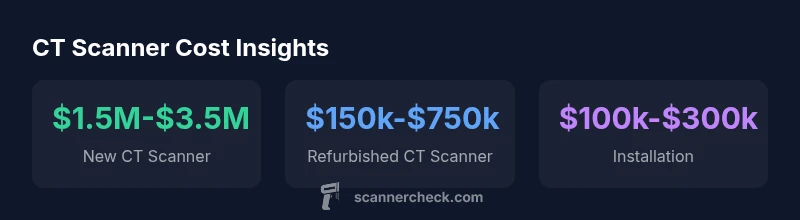
The price of a CT scanner machine varies widely, but a typical new unit falls in the range of about $1.5 million to $3.5 million, depending on detector rows, gantry speed, and software. Refurbished units can cost far less, roughly $150,000 to $750,000, with installation and integration adding further costs.
Understanding the CT scanner price landscape
The cost of a CT scanner machine is a major consideration for hospitals, imaging centers, and large clinics. While a single number might attract attention, the price is driven by multiple technical factors and procurement options. According to Scanner Check, buyers should frame the question in terms of total cost of ownership rather than bare sticker price. The CT scanner market includes a wide range of configurations from entry-level 16-slice models to high-end 256-slice systems, and each tier brings different capital outlays and ongoing costs. In practice, the sticker price is just the start: installation, room modifications, service contracts, and software upgrades can add substantially to the final figure. When planning, consider utilization patterns—throughput per day, average patient studies, and downtime costs—because those operational metrics determine the value you extract from the investment. This article focuses on how to interpret ct scanner cost figures and translate them into a credible procurement plan.
Key takeaway: the headline price is only part of the equation; successful budgeting requires modeling the full lifecycle costs and clinical value over time.
What drives the sticker price of a CT scanner
Several levers push the cost of a CT scanner machine upward or downward. Detector rows (e.g., 16, 64, 128, 256) and gantry speed significantly influence image quality and throughput. Higher-end software for iterative reconstruction and AI-assisted imaging adds value but increases price. The choice of brand and the vendor’s service network matters, as does the complexity of installation, including shielding, electrical upgrades, and space reconfiguration. Finally, maintenance contracts, warranty extensions, and training for staff all contribute to total expenditure. As a result, two scanners with similar raw hardware may diverge by hundreds of thousands of dollars once software, service, and installation are factored in. For cost-conscious buyers, it’s essential to request a full bill of materials and a lifecycle cost estimate rather than accepting the headline price alone.
Tip: Ask vendors for a fully itemized quote that separates hardware, software, installation, and ongoing service.
New vs refurbished: price ranges and value
New CT scanners come with the latest detectors, software, and manufacturer support but command premium pricing. Refurbished units can offer substantial savings, particularly for smaller facilities or loyal sites, but they often come with shorter warranties and older software features. When evaluating refurbished options, verify the upgrade paths, remaining service terms, and refurbishment quality certificates. The long-term value depends on uptime, diagnostic capabilities, and compatibility with your PACS and RIS systems. In many cases, refurbished machines paired with strong service agreements can meet clinical needs at a fraction of the cost of new equipment. This section helps you weigh clinical risk against cost savings and determine if a refurbished path is appropriate for your program.
Note: Total cost of ownership remains the guiding metric when deciding between new and refurbished.
How configuration affects cost (detector rows, software, and uptime)
Configuration is a major determinant of both upfront price and ongoing costs. A 16-slice unit is significantly cheaper than a 256-slice system, but the latter offers faster throughput and better image quality for complex exams. Software packages—advanced iterative reconstruction, AI-based dose optimization, 3D calibration, and post-processing tools—can add substantial value but raise the price. Gantry design, patient table load capacity, and uptime guarantees also influence cost. Facilities should model expected throughput (patients per day) and uptime targets to ensure the selected configuration delivers clinically meaningful improvements without overinvesting. Overall, the ct scanner cost reflects a balance between clinical needs, patient volume, and long-term reliability.
Ancillary costs to consider: installation, shielding, and integration
Beyond the hardware price, installation and site readiness can add a sizable chunk to the total ct scanner cost. This includes shielding, room size modifications, electrical and HVAC upgrades, scanner-room validations, and integration with PACS/RIS systems. Training staff, commissioning the system, and setting up quality assurance programs also contribute. In many cases, procurement teams underestimate the time required for commissioning, leading to delays and budget overruns. A precise cost estimate should include a project plan with timelines, risk allowances, and contingency reserves to cover unforeseen site work.
Financing options and total cost of ownership
Financing CT scanner cost often combines capital expenditure with operating expenses through service contracts and software subscriptions. Leasing, finance leases, or vendor financing can spread the cost over several years, improving cash flow. Be mindful of residual values, end-of-lease options, and the impact on depreciation for tax purposes. The total cost of ownership should factor in annual maintenance, software upgrade cycles, potential downtime, and the cost of downtime-related workflow inefficiencies. Early involvement of a financial advisor and a cost-model that includes utilization and downtime scenarios can help decision-makers select the most cost-effective path.
Negotiation strategies and procurement planning
When negotiating, request a detailed, apples-to-apples quote that breaks out hardware, software, installation, training, warranties, and service. Seek multiple quotes to benchmark pricing and explore bundled offers that include discounted software upgrades or extended warranties. Consider a staged procurement plan where you purchase core hardware first, with optional software modules added later as clinical demand grows. Build a risk-adjusted budget that accounts for potential delays, regulatory requirements, and facility upgrades. The goal is to align the ct scanner cost with clinical needs, throughput targets, and uptime expectations while maintaining fiscal discipline.
Regional variations and vendor landscape
Prices for CT scanners vary by region due to labor, regulatory requirements, and currency effects. In some markets, local service networks enable faster installation and shorter downtimes, which can reduce operational costs and improve value. The vendor landscape also impacts price, with major manufacturers offering different financing terms and upgrade pathways. For buyers, it’s essential to factor in regional service coverage, lead times for parts, and the availability of qualified technicians when estimating total ct scanner cost.
Case studies: clinics, community hospitals, teaching hospitals
A small community clinic may opt for a refurbished 64-slice CT with a modest service contract, targeting annual scan volumes in the low tens of thousands. A regional hospital might invest in a new 128- or 256-slice system with comprehensive software and a premium maintenance plan to support high-throughput clinics. A teaching hospital could pursue a high-end model with advanced AI-based reconstruction and research licenses, accepting longer procurement cycles but higher clinical impact. Across these scenarios, the common thread is that the initial sticker price is only one piece of a larger financial puzzle; success depends on matching capabilities to patient demand and ensuring reliable uptime.
Structured cost ranges for CT scanner investments
| Category | Estimated Cost Range (new) | Notes |
|---|---|---|
| CT Scanner (new) | $1.5M - $3.5M | Depends on detector rows and software |
| CT Scanner (refurbished) | $150k - $750k | Older units with variable warranties |
| Installation & Site Prep | $100k - $300k | Shielding, electrical, room layout |
| Annual Maintenance/Service | $50k - $250k | Contract coverage varies by vendor |
Common Questions
What factors most influence the cost of a CT scanner?
The cost is driven by detector rows, gantry speed, software packages, brand/service network, installation complexity, and ongoing maintenance. Upgrades and training add to the total.
Main factors are detector rows, speed, software, and service; installation and training also matter.
Is it cheaper to buy a used CT scanner or lease equipment?
Used or refurbished units can lower upfront costs but may come with shorter warranties and fewer financing options. Leasing spreads payments but can increase total cost over time depending on terms.
Used units save upfront, leasing spreads payments but may cost more overall.
Do installation costs vary by facility?
Yes. Site shielding, electrical and HVAC upgrades, room size, and PACS/RIS integration affect installation costs and timelines.
Facility needs and integrations drive installation costs.
What is typically included in maintenance contracts?
Contracts usually cover periodic servicing, parts, software updates, and emergency support. The level of coverage and response times vary by vendor.
Maintenance usually includes service, parts, and updates; terms vary.
How long does it take to recoup CT scanner investment?
Payback depends on throughput, reimbursement rates, and downtime costs. A detailed cost model should project cash flow across the scanner’s lifecycle.
Payback depends on usage and reimbursement; model cash flow.
Are there financing options available for CT scanners?
Yes. Options include capital financing, leases, and vendor-backed financing. Each option has implications for cash flow and tax treatment.
Financing helps manage upfront costs; terms vary.
“Budgeting for a CT scanner isn’t just about the upfront price. The real value comes from uptime, service support, and software longevity.”
Key Takeaways
- Plan for total cost of ownership, not just sticker price
- New vs refurbished offers meaningful savings with trade-offs
- Factor in installation, shielding, and software upgrades
- Maintenance contracts are critical to uptime
- Budget for lifecycle costs early in procurement