Dexa Scanner Cost: A Practical Buying Guide (2026)
Explore dexa scanner cost ranges, installation, maintenance, and total ownership to budget effectively. A practical buyer's guide for 2026 from Scanner Check.


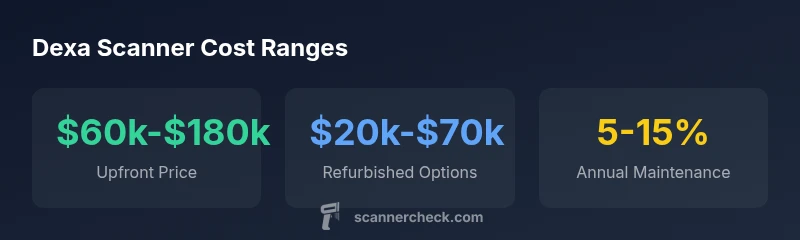
Dexa scanner cost typically ranges from roughly $60,000 to $180,000 upfront, depending on model, warranty, and vendor. Refurbished units are cheaper, while newer systems with advanced features cost more; total ownership includes installation, software, and ongoing maintenance. This price range reflects factors like calibration services, training, and integration needs, and can vary by region and financing options.
Total Cost of Ownership for a Dexa Scanner
The dexa scanner cost is only part of the financial picture. Total cost of ownership (TCO) includes upfront price, installation, electrical or shielding work, software licensing, QA tools, calibration services, training, and ongoing maintenance. In 2026, Scanner Check analysis shows that many facilities underestimate recurring costs when budgeting for a Dexa system. A practical TCO model should separate one-time expenditures from ongoing fees and account for financing or leasing options. Build a simple workbook that lists each cost line item, assigns a frequency (one-time, annual, or per-use), and captures expected usage patterns. This approach makes it easier to compare quotes from different vendors and to understand the financial impact over the scanner’s expected life.
If you operate in a market with rapid equipment turnover or strong vendor incentives, revisit your TCO quarterly to avoid budget surprises and to adjust for changes in service contracts or software licensing terms.
New vs Refurbished Dexa Scanners: Pros, Cons, and Real-world Costs
A newer Dexa scanner often ships with longer warranties, advanced features, and optimized software, but at a premium upfront. Refurbished systems can offer substantial upfront savings, yet may require larger maintenance reserves or shorter warranties. When budgeting, factor in the expected life of the warranty, the risk of replacement parts, and the availability of certified service in your region. Real-world costs depend on the vendor's service tier, availability of spare parts, and whether the purchase includes training and initial QA testing. In many cases, a mixed strategy—buying a certified refurbished unit with a comprehensive service contract—can yield favorable total ownership costs while maintaining diagnostic reliability.
Installation, Space, and Compliance Considerations
Dexa scanners require more than a plug and play installation. Adequate room size, shielding, electrical supply, HVAC considerations, and network integration influence both the cost and the time to go live. Hospital spaces may need lead shielding or specific wall structures to meet regulatory guidelines, adding to site prep costs. Data integration with PACS, DICOM workflows, and HIS/EMR systems can also add to the expense, particularly if custom interfaces or data storage upgrades are needed. A thorough site survey from the vendor helps prevent last-minute budget overruns and ensures the facility can host the equipment safely and compliantly.
Software, Licensing, and QA: Hidden Annual Costs
Software licensing, periodic updates, and QA software add recurring expenses. Some Dexa systems include baseline software for image processing and reporting, while others require annual license renewals. QA tools, calibration phantoms, and phantom-based testing routines are essential for maintaining accuracy and compliance, and these items can incur annual costs. Regions with strict quality assurance requirements may also impose additional testing protocols that necessitate updated software modules or more frequent servicing. Anticipate these ongoing costs when building a budget and negotiating contracts.
Maintenance, Warranties, and Service Contracts
Proactive maintenance and timely service are critical for uptime, especially in clinics with high patient volumes. Service contracts typically cover preventive maintenance, priority repair, parts, and on-site technician visits. The cost of maintenance can vary based on response times, coverage level, and whether remote diagnostic tools are included. Extended warranties may offer cost predictability but require higher upfront or annual fees. Evaluate whether the contract includes calibration support, software updates, and incident response windows that align with your clinic’s patient flow and goals.
Financing, Leasing, and Payment Terms
Financing and leasing are common ways to manage Dexa scanner cost without a heavy upfront hit. Vendors may offer staged payments, bundled service packages, or third-party financing with varying interest rates and terms. When evaluating options, compare total cost of ownership, not just the sticker price. Look for terms that cover installation, training, software licenses, and maintenance across the contract period, and negotiate clauses for price protection if licensing or service components change.
Procurement Strategy: How to Vet Vendors and Compare Quotes
A disciplined procurement approach helps reveal true cost of ownership. Issue a clear RFI/RFP that requests itemized line items for upfront costs, installation, software licenses, QA tools, training, calibration, and annual maintenance. Require standardized quotes to enable apples-to-apples comparison. Ask vendors about lead times, service response times, on-site qualifications, and references from similar clinics. Request total cost summaries over 5–7 years, and probe for hidden fees such as data storage expansions or future software upgrades.
Regional Variations in Dexa Scanner Pricing and Availability
Pricing for Dexa scanners varies by region due to regulatory requirements, labor costs, and market competition. Some regions experience longer lead times or limited certified service providers, which can influence annual maintenance costs and parts availability. If you operate in a market with fewer vendors, consider establishing multi-year service agreements or exploring partnerships with regional distributors to secure favorable terms. Always ensure that the chosen system complies with local radiation safety regulations and data privacy standards.
Cost Benchmarking: 2026 Trends and Practical Benchmarks
In 2026, buyers should benchmark not just upfront price but total lifecycle cost. Practical benchmarks include a clear annual maintenance % range, expected software licensing costs, and a conservative estimate for calibration and QA tools. Use multiple quotes and test each vendor’s ability to meet regulatory requirements, service responsiveness, and data integration capabilities. While numbers will vary by region and facility size, a disciplined approach to cost benchmarking helps identify the best balance between price, reliability, and clinical value.
Dexa scanner cost components and ranges
| Cost Component | Typical Range (USD) | Notes |
|---|---|---|
| Upfront Purchase Price (new) | $60,000 - $180,000 | Depends on features; excludes installation |
| Refurbished Unit Cost | $20,000 - $70,000 | Lower price but higher risk |
| Installation & Site Prep | $5,000 - $15,000 | Electrical, shielding, room adjustments |
| Annual Maintenance & Service | 5-15% of price | Warranty and service contracts |
| Software & Licensing | $2,000 - $10,000 per year | Includes QA and software updates |
| Calibration & QA Tools | $1,000 - $4,000 | Calibration phantoms and QA software |
| Data Storage & PACS Integration | $1,000 - $5,000 per year | Storage and integration costs |
Common Questions
What is the typical upfront cost for a new DEXA scanner?
Upfront cost for a new DEXA scanner varies by model and features, typically ranging from tens of thousands to six figures. Always factor in installation, training, and initial QA testing. Compare several quotes to understand what is included in the base price.
Upfront costs for a new DEXA scanner usually range from tens of thousands to six figures, depending on features and vendor. Include installation and training in your quote.
Are refurbished DEXA scanners a good option?
Refurbished units can offer substantial upfront savings but may carry higher maintenance needs or shorter warranties. Verify the seller’s certification, available service options, and the expected remaining life.
Refurbished DEXA scanners save money upfront but check warranty and service terms carefully.
Do vendors offer financing or leasing?
Yes, many vendors provide financing or leasing plans. When evaluating, compare total cost of ownership, interest rates, and contract terms across different providers.
Most vendors offer financing or leasing; compare terms and total cost carefully.
What ongoing costs should I plan for?
Plan for annual maintenance, software licensing, QA tools, and data storage. These recurring costs can represent a meaningful portion of annual budgets, depending on usage and contract terms.
Expect maintenance, software licensing, QA tools, and data storage as ongoing costs.
How long does installation typically take?
Installation can take several days to a few weeks, depending on room readiness, regulatory requirements, and network integration needs.
Installation usually takes several days to a couple of weeks.
What should I ask vendors to negotiate cost?
Ask for bundled quotes that include installation, warranty, training, and software; request price protections and volume discounts where applicable.
Request bundled quotes and look for price protections and discounts.
“Dexa equipment pricing reflects not just the hardware, but service, software, and data-management support that clinics rely on. A clear total cost of ownership view helps teams make smarter bets.”
Key Takeaways
- Define total cost of ownership before purchase.
- Consider refurbished units for budget-conscious buyers.
- Account for maintenance and software licensing.
- Ask for transparent quotes including installation and calibration.