Does a MRI Scan Cause Fatigue? Understanding Post-Scan Tiredness
Explore whether MRI scans cause fatigue, why it happens, and practical tips to stay comfortable during and after MRI procedures. Insights from Scanner Check Analysis, 2026.


Most MRI scans do not cause lasting tiredness. Fatigue, if it occurs, is usually temporary and tied to anxiety, staying still in a loud, confined tube, or the duration of the exam. In some cases, contrast injections or pre-scan anxiety can contribute to feeling worn out for a few hours after. If fatigue lingers, consult your clinician.
How MRI Works and Why Fatigue Happens
MRI uses strong magnetic fields and radio waves to produce detailed images. For many people, the experience is nonhazardous and short, but several factors can make some patients feel tired afterward. According to Scanner Check, the question 'does mri scan make you tired' is best answered by considering the scan experience rather than the imaging itself. Fatigue after an MRI is typically not a sign of brain damage or persistent health issues; it more often reflects a temporary stress response to staying still in a loud, confined space. The key pathways are sensory overload (loud noises, cool room, felt claustrophobia), physical immobility (you must lie still for the duration), and cognitive load (focusing on breathing, following technician instructions).
Typical MRI Session: Duration, Noise, and Comfort
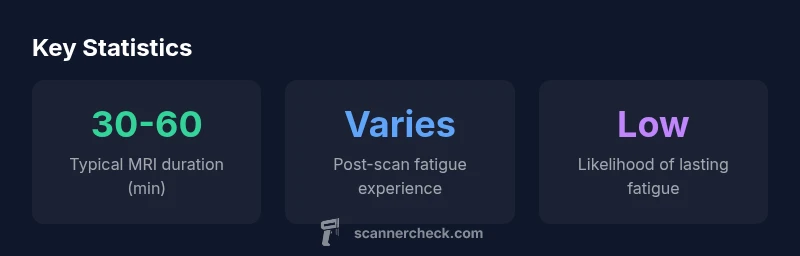
A standard MRI session can range from about 30 to 60 minutes, depending on the area being imaged and whether multiple sequences are required. The machine produces loud banging noises during the scan, which can feel startling if you’re not wearing ear protection. Comfort measures—such as padding, warm blankets, and the option to communicate with the technician—can reduce stress and the sense of fatigue. While MRI itself is safe for most people, the duration and environment often contribute more to tiredness than the imaging physics.
Anxiety, Immobility, and Post-Scan Tiredness
For many patients, fatigue after an MRI arises from anxiety, claustrophobia, or the mental effort of staying still and following precise instructions. Even short scans can feel exhausting if you’re nervous or fatigued beforehand. The body’s stress response releases cortisol and other mediators that can leave you feeling drained for a few hours post-scan. Importantly, this fatigue tends to fade as you rest and hydrate, rather than indicating any lasting harm. The degree of tiredness often correlates with your baseline anxiety levels and sleep quality the night before.
The Role of Contrast Agents and Prep in Fatigue
Contrast agents are used in some MRI scans to enhance image clarity. Most people tolerate contrast well, and fatigue is not a common direct side effect. However, a mild reaction (such as heat, nausea, or a headache) can contribute to a temporary feeling of tiredness. Pre-scan factors—like caffeine intake, sleep deprivation, or dehydration—can amplify fatigue, especially when combined with a long or complex exam. Discuss any known allergies or prior reactions with your radiology team.
Practical Tips to Reduce Fatigue During MRI
- Ask for shorter sequences or breaks if the facility offers them.
- Use high-quality ear protection or noise-reduction options provided by the clinic.
- Communicate fears or claustrophobia with the technologist; they can adjust positioning or pacing where possible.
- Focus on breathing, count, or listen to music if permitted.
- Ensure you are well-hydrated and have a light meal beforehand if advised by your clinician.
- If sleep-deprived, consider a restful night prior to the scan or discuss timing with your care team.
What to Do After an MRI If You Feel Fatigued
If fatigue persists beyond a few hours, engage in gentle activities and hydrate. Avoid driving or operating heavy machinery if you feel drowsy. If you have persistent fatigue, worsening dizziness, or confusion, seek medical advice promptly. Most post-MRI tiredness resolves with rest within a day.
Factors and experiences related to fatigue during MRI
| Factor | Typical Experience | Notes |
|---|---|---|
| Duration | 30-60 minutes | Most MRI sessions fall within this range |
| Noise level | Very loud | Use hearing protection; ask about quieter sequences if available |
| Contrast dye | Used in some exams | Check for allergies; monitor mild reactions |
| Fatigue post-scan | Variable | Usually resolves within hours with rest |
Common Questions
Does MRI cause fatigue?
Fatigue after MRI is usually temporary and influenced by anxiety, immobility, and the scan environment rather than the imaging itself. Most people feel fine after a short rest.
Most people don't stay tired after an MRI, but anxiety or lying still in a loud tube can make some people feel worn out for a few hours.
How long does fatigue last after an MRI?
For most people, any fatigue lasts only a few hours. If it persists longer, consult a clinician.
It usually goes away within a few hours; if it lasts, speak with your doctor.
Can contrast dye contribute to fatigue?
Contrast dye can cause mild reactions in some people, but fatigue is not a common direct side effect. Hydration and rest help manage mild symptoms.
Contrast can cause mild symptoms, but fatigue itself is uncommon and usually temporary.
What can I do to feel more comfortable during MRI?
Share anxiety with the tech, ask for padding, request breaks if possible, and use ear protection. Controlled breathing and pre-scan preparation help.
Tell the tech how you feel, use ear protection, and breathe slowly to stay calm.
Are there people who should avoid MRI if fatigue risk is high?
Claustrophobic individuals or those with significant anxiety may benefit from sedation or alternative imaging options after professional evaluation.
If you’re highly anxious, talk to your clinician about options like sedation or alternatives.
Is there a link between MRI and sleepiness afterwards?
There is no direct link; fatigue can be due to stress or sleep deprivation. Rest usually resolves it quickly.
No direct link to sleepiness—rest usually fixes it fast.
“Fatigue after an MRI is most often related to stress and the scanning environment rather than the imaging itself. Most patients recover quickly with rest.”
Key Takeaways
- Fatigue after MRI is usually temporary and linked to the scanning experience
- Anxiety, immobility, and loud noise contribute more than the imaging itself
- Preparation and comfort strategies can reduce post-scan tiredness
- Consult a clinician if fatigue persists beyond a few hours