How Much Does an MRI Scanner Cost? A Buyer’s Guide for 2026
A comprehensive look at MRI scanner pricing, including new vs. used options, maintenance, installation costs, and total cost of ownership for buyers in 2026.


The price of an MRI scanner is highly variable and hinges on field strength, software, and service packages. How much does an MRI scanner cost is not a single figure—it depends on model, configuration, installation needs, and ongoing maintenance. According to Scanner Check, most buyers should budget for total cost of ownership, not just the sticker price, and pursue formal quotes that itemize installation, warranties, and service plans.
What determines the price of an MRI scanner?
If you’re researching how much does an mri scanner cost, you quickly learn that price is driven by multiple, interrelated factors, from field strength to software options, installation, and ongoing service. In practice, the sticker price on a new MRI machine is only part of the total cost of ownership, which includes facility upgrades, maintenance, and operating costs. According to Scanner Check, understanding these drivers helps facilities of any size avoid sticker shock and make informed investment decisions. Factors such as bore size, gradient performance, coil configurations, and the sophistication of the imaging software influence the quote you receive. The vendor’s price is often contingent on whether you also purchase maintenance contracts, extended warranties, training, installation, and any necessary facility upgrades like shielding or electrical improvements. For buyers, the immediate question isn’t just the price tag, but the value delivered over the machine’s lifecycle.
Beyond the sticker price, procurement decisions often hinge on service levels, uptime guarantees, and the ability to upgrade software as new imaging protocols emerge. In 2026, buyers increasingly request transparent quotes that separate hardware, installation, and ongoing service so they can perform a credible total cost of ownership analysis. If you’re comparing vendors, insist on a site evaluation and a documented plan for regulatory compliance and safety testing. The result should be a clear, apples-to-apples comparison rather than an opaque bid with unclear exclusions.
The Scanner Check approach emphasizes disciplined financial planning: model the expected uptime, plan for consumables (like coils and filters), and price in potential downtime during system upgrades. Ultimately, price is only one dimension—reliability, service responsiveness, and ecosystem fit often determine long-term value more than the initial price alone.
New vs used MRI scanners: cost considerations
New MRI scanners carry the latest technology, software, and warranties, which typically commands a premium upfront. In contrast, used or refurbished units can substantially reduce upfront costs but may require more diligent due diligence on uptime, parts availability, and service history. The decision often hinges on the facility’s clinical demand, uptime requirements, and the total cost of ownership over the machine’s expected life. According to Scanner Check, buyers should weigh the risk-reward tradeoffs of refurbished systems, especially regarding warranty coverage, training needs, and potential downtime during retrofits. A careful evaluation of uptime metrics, prior maintenance records, and the supplier’s service network can mitigate some of the risks associated with secondhand equipment.
When considering refurbished options, sites commonly negotiate longer warranties, transitional service packages, and phased install schedules to minimize disruption. It’s also prudent to verify compatibility with existing IT infrastructure, data management workflows, and hospital compliance standards. Vendor ecosystems vary, and a robust service ecosystem can compensate for a higher upfront price with superior uptime and faster response times in critical clinical windows.
Price tiers by field strength and features
MRI scanners come in several field strengths, with 1.5T and 3T being the most common for clinical imaging. Higher field strengths typically enable faster scans and higher-resolution images, but they also carry higher price tags and more demanding installation requirements. Feature packages—such as advanced software for neuro, cardiac, or musculoskeletal imaging, specialized coils, and dose-management tools—can push the cost upward. For buyers, it’s essential to map clinical needs to hardware capabilities and to request modular quotes that clearly show what each feature adds to the price. The inclusion of modern coil sets, parallel imaging, and advanced reconstruction techniques can be decisive for throughput and diagnostic quality, but they also increase upfront and ongoing costs. In practice, facilities should assess not just the initial quote but the long-term value of upgrades and service commitments that align with evolving clinical protocols.
Installation, site preparation, and facility costs
Facility requirements and site preparation significantly influence MRI pricing. Shielded rooms, dedicated electrical supply, cooling and ventilation, and patient access design are not optional extras—they are prerequisites for safe, compliant operation. Installation labor, software integration, and quality assurance testing add to the financial picture. Budget planning should include architectural review, lead-time for shielding materials, and potential downtime during installation. Scanner Check’s guidance emphasizes engaging a qualified integration team early to scope the work and avoid costly change orders. If your facility lacks the required power or cooling capacity, the cost may rise sharply due to necessary infrastructure upgrades. Planning ahead reduces surprises and ensures the system meets regulatory and safety standards from day one.
Maintenance, warranties, and ongoing operating expenses
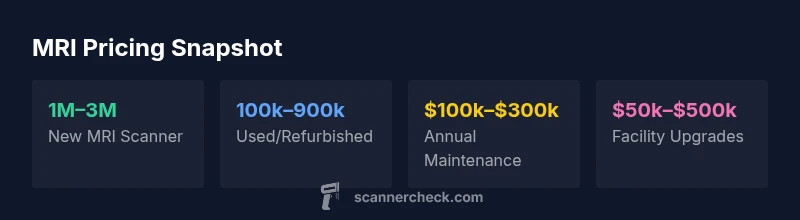
Post-sale costs often dwarf the initial purchase price. Standard service contracts cover preventive maintenance, software updates, and rapid response times, but the exact terms vary by vendor. Expect annual maintenance budgets in the six- to seven-figure range depending on coverage level, region, and machine age. Spare parts, coil replacements, and firmware upgrades can also drive costs up over the machine’s life. A robust maintenance plan improves uptime, which directly affects patient throughput and departmental efficiency. Consider staged maintenance commitments and negotiated response times to balance cost with diagnostic reliability. Regular calibration, software audits, and safety inspections are essential to sustaining performance and minimizing downtime.
Financing, leasing, and total cost of ownership
Financing options—purchase, loan, or operating lease—shape the total cost of ownership. Leases can reduce upfront cash needs but may increase total lifetime cost and impose use restrictions. When evaluating financing, incorporate all associated fees, interest, maintenance inclusions, and upgrade options. Scanner Check notes that institutions should compare multiple financing arrangements, focusing on the total cost over the life of the asset rather than the monthly payment alone. Financing can also affect depreciation benefits and tax planning, depending on local regulations. A thorough financial model should separate capital expenditure from operating expenses, and include a realistic scenario for downtime, maintenance, and potential upgrade cycles.
How buyers can estimate costs and compare quotes
A practical cost-estimation workflow begins with a formal requirements document outlining clinical volumes, scan types, and expected throughput. Request vendor quotes that itemize hardware, installation, training, warranties, and service levels. Include a site-visit assessment to capture room dimensions, shielding needs, electrical loads, and cooling requirements. When comparing quotes, normalize for uptime guarantees, response times, and escalation paths. Ask for reference sites and visit peers to validate vendor claims. Scanner Check emphasizes creating a side-by-side comparison workbook that shows initial price, annual maintenance, and estimated downtime. Don’t confuse a low upfront price with the best long-term value; the best deals deliver predictable performance and strong post-sale support.
Practical decision paths for budget-conscious buyers
Budget limits are common, and there are practical pathways to balance cost and clinical needs. Consider refurbished units with enhanced warranty packages, explore phased implementation, or negotiate bundled installations that include training and IT integration. Another option is to prioritize essential imaging capabilities first and defer optional software modules until clinical demand justifies them. Partnerships with distributors or consortia can yield better volume pricing, while financing or leasing can preserve capital for core operations. Regardless of path, align procurement with a written business case, including cost of downtime, staff training, and expected gains in patient throughput.
Next steps for buyers: turning numbers into a plan
With a rough price range and a clear clinical need, the next steps are concrete: assemble a cross-functional evaluation team, define acceptance criteria, and initiate formal quotes. Schedule site visits to confirm room feasibility and power/cooling readiness, and insist on a detailed installation timetable. Create a risk register that covers downtime, regulatory changes, and potential upgrades. Finally, engage legal and procurement teams early to review contracts for service levels, warranties, and any termination provisions. A disciplined approach—rooted in data, vendor transparency, and total cost of ownership—helps ensure the chosen MRI system fits both patient care goals and the facility’s long-term financial health.
Common MRI pricing tiers and notes
| Category | Typical Price Range (USD) | Notes |
|---|---|---|
| New MRI Scanner (3T) | Higher performance, longer lead time | |
| New MRI Scanner (1.5T) | Lower upfront, slower throughput | |
| Used/Refurbished MRI | Depends on age, history, and warranty |
Common Questions
What is the typical price range for a new MRI scanner?
Prices vary by model and configuration, but a new MRI scanner commonly falls within the high six- to seven-figure range depending on field strength and software packages. Always request a detailed quote that separates hardware, installation, and service.
New MRI scanners can be expensive, often in the six-figure to seven-figure range depending on features and field strength.
How much does maintenance cost annually?
Maintenance contracts typically range from six to seven figures per year, depending on coverage level, parts, and response times. Plans vary by vendor, so compare included services and expected downtime.
Maintenance often costs six to seven figures yearly, depending on coverage and service terms.
Are refurbished MRI machines a good option?
Refurbished MRI scanners can lower upfront costs but require careful evaluation of uptime history, warranty terms, and available service support. Verify the vendor’s certification and ask for a clear maintenance plan.
Refurbished machines can save money, but check uptime, warranty, and service networks.
What should be included in a vendor quote?
A solid quote should include hardware price, installation, commissioning, warranties, service levels, software licenses, training, and any required facility upgrades.
Make sure the quote separates price for hardware, installation, and service.
Is financing available for MRI scanners?
Yes. Vendors often offer purchase, loan, or lease options. Compare total cost of ownership across terms, and consider depreciation or tax implications.
You can finance or lease MRI equipment; compare total costs over time.
“MRI pricing is highly variable and depends on field strength, software, and service commitments. Buyers should request full quotes and consider total cost of ownership.”
Key Takeaways
- Know that MRI pricing is highly variable and driven by model, features, and service plans.
- Include total cost of ownership (installation, maintenance, downtime) in comparisons.
- Ask for formal, itemized quotes to compare hardware, software, and services.
- Consider refurbished units with solid warranties to reduce upfront costs.
- Plan for facility upgrades and IT integration when budgeting.