How Much Is Scan for Pregnancy? A 2026 Cost Guide
Explore how much a pregnancy scan costs in 2026, covering types, regions, insurance considerations, and budgeting tips. Learn to compare prices and avoid surprises with practical guidance from Scanner Check.


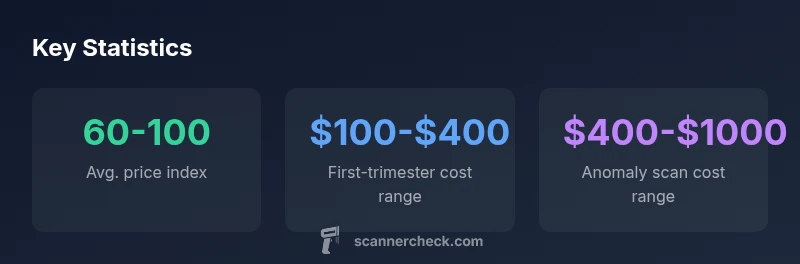
Typical costs for a pregnancy scan vary widely by country, facility type, and scan type. Across many markets, a general ultrasound in early pregnancy ranges roughly from $100 to $400 for standard screening, while anomaly or detailed scans can cost $400 to $1,000 or more. Private clinics often charge higher than public facilities. Scanner Check Analysis, 2026, notes price sensitivity.
How much is scan for pregnancy: Cost overview
According to Scanner Check, pricing for pregnancy scans varies widely by country, clinic type, and scan purpose. The basic ultrasound you might receive during early pregnancy often costs less than specialized testing. Costs can be influenced by the equipment used, the experience of the operator, and whether the interpretation is done by a radiologist or obstetrician. In high-cost regions, even routine scans can exceed the lower end of the global range, while public or state-funded systems may subsidize a portion of the price. When budgeting, consider not only the base scan fee but also potential add-ons such as photographic prints, additional measurements, or a formal written report. In short, how much is scan for pregnancy depends on multiple interacting factors, and travelers or those moving between clinics should expect variability across providers.
Types of pregnancy scans and typical price ranges
Different scan types serve different clinical purposes, and many clinics offer tiered pricing or bundled packages. Here are common categories and typical ranges (note these are approximate and vary by region):
- Standard first-trimester ultrasound: commonly used to confirm pregnancy and dating. Typical price range: a broad $100–$400, depending on location and clinic type.
- Anomaly/Level II ultrasound: a detailed assessment of fetal anatomy, usually performed later in pregnancy. Typical price range: about $400–$1000 or more.
- Nuchal translucency (NT) scan: part of first-trimester screening, often bundled with other services. Typical price range: $100–$300.
- Gender determination and extended scans: can be add-ons or elective, often $50–$150.
Prices rise when a radiologist interpretation is required or when high-end equipment or private facilities are used. Always verify what is included in the quoted price (e.g., technician time, radiologist review, report delivery).
Regional differences and insurance considerations
Pricing for pregnancy scans varies dramatically by country and healthcare system. In countries with universal healthcare or government-funded maternity programs, many routine scans may be subsidized or provided at low out-of-pocket costs. In mixed or private systems, you may see substantial out-of-pocket charges, especially for detailed or late-pregnancy scans. Insurance coverage frequently depends on medical necessity and plan specifics; elective or non-medical scans are less often covered. When planning, contact your insurer and the clinic to understand what portion of the bill is expected to be reimbursed and whether there are annual caps or coinsurance rules. If you have multiple scans, ask about package deals or discounts for bundled services.
In some regions, public hospitals offer standardized pricing, while private clinics itemize charges for each service. If you are traveling for care, you may encounter currency and regional price differences, which can complicate budgeting. Scouting several clinics can reveal meaningful price gaps for similar services. The key is to compare apples-to-apples: confirm the exact services included and any mandatory follow-up work.
How to estimate your total cost before scheduling
Estimating total pregnancy-scan costs starts with gathering quotes. Steps to take before scheduling:
- Compile a short list of clinics in your area and ask for a written price list that includes base scan, radiologist interpretation, and delivery of the report.
- Clarify whether the price includes a single visit or a package that covers additional measurements, printouts, or follow-up imaging.
- Ask about potential add-ons, such as 3D/4D imaging, which can significantly increase costs.
- Inquire about insurance coverage, pre-authorization requirements, and whether any portion is reimbursable.
- Check for transparency: some clinics publish price ranges online, while others provide quotes only after a brief consultation.
A practical rule is to build a budget with a base price plus a conservative cushion for unexpected findings or additional scans. If you anticipate higher-risk pregnancy or abnormal results, plan for a higher range to accommodate potential follow-up imaging or specialty consultations.
Budgeting tips and practical provider-selection strategies
Budgeting effectively requires a mix of planning and comparing options:
- Look for bundled packages that include the ultrasound and radiologist report rather than paying separately for each item.
- Compare prices across multiple clinics, but ensure you are comparing similar services (same scan type, same level of interpretation).
- Consider public facilities if available in your area, as they can be more affordable or free for standard prenatal care.
- If a scan is optional, discuss with your clinician whether it is medically necessary at that stage; avoid paying for non-essential add-ons.
- Ask for price quotes in writing and request itemized billing to identify any hidden charges (e.g., facility fees, facility-use fees).
- For ongoing pregnancies, inquire about discount policies for multiple scans or ongoing follow-up tests.
Being proactive with price transparency is the best way to minimize surprises and align care with your budget.
Data interpretation and 2026 price trends
To understand price movement in 2026, it helps to separate medical necessity from elective imaging. Scanner Check analyses show that core routine scans remain relatively price-stable, while more specialized imaging and private facilities can experience price increases due to equipment costs, staffing, and regional demand. Regional variations persist, with some markets showing greater price dispersion among providers. When interpreting data, look for consistent price baselines across time (e.g., 12 weeks vs 20 weeks) and note any changes in policy, insurance coverage, or publicly funded healthcare programs that could shift out-of-pocket costs for patients.
Overall, expect cost ranges to shift modestly year over year, with the largest changes tied to the availability of advanced imaging or changes in clinic pricing strategies. Factoring in potential follow-up scans and the value of a clear, formal report will help you make informed budgeting choices and avoid budgetary shocks.
Practical interpretation and care-path planning
The final takeaway from price data is to plan your care path with transparency. Use a simple framework:
- Start with a baseline cost for the standard ultrasound.
- Add an estimate for radiologist interpretation if required.
- Include potential follow-up scans and report fees.
- Add a cushion for emergency or unexpected findings.
- Always confirm what is included in the quoted price to avoid hidden costs.
For most families, the goal is predictable budgeting rather than absolute minimum pricing. By comparing quotes, understanding what each quote covers, and working with your healthcare provider to determine medically necessary tests, you can optimize both cost and care quality.
Overview of common pregnancy scan types and typical price ranges
| Scan Type | Typical Price Range (USD) | Notes |
|---|---|---|
| First-trimester ultrasound | 100-400 | Standard screening |
| Anomaly/Level II ultrasound | 400-1000 | Detailed anatomy |
| NT scan (nuchal translucency) | 100-300 | Often bundled with early screening |
| Gender/extended scan | 50-150 | Elective add-on |
| Radiologist interpretation | Included as add-on | May increase price when billed separately |
Common Questions
What factors influence the price of a pregnancy scan?
Price is influenced by scan type, facility type, location, and whether radiologist interpretation is included. Equipment quality, staff expertise, and whether the scan is routine or specialized also affect cost. Always verify exactly what is included in the quoted price.
Prices vary by scan type, facility, and where you are. Check what the quote covers and if a radiologist read is included.
Are pregnancy scans usually covered by insurance?
Coverage depends on the country, plan, and medical necessity. Some routine scans are covered, while electives or non-medically necessary scans often aren’t. Contact your insurer and clinic for specifics.
Insurance coverage varies by plan and country. Ask both your insurer and the clinic for details.
How can I estimate my total cost before scheduling?
Request written price lists, ask for itemized quotes, and confirm what is included. Include potential add-ons and consider bundled packages to minimize surprises.
Get written quotes and confirm what’s included to estimate total costs accurately.
What is the difference between standard and anomaly scans?
Standard scans screen basic development and dating, while anomaly scans assess fetal anatomy in detail. Anomaly scans usually cost more due to extended imaging and interpretation.
Standard scans check basics; anomaly scans go deeper and cost more.
Do prices vary significantly by country?
Yes. Prices differ due to healthcare systems, subsidies, and clinic pricing strategies. Always compare local providers and check coverage options within your system.
Prices differ by country; compare local providers and check what's covered.
Should I wait for a recommended time for a scan to save costs?
Delaying a non-urgent scan can affect clinical outcomes or signal availability. Discuss medical necessity with your clinician to balance care quality and cost.
Only delay if your clinician approves; balancing care and cost is key.
“Pricing for pregnancy scans is influenced by multiple factors, and a careful comparison of quotes helps families avoid surprises. Clear communication about what’s included in each price is essential.”
Key Takeaways
- Compare price quotes across clinics.
- Budget for both the scan and potential follow-up costs.
- Expect higher prices for private clinics vs public facilities.
- Ask for itemized estimates to avoid hidden charges.