Is Scanner Bad for Pregnant? Imaging Safety and Guidance
Is scanner bad for pregnant? This analytical guide explains imaging types, safety considerations, and practical steps to minimize exposure, with evidence-based insights from Scanner Check.


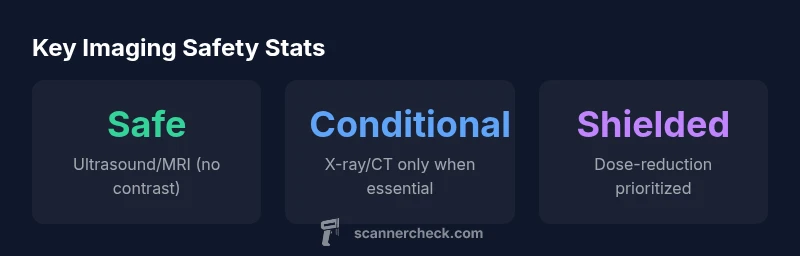
Is scanner bad for pregnant? The answer depends on the scanner type. Non-ionizing imaging such as ultrasound and MRI without contrast is generally considered safe during pregnancy when medically necessary, while ionizing imaging like X-ray or CT involves radiation and should be avoided unless the benefits clearly outweigh the risks and shielding or dose reduction is used.
Is the Question 'is scanner bad for pregnant' worth asking?
The phrase itself signals a concern that deserves careful unpacking. According to Scanner Check, there is no blanket rule: the safety profile depends on the specific imaging modality and the clinical necessity. Non-ionizing scans—such as ultrasound and MRI without contrast—are generally safe when they provide essential information for the pregnancy or fetal health. Ionizing scans—like X-ray and CT—produce radiation exposure and require a clear medical justification, dose optimization, and shielding whenever feasible. The goal is to minimize fetal exposure while preserving diagnostic value. Transparency with your care team and documentation of the reasoning behind each imaging choice are key components of responsible care. This nuanced stance aligns with broad medical guidelines and reflects the real-world balance clinicians strive to achieve.
Understanding Imaging Types: Ionizing vs Non-Ionizing
Imaging modalities differ dramatically in how they interact with biological tissue. Non-ionizing techniques, notably ultrasound (sound waves) and MRI (magnetic fields and radio waves), do not use ionizing radiation. They are commonly used in obstetric care and fetal assessment because they carry minimal, if any, known risk to the developing fetus when properly applied. Ionizing modalities, including X-ray and CT, involve radiation that can be biologically active. In pregnancy, these scans are reserved for situations where the information obtained is necessary for maternal or fetal health and cannot be obtained by non-ionizing means. Dose optimization, shielding, and limiting exposure time are central to safe practice.
Safety of Ultrasound During Pregnancy
Ultrasound is a frontline tool in prenatal care. It uses high-frequency sound waves to visualize fetal development, amniotic fluid, placenta, and uterine structure. The technique is non-ionizing and has a long track record of safe use when performed by trained personnel with medically indicated purposes. While there are ongoing discussions about dose and frequency in research settings, routine obstetric ultrasounds are widely accepted as safe. If multiple scans are needed, clinicians weigh necessity against any theoretical risk, aiming to minimize duration and frequency while preserving diagnostic value.
MRI: What It Means for Expectant Mothers
Magnetic resonance imaging (MRI) without gadolinium-based contrast is generally considered safe during pregnancy for specific indications, especially when ultrasound results are inconclusive or when detailed soft-tissue information is essential. MRI does not use ionizing radiation, which is a major safety advantage. However, its use during pregnancy should be guided by a radiologist and obstetrician, considering gestational age and clinical necessity. If contrast is ever contemplated, the risks and benefits must be carefully evaluated, as certain contrast agents are typically avoided during pregnancy unless clearly required for setting a diagnosis that would change management.
X-ray and CT: When They Are Used and How Risk Is Managed
X-ray and CT scans employ ionizing radiation, which can affect developing fetal tissues. In pregnancy, these scans are used sparingly and only when questions cannot be answered with ultrasound or MRI. When such imaging is deemed essential, clinicians apply shielding, optimize dose, and minimize exposure. The decision-making process involves assessing the urgency of information, alternative modalities, and the smallest possible radiation dose that achieves a medical objective. Patients should discuss all options with their care team and insist on a documented plan that prioritizes safety.
Practical Steps for Patients and Providers
If you are pregnant and a scan is being considered, ask for: (1) the exact imaging modality and its purpose, (2) whether non-ionizing options can suffice, (3) the estimated exposure or dose, (4) shielding options and duration, (5) whether contrast is planned and its safety profile, and (6) a clear plan for follow-up imaging if needed. For dental or incidental imaging, request lead shielding and confirm imaging necessity. Keeping a record of all scans and sharing it with your obstetric team helps maintain continuity of care and minimizes redundant exposure.
How Doctors Assess the Risk-Benefit of Scans
Healthcare teams follow guideline-based risk assessments when considering scans during pregnancy. They compare potential diagnostic benefits against fetal exposure, fetal safety data, and maternal health needs. In many cases, delaying non-urgent imaging until after delivery or choosing the safest alternative is possible. When imaging cannot be postponed, teams strive to use the lowest viable dose, apply shielding, and document the rationale behind each decision. Your active participation in these discussions improves the quality of the decision and aligns treatment with your values and priorities.
Common Scenarios: Dental X-Rays, Chest X-Rays, and More
Dental X-rays, for example, can be performed with aprons and thyroid shielding and are typically low-risk when medically necessary. Chest X-rays may be required to assess respiratory infections or other conditions, but shielding and dose optimization are standard practices. In rare obstetric emergencies or complex cases, imaging decisions become more nuanced, requiring close collaboration among obstetricians, radiologists, and the patient. Understanding the spectrum of imaging options helps patients advocate for the safest, evidence-based approach.
Preparing for a Scan: Questions to Ask Your Care Team
Before any imaging, prepare questions like: What is the exact modality and reason? Is non-ionizing imaging sufficient? What are the radiation exposure estimates and how will exposure be minimized? Is contrast necessary, and what are its safety implications for pregnancy? Can the scan be postponed? What follow-up imaging might be needed? By asking these questions, you participate actively in a shared decision-making process that prioritizes both fetal safety and maternal health.
Overview of imaging modalities and safety considerations during pregnancy
| Imaging Type | Ionizing Radiation? | Typical Use During Pregnancy | Notes |
|---|---|---|---|
| Ultrasound | No | Prenatal visualization, fetal assessment | Safe and non-ionizing; common in obstetrics |
| MRI (without contrast) | No | Detailed soft-tissue evaluation when needed | Generally safe; consider contrast only if essential |
| X-ray / CT | Yes | Specific indications where benefits exceed risks | Radiation exposure; shielding advised when used |
| Dental X-ray | Yes | Occasional imaging with shielding | Low dose; minimize exposure and use aprons |
Common Questions
Is MRI safe during pregnancy?
MRI without contrast is generally considered safe during pregnancy for necessary indications. Discuss timing and necessity with your clinician, especially in the first trimester.
MRI without contrast is usually safe during pregnancy when needed; talk with your doctor about timing and necessity.
Should I avoid X-ray imaging during pregnancy?
X-ray involves ionizing radiation and should be avoided if alternatives exist. If imaging is essential, use shielding and the lowest dose possible.
Avoid X-rays if you can; if unavoidable, shielding and dose minimization are essential.
Can imaging with contrast be used during pregnancy?
Contrast agents are typically avoided during pregnancy unless absolutely necessary for diagnosis. Benefits must clearly outweigh risks.
Contrast is usually avoided in pregnancy unless it’s essential for diagnosis.
What about dental X-rays while pregnant?
Dental X-rays can be performed with proper shielding and minimal exposure. It’s advisable to coordinate timing with dental care.
Dental X-rays are usually safe with shielding; coordinate with your dentist.
How can I minimize radiation exposure if a scan is necessary?
Ask about shielding, dose-reduction techniques, and choosing the lowest-risk modality that achieves diagnostic goals.
Ask for shielding and the lowest-dose option that still answers the medical question.
Is ultrasound safe during pregnancy?
Ultrasound uses non-ionizing sound waves and is widely used in pregnancy. It is considered safe when performed appropriately.
Ultrasound is generally safe for pregnancy when used appropriately.
“Effective imaging during pregnancy requires individualized risk-benefit analysis and deliberate minimization of exposure. The safest path is guided by clear evidence and patient-centered discussion.”
Key Takeaways
- Assess modality by ionizing vs non-ionizing
- Prioritize non-ionizing imaging when possible
- Use shielding and lowest feasible dose if radiation is necessary
- Consult obstetric and radiology teams for a tailored plan
- Document the rationale for each imaging decision