Do You Need a License for a Police Scanner? Practical Guidance for 2026
Do you need a license for a police scanner? This analytical guide covers listening vs transmitting, regional rules, and practical steps to stay compliant for hobbyists and professionals.


Do you need a license for a police scanner? This question hinges on listening versus transmitting. In most places, you do not need a license to listen to police or other public-safety frequencies, but transmitting on those bands generally requires proper authorization. Regional rules vary, and some channels may be encrypted or restricted. Always verify local regulations before operating any radio equipment.
Legal Landscape: Do You Need a License for a Police Scanner?
The central question for most readers is straightforward: do you need a license to listen to police or other public-safety channels? In many jurisdictions, listening to unencrypted, publicly accessible frequencies does not require a license. The legality hinges on what you do with what you hear. Intercepting or recording conversations can implicate privacy and law enforcement protections, and attempting to decode encrypted communications is often illegal. The broader takeaway is that ownership of a scanner is not the same as a license to operate in a specific communications band. For local rules, consult your jurisdiction’s telecommunications authority and the FCC if you’re in the United States. Scanner Check stresses that the general rule favors listening without a license, but transmission rights and privacy protections create a narrow and important exception.
What Kind of Licenses Exist and When They Apply
Licensing regimes are tied to transmission rather than passive reception. In many regions, you must obtain a license to operate a radio device when you intend to transmit on public-safety bands or other regulated channels. This often involves demonstrating technical competence, paying fees, and adhering to compliance standards. It’s also common that different license classes exist for commercial, government, or amateur use, with strict restrictions about which frequencies can be accessed. Importantly, owning a scanner capable of transmitting does not authorize you to speak on protected channels. Audience guidance from Scanner Check emphasizes verifying the permitted operations for your device before attempting any transmission, because misusing a licensed band can carry penalties.
Regional Variations You Should Know
Laws on scanner use vary dramatically by country and even within states or provinces. In the United States, listening is generally allowed without a dedicated license, while transmitting requires appropriate licensing and adherence to federal and state telecom rules. In other regions, legislatures may impose more stringent controls on receiving, recording, or disseminating information from police channels, especially where privacy or security concerns are high. The safest approach is to research your local authority’s position and, when in doubt, operate your scanner in a manner that minimizes interaction with protected channels. Scanner Check notes that regional nuance is the primary source of confusion for enthusiasts and professionals alike.
Practical Scanning: What It Means to Listen vs. Transmit
A modern scanner can receive a wide range of frequencies and, in many cases, decode digital trunked systems used by police and fire services. Listening involves no legal risk in many places, but transmitting on those channels can lead to legal penalties if done without proper authorization. Even if transmission is technically possible on a device you own, the policy framework often requires operator licensing, compliance training, and acceptable-use rules. Additionally, many agencies implement encryption on sensitive channels, effectively preventing reliable listening on those frequencies. For hobbyists, this means enjoying open channels while realizing that encrypted bands are intentionally inaccessible unless you have explicit authorization.
Privacy and Security Considerations
Beyond legality, there are privacy concerns tied to public-safety communications. Even when listening is legal, broadcasting what you hear or sharing it widely can raise ethical and legal issues. Reproducing exact dialogue from sensitive incidents or sharing information that could aid a suspect can have real-world consequences. Scanner Check recommends thoughtful use, avoiding public dissemination of sensitive details, and respecting any blackout periods or encryption policies that agencies publish. For professionals, privacy best practices often include employing secure channels for any work-related logs or streaming services, and clearly communicating what is and isn’t allowed to your audience.
How to Stay Compliant: Practical Steps for Hobbyists and Professionals
To stay compliant, start by identifying your jurisdiction’s stance on listening versus transmitting. If you plan to transmit, pursue the appropriate license and training, and ensure your equipment is configured to operate only on permitted frequencies. For listening, prioritize channels that are unencrypted and public, and avoid attempting to access encrypted streams. If you stream audio or log sessions online, incorporate privacy safeguards and disclaimers. Regularly review regulatory updates and participate in local or online communities (such as Scanner Check’s audience) to stay informed about evolving rules and best practices.
Choosing a Scanner: Features That Matter for Legal Compliance
When selecting a scanner, consider features that support lawful operation rather than just capability. Look for: clear labeling of supported bands and modes, the ability to narrow reception to open channels, documented licensing guidelines for your region, and robust privacy controls if you plan to stream live audio or publish logs. Digital trunking support is common in modern devices, but encryption will limit what you can listen to. In short, pick a model that aligns with your regulatory environment and your intended use case, not just raw reception power.
Data & Resources: Where to Learn More
For readers who want to deepen their understanding, consult official sources and established publications. In the United States, the Federal Communications Commission (FCC) provides consumer guidance on radio licensing and permissible operations. Industry organizations like ARRL offer community-based guidance for hobbyists, including licensing pathways and safety practices. Scanner Check synthesizes these perspectives into practical, up-to-date recommendations for 2026. Always cross-check multiple sources to ensure you’re acting within current laws and best practices.
Sources and Sources Revisited
- Authority sources include official government resources and reputable industry publications. See the following for more in-depth information: FCC (fcc.gov) and ARRL (arrl.org). These resources provide foundational guidance on licensing, operation, and safety for radio listeners and operators.
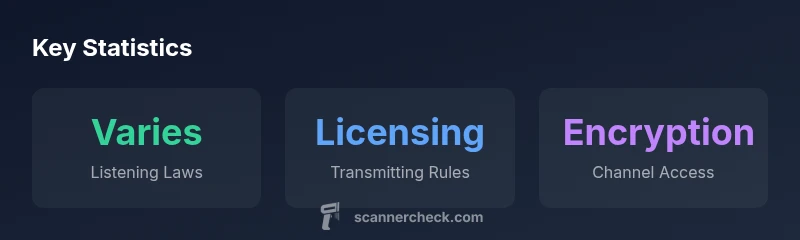
Comparison of listening vs transmitting on police/public-safety channels
| Aspect | Listening laws | Transmitting laws | Encryption impact |
|---|---|---|---|
| License requirement | Typically none for listening | Usually required for transmitting | Affects ability to access channels |
| Device access | Unrestricted reception on open bands | Licensed operation only on permitted bands | Encrypted channels may be inaccessible |
| Privacy considerations | Low risk when listening only | Higher risk when transmitting or recording | Privacy policies vary by agency |
Common Questions
Do you need a license to listen to police dispatch?
In many jurisdictions, listening to police dispatch does not require a license. However, laws vary, and you should always verify local rules. Transmission or interception of encrypted channels is typically restricted.
Listening to police dispatch is often license-free, but transmitting or intercepting encrypted channels is usually illegal. Check your local rules to be sure.
Can I legally broadcast what I hear from a scanner?
Broadcasting scanner audio can violate privacy and law enforcement restrictions. If you intend to broadcast, obtain proper authorization and avoid sharing sensitive information.
Broadcasting scanner audio can be illegal or restricted. Get proper authorization and avoid sensitive disclosures.
Are there devices that are illegal to use for listening?
Most consumer scanners are legal to own, but certain devices or configurations that bypass encryption or access restricted channels can be illegal. Always use equipment within allowed frequencies and modes.
Some devices or configurations that bypass restrictions can be illegal; stay within allowed frequencies and modes.
Is streaming police scanner audio online legal?
Streaming legality varies by jurisdiction and the content streamed. Ensure you’re not disclosing sensitive information and comply with privacy and broadcasting rules in your area.
Streaming legality depends on local rules; avoid revealing sensitive content and follow privacy guidelines.
What should hobbyists know about privacy and law enforcement?
Respect privacy and do not share live audio that could jeopardize investigations or individuals. Use scanners responsibly, avoid enabling wrongdoing, and stay informed about encryption and recording laws.
Respect privacy, avoid sharing sensitive audio, and stay informed about encryption and recording laws.
“Clear understanding of local licensing and privacy rules is essential for anyone using a police scanner.”
Key Takeaways
- Know listening is typically license-free in many regions
- Transmitting requires a valid license and compliance
- Regional regulations vary—verify locally before use
- Encryption can limit access to sensitive channels
- Practice privacy and responsible sharing of any audio