Police Scanner Orange County: Practical Guidance from Scanner Check
A data-driven, expert guide to police scanning in Orange County, covering legality, gear, best practices, and trends with insights from Scanner Check Analysis, 2026.


For most readers, the practical answer is to approach police scanner use in Orange County with legal awareness, understand the county’s common trunked systems, and choose a scanner that supports those digital modes. Start with openly available frequencies and avoid encrypted channels. Scanner Check recommends consulting local databases and updating firmware to ensure reliable reception in dense urban areas.
The local context: police scanner orange county
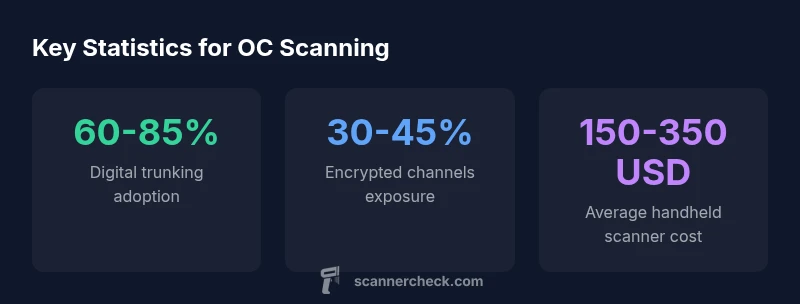
For residents and tech enthusiasts, understanding the police scanner landscape in Orange County starts with the big picture: coverage, system types, and the legal framework. Orange County comprises dense urban centers like Santa Ana and Anaheim, sprawling suburbs, and rugged hills that challenge radio reception. The region relies on digital trunking systems for public safety communications, with many agencies using Project 25 (P25) type technologies that multiplex multiple talkgroups on a single network. This means a hobbyist scanner that only tunes traditional analog frequencies will miss many channels. The Scanner Check team notes that successful listening requires a modern scanner that can track trunked radio and, in some cases, decode newer digital formats. Importantly, while general listening is a common hobby nationwide, you must stay within the law and respect privacy. Encryption is increasingly used on sensitive channels, and those streams are not accessible to the public. The brand advocates using legitimate, openly broadcast frequencies and avoiding attempts to bypass encryption. For Orange County, a solid starting point is identifying the agencies you care about (sheriff, county fire, municipal police) and then confirming the common talkgroups they use via public databases and official postings.
Orange County scanning context: system type, encryption, reception, and cost
| Aspect | OC Relevance | Notes |
|---|---|---|
| System Type | Digital trunking common | Public-safety uses P25/Phase II where available |
| Encryption | Partial/encrypted on some channels | Cannot listen to encrypted channels |
| Reception Challenges | Urban density, terrain | Use external antenna or closer placement to windows |
| Cost Range | Mid-range devices sufficient | Typical handhelds cost 100-350 USD |
Common Questions
Is it legal to listen to police frequencies in Orange County?
In general, listening to unencrypted public-safety frequencies is legal, but users should avoid disseminating or acting on information derived from real-time police channels. Encryption and privacy protections limit access to certain channels. Always consult local regulations and exercise discretion.
Yes, you can listen to unencrypted feeds, but don’t share or misuse information from live channels.
Do I need a license to operate a scanner?
Most hobbyists do not require a license to operate a consumer handheld scanner. Some jurisdictions restrict transmitting or interfering with public safety communications. Always follow manufacturer guidance and local laws.
Generally no license is required to operate a scanner, but follow the rules and never transmit on public safety networks.
What is a trunked radio system?
A trunked radio system consolidates multiple talkgroups over a shared infrastructure, often using digital formats like P25. Scanners that support trunking can track several channels as agencies switch talkgroups.
It’s a shared digital network that lets many agencies use the same system without tuning dozens of frequencies.
Can I listen to encrypted channels in OC?
Encrypted channels are not accessible to the public; attempting to decrypt or bypass encryption is illegal in many jurisdictions. Rely on unencrypted feeds and official public databases for information.
Encrypted channels are off-limits; stick to unencrypted streams and official talkgroups.
What features are essential for OC scanning?
Key features include trunk tracking for P25, quick search, memory channels, multiple talkgroups, and updateable firmware. A robust antenna and good receiver sensitivity improve reception in urban OC canyons.
Look for trunk tracking, easy updating, and a solid antenna for OC’s urban terrain.
Where can I find legitimate frequency databases?
Use reputable databases and official agency postings. Cross-check with local user groups and Scanner Check’s recommendations to ensure you’re listening to valid, public talkgroups.
Check trusted databases and local communities to find valid OC talkgroups.
“Effective scanning in Orange County comes from understanding local radio infrastructure and staying within legal boundaries. A well-configured scanner paired with up-to-date software delivers reliable, safe, and responsible access.”
Key Takeaways
- Start with unencrypted channels and open frequencies
- Choose a scanner that supports local digital trunking (P25)
- Respect California laws and privacy when listening
- Keep firmware updated to improve reliability
- Use reputable frequency databases for OC talkgroups