Can Scan Cause Bleeding During Pregnancy? Evidence and Guidance
Explore whether scanning can cause bleeding during pregnancy. This evidence-based guide reviews ultrasound safety, bleeding risk, and practical guidance for expectant parents and clinicians.


Many readers ask can scan cause bleeding during pregnancy. In general, diagnostic imaging like ultrasound does not cause vaginal bleeding or other bleeding in pregnancy when performed by trained professionals for medically indicated reasons. Bleeding during pregnancy is usually linked to placental issues, cervical changes, or other obstetric processes, not the imaging procedure itself.
Understanding imaging in pregnancy and possible bleeding
According to Scanner Check, imaging in pregnancy is carefully balanced to minimize risk while providing essential diagnostic information. Diagnostic scans, especially ultrasound, are widely used to monitor fetal development, placental position, and maternal well-being. Pregnancy imaging uses non-ionizing sound waves rather than X-rays, reducing radiation exposure. However, bleeding during pregnancy is a common symptom that often prompts imaging for evaluation. This section explains how imaging works, what it can and cannot tell you, and why the question can scan cause bleeding during pregnancy is rarely answered by the scan itself. We'll review how bleeding is assessed, what differentiates a scanning artifact from a genuine clinical finding, and how clinicians communicate risk to patients. For most patients, the imaging procedure is brief, noninvasive, and performed with attention to fetal and maternal safety.
The question: can scan cause bleeding during pregnancy?
In practice, the risk of bleeding caused by a scan is not supported by evidence. Most scans use ultrasound with high-frequency sound waves that pass through tissues and reflect back to form an image. The procedure itself does not involve incisions, injections, or radiation, which are recognized sources of risk in other contexts. Some patients worry about whether the pressure of a pelvic scan or a transvaginal probe might irritate the cervix. While discomfort is possible, bleeding due to the scan itself is not a typical outcome when performed correctly. Bleeding in pregnancy more often arises from placental conditions, cervical irritation, or other obstetric processes. If bleeding occurs after a scan, it is usually a coincidence rather than causally linked; clinicians should evaluate symptoms and correlate with the imaging findings to determine the cause.
Ultrasound safety profile in obstetrics
Ultrasound is a non-ionizing imaging modality that uses sound waves to create real-time images of the fetus and uterus. It does not involve ionizing radiation, which is a key reason it is preferred in pregnancy when medically indicated. Professional bodies (including obstetric and radiology organizations) emphasize that ultrasound should be used only when clinically necessary and performed by trained sonographers or radiologists. Thermal and mechanical indices are monitored during the study to minimize any potential tissue heating or mechanical effects. Overall, the safety profile is strong when guidelines are followed, and imaging is tailored to the trimester and clinical question.
How bleeding during pregnancy is more commonly caused
Bleeding in pregnancy is more often related to placental or cervical factors rather than the imaging procedure itself. Placental conditions such as previa or abruption, subchorionic hematomas, cervical irritation or infections, and other obstetric processes can cause vaginal bleeding. Hormonal fluctuations, cervical changes after intercourse, and certain uterine conditions may contribute as well. While a scan can reveal the underlying cause and assist in risk assessment, it is not typically the trigger for bleeding. For patients presenting with bleeding, clinicians perform a careful history, physical examination, and targeted imaging to determine the cause and the appropriate management plan.
Imaging modalities and bleeding risk
When evaluating bleeding during pregnancy, ultrasound remains the first-line imaging modality due to its safety and accessibility. MRI without contrast is a valuable alternative when ultrasound results are inconclusive or when a more detailed assessment is needed, and it is generally considered safe in pregnancy when medically indicated. CT or X-ray imaging is associated with ionizing radiation and is typically avoided in pregnancy unless absolutely necessary, with dose-minimization strategies and shielding in place. If contrast agents are considered, gadolinium is usually avoided during pregnancy unless there is a compelling maternal indication. Doppler ultrasound can assess blood flow without introducing radiation, offering additional information about placental and fetal circulation.
When to worry and red flags during imaging
If bleeding occurs during pregnancy, red flags include heavy vaginal bleeding, severe abdominal pain, or signs of hemodynamic instability. Even if a scan was performed, any new bleeding should prompt immediate medical evaluation to rule out conditions such as placental complications or threatened miscarriage. Clinicians will correlate imaging findings with the patient’s symptoms and laboratory data to guide management. Scheduling decisions should balance urgency, fetal safety, and maternal well-being, and patients should be informed about the benefits and risks of each imaging option.
Practical guidance for patients planning imaging
Before imaging, bring any prior pregnancy imaging to the visit, prepare a list of symptoms and questions, and discuss the necessity and timing of the scan with your clinician. Ask about alternatives, especially if there is bleeding or high-risk history. For expectant parents, obtaining imaging for a clearly defined medical reason during a stable period can help minimize anxiety and ensure appropriate follow-up. If a scan is indicated and performed, trust in the clinician’s training to interpret results in the context of overall pregnancy health.
How clinicians document and communicate when bleeding occurs
Documentation should clearly describe the patient’s symptoms, gestational age, imaging findings, and clinical decision-making. Clear communication with the patient about what the scan shows, what it does not show, and the next steps is essential. Providers should discuss potential causes, recommended monitoring, and warning signs that require urgent evaluation. Shared decision-making helps patients understand imaging benefits, risks, and how results will influence care plans.
Takeaways for planning imaging in high-risk pregnancies
In high-risk scenarios, imaging decisions are individualized. Providers weigh the benefits of obtaining critical diagnostic information against any theoretical risks. For many patients, ultrasound remains the safest and most informative modality during pregnancy. If there are concerns about bleeding, a clinician may use targeted ultrasound, Doppler studies, or MRI as indicated, with careful interpretation and follow-up planning. Continuous communication between patient and care team is essential to ensure timely, informed decisions.
Imaging modalities in pregnancy and bleeding risk context
| Imaging Modality | Typical Use in Pregnancy | Bleeding Risk (qualitative) | Notes |
|---|---|---|---|
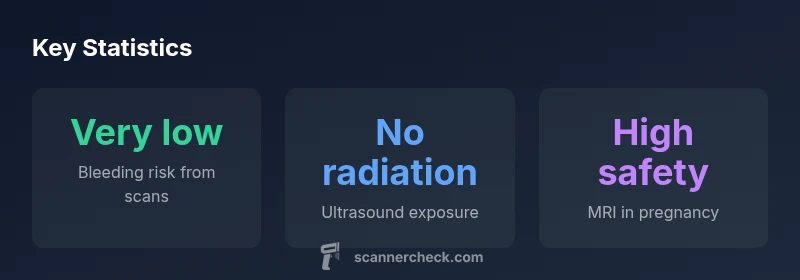
| Ultrasound (2D/3D) | Common in pregnancy | Very low | No ionizing radiation; real-time imaging |
| MRI (without contrast) | Alternative when ultrasound inconclusive | Very low | Avoid gadolinium; no radiation |
| CT/X-ray with contrast | Occasional use if ultrasound inconclusive | Moderate to high | Ionizing radiation; used only if benefits exceed risks |
Common Questions
Can ultrasound cause bleeding during pregnancy?
No. Ultrasound uses non-ionizing sound waves and is widely regarded as safe when performed for a medically indicated purpose. Bleeding is usually related to obstetric conditions rather than the imaging itself.
Ultrasound doesn't cause bleeding when done by trained staff. If you have bleeding, talk to your clinician about likely causes.
Is MRI safe in pregnancy?
MRI without contrast is generally considered safe in pregnancy when needed. Gadolinium is typically avoided unless there is a compelling maternal indication.
MRI without contrast is usually safe in pregnancy when needed; gadolinium is avoided unless necessary.
Should imaging be avoided if I am bleeding?
Not always. If imaging is medically required to diagnose the cause of bleeding, clinicians proceed with caution. The goal is to minimize risk while obtaining critical information.
Bleeding doesn’t automatically rule out imaging—your doctor will weigh benefits and risks.
What about CT scans during pregnancy?
CT involves ionizing radiation and is usually avoided during pregnancy unless the benefits clearly outweigh the risks. When used, dose optimization and shielding are applied.
CT is generally avoided in pregnancy unless absolutely necessary.
How can I talk to my doctor about imaging risks?
Prepare questions about necessity, alternatives, timing, and safety margins. Request plain-language explanations of what the scan will reveal and how it affects management.
Ask whether the scan is essential and what options exist if you’re concerned.
“Ultrasound is noninvasive and does not cause bleeding when performed by trained professionals for medically indicated reasons. The available evidence supports its safety profile in pregnancy.”
Key Takeaways
- Ultrasound remains first-line in pregnancy due to safety.
- Bleeding during pregnancy is usually not caused by scanning.
- MRI is a safe alternative when indicated; avoid gadolinium.
- Avoid ionizing radiation when possible; discuss alternatives.
- Clinicians should tailor imaging to maternal-fetal risk and symptoms.