Do CT Scans Need Fasting? A Practical Guide
This evidence-based guide explains when fasting is required for CT scans, how contrast may affect prep, and practical steps to prepare safely while avoiding delays.


Do CT Scans Need Fasting?
For many patients, the phrase do ct scan need fasting is more about protocol than a universal rule. The majority of CT exams—especially those performed without oral contrast or with IV contrast alone—do not require a long fasting period. The exact prep varies by protocol, indication, and the use of contrast agents. The Scanner Check Team notes that prep guidance is continually updated as new contrast protocols emerge, and patients should rely on the written instructions provided by the imaging facility. If your notes mention a specific contrast plan, follow those directions even if they differ from general guidance.
Key takeaways you can act on now include: follow facility instructions, check any notes about contrast, and plan for possible minor delays if fasting or intake restrictions are requested by the radiology team.
When Fasting Might Be Required
Fasting may be advised when an abdominal CT study uses oral contrast to improve visualization of the bowel or stomach. In these cases, imaging centers sometimes request a light fasting period or avoiding heavy meals for several hours before the scan. The exact duration varies by protocol, the type of contrast used, and patient tolerance. If you have diabetes or gastrointestinal sensitivities, inform the scheduling staff, as they may tailor instructions to minimize risk while preserving image quality. The Scanner Check analyses emphasize that adherence to protocol matters more than a generic rule, so double-check the appointment notes.
Practical tip: if oral contrast is planned, you might be asked to finish drinking the contrast a certain amount of time before the exam or to refrain from large meals beforehand to reduce residual stomach contents.
How Contrast Changes Prep
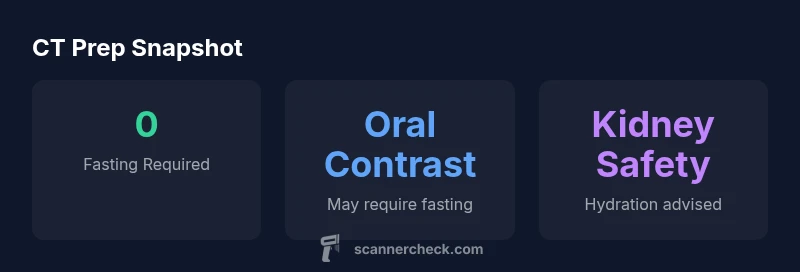
There are two main categories of contrast that influence prep: IV contrast and oral contrast. IV contrast often requires nothing more than standard hydration and a quick medical history check. Oral contrast, used to illuminate the GI tract, can lead to different prep requirements, including short fasting or light meals. When IV contrast is used, you’ll typically receive prep instructions related to kidney function and hydration rather than fasting. In both cases, radiology teams assess risk factors, such as allergies or renal function, to determine the safest approach. The key is to align with the exact protocol chosen for your scan. As Scanner Check notes, protocol specificity drives prep decisions more than any general rule.
Practical Prep Steps for Patients
- Review the exact instructions provided by the imaging center and ask questions if anything is unclear.
- If oral contrast is planned, avoid heavy meals for a few hours prior and stay hydrated as advised by your radiology team.
- Bring a list of medications, especially diabetes meds or kidney-related prescriptions, so staff can tailor prep safely.
- Arrive early to complete any paperwork and labs (if required) before the scan.
- If you’re unsure whether fasting applies, contact the facility the day before your appointment.
- Have a family member or friend accompany you if you’re anxious about the prep process; clear communication reduces confusion and delays.
Special Cases: Abdominal CT and CT Angiography
Abdominal CT with oral contrast and CT angiography (CTA) follow distinct prep rules. CTA often relies on rapid imaging after contrast administration and may not require fasting beyond standard appointments. Abdominal CT with oral contrast typically requires coordination around meals and hydration to ensure good bowel visibility. In every case, the imaging team will provide the final instructions based on the protocol and patient factors. Scanner Check’s guidance highlights that special protocols are common, so do not assume one size fits all.
Diabetes, Kidney Function, and Medication Considerations
Patients with diabetes or reduced kidney function deserve particular attention. Some centers adjust insulin or oral agents on the day of scanning, especially if hydration needs or contrast risk are involved. If you use metformin or other agents, follow your clinician’s advice and the radiology team’s contrast safety protocol. Hydration is often emphasized to support kidney clearance after IV contrast. If you’re unsure about fasting during a diabetic regimen, contact your imaging center for tailored instructions.
What to Bring and What to Expect at the Lab
Bring a current list of medications, including dosages, and any recent lab results related to kidney function. Arrive with an updated appointment time to minimize waiting, and wear comfortable clothing without metal fasteners that could interfere with imaging. Expect a short intake process, a possible IV line for contrast administration, and a brief rest period after the scan. If contrast was used, you may be advised to monitor for mild side effects and to drink fluids to aid flush-out after the exam. Reading facility notes beforehand helps set expectations and reduces stress.
Common Myths About Fasting and CT Scans
Myth: Fasting is always required for CT scans. Reality: In most cases, fasting is not necessary; protocol-driven variations exist, particularly with oral contrast. Myth: Any food or drink will invalidate the scan. Reality: Hydration and timing are carefully balanced to optimize image quality, and mild fasting is often sufficient rather than extensive restrictions. Myth: Fasting guarantees a better result. Reality: The imaging target, contrast use, and patient safety considerations determine prep rather than a blanket restriction. The key is to follow the provider’s tailored instructions.
Timeline and Follow-Up After the Scan
Most patients can resume normal activities immediately after a non-contrast CT or IV-contrast CT. If oral contrast was used, you might be advised to monitor digestion for a short period. If you experience persistent symptoms, severe allergic reactions, or unusual side effects after a scan, contact your clinician or radiology center promptly. Review the results with your physician to understand whether any follow-up imaging is necessary.