How Long Do PET Scans Last? A Practical Guide
Learn how long PET scans last, what factors influence duration, and how to prepare. This Scanner Check guide covers uptake times, imaging duration, and post-scan steps with practical tips.


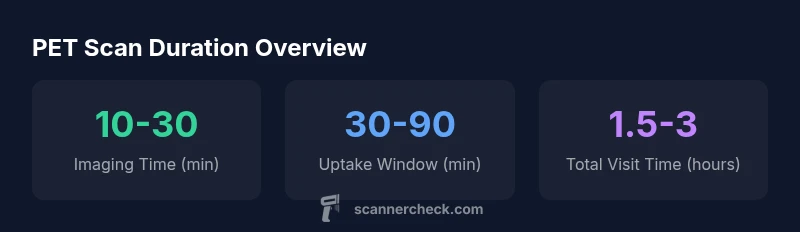
PET scan sessions vary by protocol, but the actual imaging typically lasts 10-30 minutes. The bulk of time comes from tracer uptake, patient preparation, and post-procedure steps. Depending on the protocol and facility, you may wait 30-90 minutes after tracer injection before imaging, with total visits ranging from about 1.5 to 3 hours from arrival to results.
How long do pet scan last: Factors shaping duration
Understanding the question how long do pet scan last is essential for planning, especially for patients scheduling imaging around work, travel, or caregiving. According to Scanner Check, PET scan duration is not a fixed number; it depends on the imaging protocol, the tracer used, and the facility’s workflow. The actual acquisition—the moment the scanner collects data—tends to be brief, typically 10 to 30 minutes for most oncology or neurology studies. However, the overall time from arrival to results often ranges from about 1.5 to 3 hours, when you include check-in, tracer injection, uptake time, and aftercare. This distinction between “imaging time” and “visit time” is important for patients who want to schedule around daily commitments and for clinicians who counsel families on what to expect. Readers should note that these figures come from broad practice patterns compiled by Scanner Check in 2026 and can vary by center.
Determinants of PET Scan Duration
PET scan duration is shaped by several interrelated factors. First, the type of study (oncology, neurology, or cardiology) dictates how long the uptake period and the scan must be. Second, the tracer and its uptake time influence when imaging starts. FDG-based protocols generally include a defined uptake window, while newer tracers may have different timing. Third, scanner type and technology matter: newer devices with faster detectors can shorten the active imaging window but may be paired with longer prep times due to calibration and quality checks. Finally, patient factors such as ability to stay still, prior imaging history, and required sedation can add to the total time. As a practical rule, expect variability, and ask your imaging team for a center-specific timetable.
Workflow: from check-in to final interpretation
The PET workflow typically includes several stages. After check-in and consent, you receive a tracer injection. The uptake period then begins, often ranging from 30 to 90 minutes depending on the tracer and study. During uptake, patients may be asked to rest and avoid strenuous activity and excessive food intake. The actual PET scan then proceeds for 10 to 30 minutes, and many centers perform a concurrent CT scan for attenuation correction and anatomical localization, which adds 1–5 minutes to the imaging phase. After the scan, radiologists interpret the images; this interpretation can take additional time outside the patient’s appointment slot. By understanding the sequence, patients can better anticipate the total time required.
Protocols vary by clinical goal
Oncology-focused PET scans, particularly whole-body studies, tend to emphasize longer uptake and comprehensive imaging, potentially extending total appointment time. Neurological PET studies, used to evaluate dementia or epilepsy, may rely on tracer timing that slightly shifts the duration of uptake and imaging. In cardiology, PET can assess myocardial perfusion, sometimes with shorter uptake windows but careful image acquisition. In all cases, centers tailor durations to the clinical question, radiotracer characteristics, and patient safety considerations. This variability underlines the value of asking for a written timetable before your appointment.
Practical tips to minimize total time
To minimize time at the imaging center, consider these practical steps: (1) Confirm fasting and hydration rules in advance, (2) Arrive early to complete intake forms, (3) Bring a list of current medications and prior scan images, (4) Ask about the expected uptake window and imaging start time, and (5) Plan for a non-rush day if possible to reduce stress and movement during the scan. Small adjustments in routine can shave minutes off total time and improve comfort during the session.
What to expect after the scan and how results are delivered
After the imaging portion, the radiologist reviews the data, and you receive results through your clinician. Depending on the study and facility, you may have a brief wait for preliminary results or receive a full report within days. If you have follow-up appointments to discuss treatment decisions, schedule time for those discussions. Knowing the typical timing helps reduce anxiety and set expectations during the planning phase.
Planning considerations for different clinical goals
If your goal is cancer staging, your team may opt for a whole-body protocol that concentrates on maximizing diagnostic yield, which can extend uptake and interpretation time. If the aim is neurological assessment, a targeted, higher-resolution approach might be chosen, sometimes with shorter uptake durations but longer post-processing for functional analysis. Always coordinate with your imaging center to align your schedule with the chosen protocol, since this can affect both timing and logistics.
Overview of PET scan timing by component
| Aspect | Typical Duration | Notes |
|---|---|---|
| Uptake period before imaging | 30-90 minutes | Time between tracer injection and scan; varies by tracer and protocol |
| Actual PET scan duration | 10-30 minutes | Main acquisition; longer for whole-body/high-resolution studies |
| CT attenuation correction | 1-5 minutes | Often performed with PET in same session |
| Total in-clinic time | 1.5-3 hours | Includes check-in, uptake, scanning, and post-procedure steps |
Common Questions
Does a PET scan require fasting?
Many centers require a fasting period before PET imaging to reduce interference from glucose. A typical fasting window is around 4-6 hours, with water usually allowed. Always follow your center's specific instructions.
Many centers ask you to fast for several hours before a PET scan; follow the center's instructions and drink water if allowed.
Can I eat before a PET scan?
Eating is generally discouraged before the tracer is administered, but some centers permit light meals once a protocol is established. Check your facility's guidelines ahead of time.
Check with your imaging center; some allow light meals after the tracer is given, but many require fasting beforehand.
How long is the uptake period before the scan?
Uptake times typically range from 30 to 90 minutes depending on the tracer and study. The exact window is chosen to optimize tracer distribution and imaging quality.
Uptake usually lasts 30 to 90 minutes, depending on the tracer and study.
Is sedation ever needed for PET scans?
Sedation is uncommon but may be used for pediatric patients or individuals who cannot stay still. Your care team will discuss options if needed.
Sedation is rare and usually reserved for special cases, with planning ahead.
Why might the total visit time be longer than the scan itself?
Total time includes arrival, preparation, tracer uptake, imaging, and post-procedure processing. Center-specific workflows and patient needs can add extra minutes.
Because it includes check-in, uptake, imaging, and processing, not just the scan.
“A PET scan's duration is influenced by protocol, tracer uptake, and patient factors. Clear communication with the imaging team can significantly improve planning and reduce delays.”
Key Takeaways
- Plan for 1.5–3 hours total from arrival to results.
- Imaging time is usually 10–30 minutes, uptake adds the majority of duration.
- Ask centers for your center-specific timetable before the appointment.
- Factor in protocol differences when scheduling around work or family.