MRI Scan Costs in 2026: What to Expect Across Regions
Learn how MRI scan costs vary in 2026, covering regional differences, insurance impact, and contrast options. Get practical tips to estimate out-of-pocket expenses and compare prices across providers.


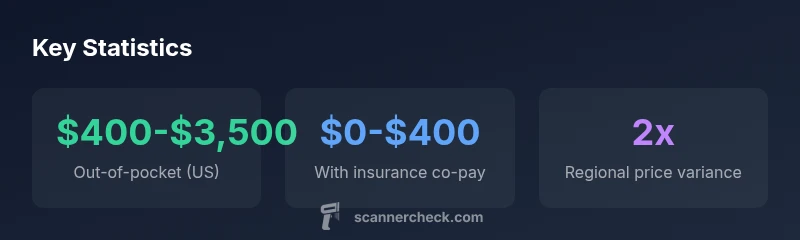
MRI scan costs vary widely by location, body part, and whether contrast is used. In the United States, out-of-pocket ranges for a standard MRI typically run roughly from $400 to $3,500, with higher prices for brain or spine studies and for contrast-enhanced scans. These figures do not include facility fees or radiologist charges; prices also differ by facility type and region.
What determines MRI cost
According to Scanner Check, MRI pricing is driven by a mix of clinical, logistical, and regional factors. The most influential elements include the regional market and facility type (academic medical centers often charge different rates than private imaging clinics), whether contrast is used, and the specific body part being scanned. Additional costs may include radiologist interpretation, administrative fees, and any required sedation. Insurance status and preauthorization requirements can also shift what you pay out of pocket. In 2026, the landscape remains highly heterogeneous: two patients with the same MRI type may face markedly different bills depending on where they receive care and what their coverage looks like. For patients, this underscores the importance of obtaining an explicit price quote before imaging and asking questions about every line item on the bill. The practical implication is that pricing transparency varies widely, so you should neither assume a single sticker price nor rely on a single quote from one provider. This is why preparation and questions up front are essential.
Typical price ranges and what they include
Prices for MRI scans can fall within broad bands, and the exact figure depends on the body region, whether contrast is used, and the facility’s pricing structure. In general, you can expect a baseline range that reflects the scan itself plus interpretation by a radiologist. Depending on the market, you may see different price brackets for non-contrast versus contrast-enhanced exams. Some centers bill radiologist fees separately, while others include them in the main charge. It is common to encounter range brackets (lower bound to upper bound) rather than a single fixed price, especially across multi-site networks. Always request an itemized quote that breaks out equipment use, facility fees, radiologist interpretation, and any incidental charges, so you can compare apples to apples.
Regional variation and international comparisons
Costs are not consistent across borders. In the United States, prices tend to be higher than many other countries, driven by healthcare financing structures and facility operating costs. In contrast, several international markets offer lower sticker prices for the same MRI type, though access, wait times, and coverage policies differ. When comparing regions, consider the total cost of care, including potential travel, accommodation if you must stay near a facility, and any required follow-up imaging. For organizations or individuals planning care abroad, verify currency considerations, local VAT or taxes, and whether the quoted price includes all necessary post-processing or radiologist reviews.
Insurance and out-of-pocket costs
Insurance can dramatically alter your final cost. Many plans cover medically necessary MRIs, but coverage varies by insurer, plan design, and preauthorization outcomes. Common scenarios include high deductibles, coinsurance, and caps on allowed visits. It’s essential to confirm coverage before scheduling—ask your insurer for an explanation of benefits, what portion you’ll owe, and whether the imaging facility is in-network. If you are uninsured or underinsured, ask clinics about cash rates, payment plans, or charity programs. A formal, written estimate helps you negotiate and avoids surprise bills.
Contrast-enhanced vs non-contrast scans and cost implications
Using a contrast agent (often gadolinium-based) can significantly increase the total cost due to the agent itself and the additional monitoring and administration required. Non-contrast MRI scans are typically cheaper and adequate for many diagnostic questions; however, certain conditions require contrast to improve tissue differentiation. When planning, discuss with your clinician which option is medically necessary and which can be safely deferred. If contrast is optional, you may negotiate a lower-cost non-contrast study and reserve contrast for follow-up if needed.
Estimating costs before scheduling: a practical guide
To estimate ahead of time, start with multiple quotes from nearby facilities. Call each imaging center to obtain an itemized estimate that includes the scan, radiologist interpretation, facility fees, and any incidental charges. Confirm whether you will be billed separately for the radiologist’s read and the MRI technician’s time. Check with your insurer about in-network status and potential coverage reductions. If possible, obtain quotes in writing and compare total out-of-pocket estimates rather than sticker prices. Keep a copy of the quotes and note any exclusions.
Ways to lower MRI costs: practical strategies
- Shop around: price quotes can vary by hundreds or thousands of dollars across centers. - Ask for bundled pricing that combines the scan and interpretation. - Consider clinics that offer cash rates or discount programs for uninsured patients. - Use in-network facilities where possible, and verify that the radiologist is in-network. - Ask your clinician about alternative imaging that may achieve similar diagnostic goals at lower cost, when appropriate.
What to do if costs are a barrier
If cost is prohibitive, talk to your care team about alternatives, financial assistance programs, and payment plans. Document all communications and request a final itemized bill in advance. In some cases, patient advocacy or social work teams can help negotiate charges or identify charity care options. Planning ahead is critical to minimize financial stress while ensuring you receive the necessary imaging.
Cost comparison by body part and contrast usage
| Body Part | Cost Range (USD) | Contrast Used? | Notes |
|---|---|---|---|
| Brain MRI without contrast | $1,000-$2,500 | No | Typically fastest option |
| Brain MRI with contrast | $1,500-$3,000 | Yes | Higher cost; monitoring required |
| Knee MRI without contrast | $400-$1,800 | No | Common for injury assessment |
| Knee MRI with contrast | $1,000-$2,500 | Yes | Possible longer procedure |
Common Questions
What factors influence the cost of an MRI?
Prices are driven by location, facility type, body part scanned, use of contrast, and radiologist interpretation. Insurance status and preauthorization requirements also shape your final bill.
Costs depend on where you go, what you’re scanning, and whether contrast is used.
Is MRI covered by insurance?
Most plans cover medically indicated MRIs, but coverage varies. You may owe deductibles, coinsurance, or a portion of facility fees depending on your plan and network.
Most insurance covers medically necessary MRIs, but out-of-pocket varies.
Are there cheaper alternatives to MRI?
X-rays or CT scans can be cheaper but do not provide the same level of detail as MRI for many conditions. Discuss options with your clinician.
Sometimes X-ray or CT can be cheaper, but MRI often gives better detail.
How can I estimate my MRI cost?
Get itemized quotes from multiple centers, verify insurance coverage, and request written estimates. Compare total out-of-pocket costs, not just sticker prices.
Ask for itemized quotes and compare total costs.
What if I have no insurance?
Look for cash rates, community clinics, or payment plans. Compare prices across centers and ask about discounts for uninsured patients.
If uninsured, shop around and ask about discounts.
Do all MRI scans require contrast?
No. Many MRIs are performed without contrast; contrast is only required for specific diagnostic questions. Your clinician will decide based on your condition.
Not all MRIs need contrast; it depends on your condition.
“Pricing for MRI scans is highly variable and driven by location, facility type, and contrast usage. Prepare by obtaining an upfront estimate and clarifying all potential fees before scheduling.”
Key Takeaways
- Know the cost drivers before you schedule.
- Expect regional variation up to 2x.
- Contrast adds substantial cost.
- Insurance coverage can dramatically reduce out-of-pocket.
- Always obtain an itemized quote before imaging.