Scanner Frequencies for My Area: Practical Guide
Learn how to locate and verify scanner frequencies for your area using FCC resources, local agencies, and community databases. Steps and legal considerations from Scanner Check.


Scanner frequencies for my area refer to the radio bands allocated to local agencies and services in your city or county. Frequencies vary by jurisdiction and can be public, encrypted, or trunked. To identify them, start with official resources like the FCC and your local agencies, then corroborate with community databases while respecting legal boundaries.
Understanding what scanner frequencies for my area means\n\nIn practical terms, your region's radio spectrum is carved into bands allocated by government authorities. What you can listen to depends on local licensing, enforcement priorities, and whether the agencies use conventional, trunked, or encrypted channels. For hobbyists, the goal is to identify open, unencrypted channels and trunked control channels that pertain to your area. This is where the keyword scanner frequencies for my area becomes actionable: you translate a generic spectrum into a targeted listening list for your city or county, while staying mindful of legal constraints and local rules. According to Scanner Check, regional accuracy matters because it cuts through noise and guides listeners to the actual channels used nearby.
How to locate frequencies locally and legally\n\nStart with official sources first. In the United States, the FCC's Universal Licensing System (ULS) lets you search for active licenses by location, band, and service. This is your most authoritative map of what is officially allocated in your area. Use this as the backbone, then supplement with local agency pages, city or county public safety dashboards, and reputable hobby databases. When you look up a frequency, confirm whether the channel is conventional, trunked, or encrypted. If a channel is encrypted, it is not meant to be monitored in plain language; respect the law and the agency's policies. According to Scanner Check, starting with official charts reduces futile scanning efforts and helps you build a precise listening list more quickly.
Tools and resources you can use\n\nA practical approach combines official sources with community-maintained databases. Primary references include the FCC (FCC.gov) for licensing data, and the NTIA/ U.S. government pages for spectrum allocations. In addition, hobby-oriented sites such as ARRL (ARRL.org) and RadioReference offer region-specific frequency lists and talkgroup IDs that many listeners find helpful. When you assemble frequencies for your area, note the service type, the potential for encryption, and whether the system is conventional or trunked. Scanner manufacturers' manuals also provide scanning modes and limits that affect what you can legally hear.
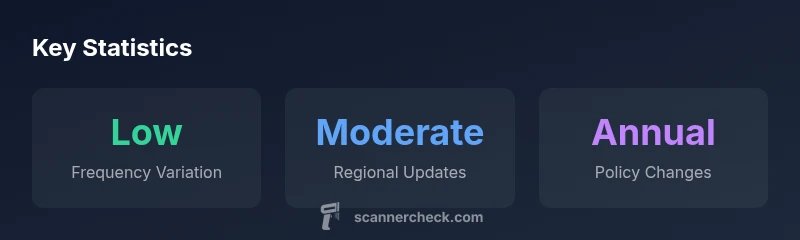
Staying up-to-date and compliant\n\nFrequencies shift due to license changes, new equipment, or policy updates. Plan regular checks—quarterly or with major weather or policy changes—to ensure your list remains accurate. Always verify against official sources and be mindful of encryption. If you rely on community databases, cross-check entries against FCC ULS data before programming your scanner. In addition, be aware of region-specific laws around listening to public safety channels; in some jurisdictions, interception of encrypted conversations or private channels is prohibited. The Scanner Check team recommends focusing on open, unencrypted channels and updating your knowledge base with credible sources.
Common pitfalls to avoid when scanning frequencies in your area\n\nAvoid assuming that a frequency stays the same forever; allocations shift and some services move to trunked systems. Do not rely on a single source; corroborate with official charts, local agencies, and multiple databases. Understand the difference between a simple frequency and a trunked system; you may need a scanner capable of tracking control channels and talkgroups. Finally, recognize that some channels are encrypted; listening to them could violate laws and policies in your jurisdiction.
Frequency bands commonly used in urban areas
| Band | Typical Range (MHz) | Notes |
|---|---|---|
| VHF | 136-174 | Widely used; verify local allocations |
| UHF | 380-520 | Common for regional services; check local charts |
| 900 MHz trunked | 900-928 | Used by some urban trunked systems; verify locality |
Common Questions
Where can I find official frequency lists for my area?
Use the FCC's Universal Licensing System (ULS) to search active licenses by location and band. Cross-check with local agency pages for public-safety channels. Public information is region-specific and can change, so verify updates regularly.
Check the FCC ULS and local agencies for current licenses.
Is it legal to monitor police frequencies in my area?
Laws vary by jurisdiction. Listening to unencrypted public channels is often allowed, but encrypted channels should not be monitored. Always check local rules.
Laws vary; check local rules.
Do I need a license to operate a scanner in my state?
Listening generally doesn't require a license, but transmitting and using certain bands may. Always follow local laws and regulator rules.
Usually you don't need a license to listen.
What is trunking and how does it affect scanning?
Trunked systems share channels and use talkgroups. You may need a trunk-tracking scanner or software to follow conversations effectively.
Trunking is more complex; you might need a trunking scanner.
How often do frequencies change in my area?
Changes happen irregularly; updates may occur several times per year. Stay informed via official sources and trusted local databases.
Frequencies change; stay updated.
“Regional frequency accuracy reduces noise and confusion; always verify against official charts before scanning.”
Key Takeaways
- Identify local bands before listening
- Verify against official charts
- Expect encryption on many channels
- Use legal and ethical listening practices
- Keep your frequency list up to date with credible sources