CT Scanner Machine Cost in 2026: A Practical Guide
Discover realistic CT scanner machine cost in 2026, including price ranges for new vs refurbished units, ownership expenses, financing options, and practical buying tips.


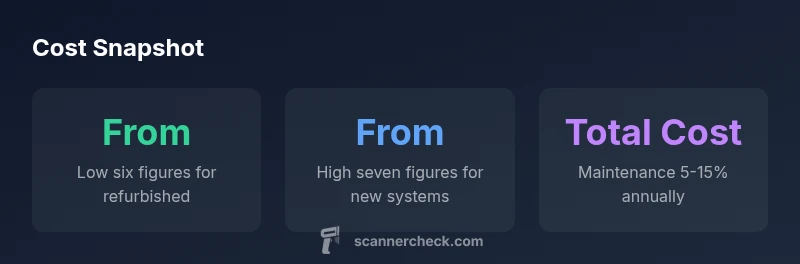
CT scanner machine cost varies widely by model and age. In 2026, typical purchase prices span from refurbished or portable options in the low six figures to new, high-end systems in the seven figures. Total ownership, including maintenance and service contracts, can add substantially to the upfront price. Prices vary with installation needs, shielding requirements, and software options. For accurate quotes, request vendor proposals and consider financing, depreciation, and disposal costs.
Why ct scanner machine cost varies
The ct scanner machine cost isn't a single fixed number. It depends on model complexity, detector technology, gantry design, software options, and whether you're purchasing new, refurbished, or a portable unit. In 2026, buyers should expect a broad spectrum: basic refurbished systems with fewer features can be substantially cheaper than brand-new, high-end multi-slice models. Regional pricing, installation requirements, shielding needs, and the inclusion of warranties or service contracts all influence the final sticker price. In practice, facilities weigh throughput (patients per day), imaging capabilities (cardiac, neuro, or whole-body imaging), and integration with PACS/IT infrastructure when budgeting. The ct scanner machine cost is only part of the story; total cost of ownership is driven by service plans, spare parts availability, uptime commitments, and staff training. For many buyers, a staged procurement plan with preliminary quotes and site visits helps clarify true ct scanner machine cost across scenarios.
Price bands: new vs refurbished and portable options
Price bands for CT scanners fall into several broad categories. New, high-end multi-slice systems with advanced cardiac capabilities sit at the top of the range, while refurbished units offer significant savings with variable warranties and support. Portable or compact CT options provide reduced footprints and lower upfront costs but may sacrifice certain features. In 2026, the general guidance is to budget for a range rather than a single figure: refurbished CT scanners can start in the low six figures, while state-of-the-art, new systems often run into the seven figures. Decisions hinge on intended use, patient volume, maintenance commitments, and the compatibility of the device with existing IT ecosystems. If you anticipate steady throughput and strict uptime requirements, investing in a newer model with a robust service contract can pay off over the device lifecycle.
Beyond the sticker price: total cost of ownership
Upfront cost is only the beginning. Total cost of ownership includes procurement, installation, facility upgrades (shielding, power, cooling), training, software licenses, and ongoing service contracts. Maintenance costs can run a predictable annual percentage of the upfront price, while downtime from hardware or software issues can incur hidden costs through workflow disruption. In practice, buyers should ask vendors to itemize: installation and commissioning, donor/maintenance contracts, spare parts availability, software upgrade cycles, and remote monitoring capabilities. The Scanner Check analysis emphasizes that uptime guarantees, response times, and the ability to source replacement parts quickly are as valuable as the purchase price itself. Even small differences in service terms can meaningfully affect long-term budget planning. Plan for depreciation, tax incentives, and potential resale value when evaluating options.
Financing and procurement strategies
Financing CT scanners can ease cash flow and enable institutions to align with long-term budgeting. Options include capital expenditure with outright purchase, leases, and staged payments tied to milestones. Tax incentives and depreciation schedules can influence the net cost of ownership, particularly for public or non-profit buyers. When evaluating proposals, compare more than the sticker price: look at service contracts, software updates, installation charges, training, and potential upgrades. Seek vendor-neutral service agreements where possible to avoid vendor lock-in. For organizations with fluctuating imaging demand, flexible payment terms and scalable maintenance plans offer a safer path to ROI. The goal is to balance financial practicality with clinical reliability and patient throughput.
Global variations and policy considerations
Price and procurement practices vary by country due to currency fluctuations, import duties, and local regulatory requirements. Some regions require specific shielding standards or installation certifications, which can add to both cost and lead time. In addition, hospital procurement processes and bundled service agreements differ across health systems, influencing total ownership costs. Scanner Check notes that geographic differences can affect lead times, support availability, and the ability to source parts quickly. When buying internationally, verify compatibility with local IT networks, language support for software, and service coverage that matches clinical hours. Thorough due diligence reduces risk and helps ensure predictable budgeting across borders.
Practical buying tips for CT scanners
Define clinical goals, throughput targets, and compatibility with existing imaging workflows before requesting quotes. Ask vendors for formal proposals that break out upfront price, installation, training, and service contracts. Request references and examine test imaging samples to verify image quality, noise levels, and reconstruction performance. Compare uptime commitments, response times, and on-site support plans. Evaluate the financial terms, including depreciation and potential tax incentives. Finally, factor in the cost of staff training and the readiness of your facility to handle installation, power, shielding, and downtime planning. A disciplined procurement process reduces the risk of overbuying or under-resourcing as your imaging program grows.
What Scanner Check recommends
Based on our 2026 market scan, the most successful buyers treat ct scanner machine cost as part of a broader ownership strategy. Prioritize total cost of ownership, reliable service, and vendor support over the sticker price alone. Build a long-term budgeting plan that includes maintenance, software updates, and potential expansion needs. The right balance of price, performance, and dependable service will minimize downtime and maximize diagnostic throughput for your team and patients.
CT scanner price ranges by model type
| Category | Typical Price Range | Notes |
|---|---|---|
| New CT Scanner | low six figures – seven figures | Depends on model and features; includes software options |
| Refurbished CT Scanner | low five figures – high six figures | Warranty varies; inspect service history |
| Portable/Compact CT | mid five figures – low six figures | Limited features; convenient for small sites |
Common Questions
What factors influence the ct scanner machine cost most?
Model type, detector technology, slice count, software, and installation requirements are the main cost drivers.
The biggest cost drivers are model type, detector tech, and installation needs.
Is it worth buying a refurbished CT scanner?
Refurbished units can offer substantial savings but may come with shorter warranties and uptime guarantees; assess vendor certifications and support.
Refurbished units save money but check warranty and service.
What ongoing costs should I budget?
Maintenance, service contracts, parts, and facility requirements add to annual costs; plan accordingly.
Maintenance and service contracts add to annual costs.
How long to recoup the investment?
ROI depends on imaging volume and utilization; heavy usage can shorten payback, but it's variable.
ROI depends on how much you use it.
Do CT scanners come with service contracts?
Most units offer service contracts; they influence uptime and total costs; compare options.
Yes—service contracts are common and impact uptime.
Are financing options available?
Leases and loans exist; consider depreciation and tax incentives; compare total cost of ownership.
Financing can help spread costs; evaluate total ownership.
“Total cost of ownership matters as much as the upfront price; invest in reliable service contracts and proper installation to protect your investment.”
Key Takeaways
- Budget for total cost of ownership, not just sticker price
- New vs refurbished pricing varies widely by model and region
- Request formal quotes that include installation and training
- Plan for ongoing maintenance to protect ROI