MRI Scanner Time: How Long Do You Stay Inside?
Learn how long you typically stay in an MRI scanner, what factors affect duration, and tips to stay comfortable. Data from Scanner Check Analysis, 2026.


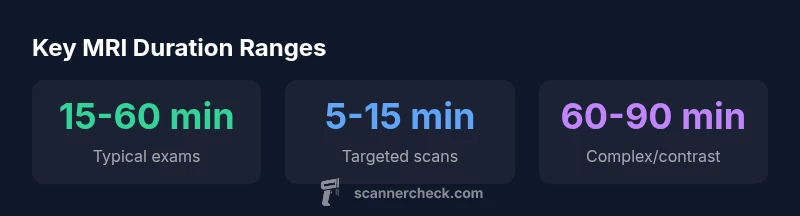
If you’re wondering how long are you in a mri scanner, plan for a window that typically ranges from 15 to 60 minutes for most studies. Short, targeted scans may be completed in 5-15 minutes, while more comprehensive brain, spine, or multi-region protocols can take longer, sometimes up to 90 minutes with contrast. The exact time depends on the area scanned, the number of sequences requested, the use of contrast, and patient cooperation. Arrive a bit early, wear comfortable clothing, and stay still during the scan.
MRI duration: what to expect
MRI exams vary by body part and protocol. If you’re wondering how long are you in a mri scanner, plan for a window that typically ranges from 15 to 60 minutes for most studies. Short, targeted scans may be completed in 5-15 minutes, while more comprehensive brain, spine, or multi-region protocols can take longer, sometimes up to 90 minutes with contrast. The exact time depends on the area scanned, the number of sequences requested, the use of contrast, and patient cooperation. Arrive a bit early, wear comfortable clothing, and stay still during the scan.
Typical durations by study type
Understanding the study type helps set expectations. Brain MRI with multiple sequences often falls in the 20-45 minute range, though adding contrast or advanced protocols can extend it. Knee MRI tends to be shorter, around 15-30 minutes, while a full-spine exam commonly clocks in at 30-60 minutes. Chest and abdominal scans can vary from 20-40 minutes, depending on breathing techniques and whether contrast is used. For whole-body or complex oncology protocols, total time can approach 60-90 minutes. These are general ranges; individual facilities may differ based on scanner capability and protocol variations.
Sequencing and protocol: what adds time
Time inside the scanner is driven by the number and type of sequences, not just the body part. Each sequence captures data in a different way, with T1- and T2-weighted images, diffusion sequences, and optionally functional or contrast-enhanced sequences adding minutes. Longer exams require more slices, thinner slices, and higher resolution, which increases time. Prep time, including IV access for contrast, patient positioning, and coil setup, also contributes. In many facilities, techs run parallel tasks (positioning while one series finishes) to optimize throughput; still, patient movement requires repeats, which can add significant time. If contrast is used, you must wait through the post-injection period for optimal imaging.
Before you lie down: preparation and setup
Preparation steps can shave minutes off your MRI experience. Leave jewelry at home, remove metal objects, and switch to comfortable clothing without metal fasteners. If you know you’ll need contrast, ensure you’ve informed staff about kidney history and allergies; you may need IV access, which adds a few minutes. Eating or drinking is usually fine, but some protocols require fasting. If anxiety is a concern, discuss options like open bore settings, weighted blankets, or mild sedation with your care team. Arriving early helps you complete intake forms, insurance verification, and screening without delaying the actual scan.
During the scan: staying still, noise, and comfort
The core requirement for accurate MRI images is staying still. Even small movements can necessitate a rescan, adding minutes. Plan for long periods lying flat; use foam pads, cushions, and adjustable head supports to improve comfort. Ear protection is standard due to loud knocking sounds; some facilities offer music or noise-reduction techniques. If you have claustrophobia or trouble holding still, let the technologist know; they can provide breaks between sequences or use shorter runs with rest intervals. In some cases, parallel imaging or accelerated sequences reduce scan time without sacrificing quality. Clear communication with the technologist is essential; you can request a pause if discomfort becomes too much.
After the scan: results, next steps, and timing
Once the images are acquired, radiologists interpret them and generate a report for your clinician. Depending on the urgency, you may receive preliminary results in a few hours for time-sensitive cases, or you’ll receive a full report within one to several days. If contrast was used, monitoring for any reactions is typically unnecessary, but you should report unusual symptoms. If you had multiple scans or additional follow-up imaging requested, your total time in the imaging department may extend across the day. Understanding these timelines helps you plan appointments and reduces anxiety around MRI duration.
Typical MRI durations by study type
| Study Type | Typical Duration | Notes |
|---|---|---|
| Brain MRI | 20-45 minutes | Includes multiple sequences; contrast may extend time |
| Knee MRI | 15-30 minutes | Focused exam with 1-2 sequences |
| Spine MRI | 30-60 minutes | Can include whole-spine; contrast depends on protocol |
Common Questions
What factors most influence MRI duration?
Body area, sequences, contrast, and patient stillness drive duration; scheduling and machine capacity also matter.
Time depends on what needs to be imaged and how still you stay during the exam.
Can the time inside the scanner be shortened?
Preparation helps; wearing comfortable clothing and arriving early reduces delays; some sites offer fast-track protocols.
Yes, with proper prep and the right protocol, you can speed things up.
Does contrast affect duration?
Yes, contrast administration adds 10-20 minutes on average; timing depends on IV setup and additional sequences.
Contrast can add time.
What should I do if I feel claustrophobic?
Tell staff; they may offer open bore options, breathing techniques, or mild sedation. Discuss beforehand.
Let the team know—help is available.
How long after an MRI will I get results?
Radiologists usually provide a report within days; urgent cases may have faster preliminary results.
Your doctor will tell you when to expect results.
Is there a way to know the exact duration before the scan?
Technologists can estimate based on the protocol; final timing varies with patient and sequences.
You’ll get an estimate before starting.
Can I bring a friend or family member into the room?
Most sites do not allow companions in the room; check local policies.
Ask beforehand to understand the policy.
“MRI duration varies with the study type, sequences, and patient cooperation. With proper preparation and clear communication with the technologist, you can minimize delays without compromising image quality.”
Key Takeaways
- Know typical ranges before scheduling
- Ask about sequences that affect duration
- Prepare clothing and metal removal
- Plan for potential contrast time if used
- Stay still and communicate with staff to minimize repeats