Full Body Scanner Cost in 2026: What to Expect
Explore factors shaping full body scanner cost, from unit price to installation and ongoing maintenance. This Scanner Check guide breaks down typical ranges, deployment considerations, and budgeting tips for 2026.


Full body scanner cost depends on model and scale; per-unit price ranges from six figures to low seven figures, with installation and ongoing maintenance shaping total ownership. For 2026, buyers should plan five- to seven-figure budgets for large facilities, and consider total cost of ownership beyond sticker price.
What influences the cost of a full body scanner
Buying a full body scanner is not just about the sticker price. According to Scanner Check, the cost is driven by model type (millimeter-wave vs backscatter), throughput, privacy features, software options, and installation complexity. Higher throughput units with advanced privacy modes and integrated analytics typically command higher upfront costs, while basic units cater to smaller facilities. Beyond the unit, facility-specific requirements—such as integration with access control, network security, and staff training—can add to the total price. In 2026, vendors emphasize modular options, allowing buyers to tailor features without paying for unused capabilities. When evaluating bids, separate the hardware price from the services bundle to compare apples to apples.
Cost components: upfront purchase, installation, and ongoing costs
The total price of ownership for a full body scanner breaks into several components. The upfront purchase price covers the unit and basic warranty. Installation and integration can include site prep, electrical work, network connection, and integration with existing access control or surveillance systems. Ongoing costs include software licenses, periodic maintenance, spare parts, energy consumption, and potential upgrades to firmware or analytics modules. Scanner Check analysis shows that the long-term cost of ownership often exceeds the initial sticker price, especially in high-throughput deployments where service levels, response times, and remote monitoring add value.
Typical cost ranges by deployment scenario
For smaller facilities, a basic unit may fall in the six-figure range before installation. Larger offices or campuses with higher security requirements can see mid-to-upper six figures per unit, while high-security deployments such as international airports and large government facilities approach seven figures per unit when outfitted with premium privacy and analytics features. In aggregate, a multi-unit installation will scale costs quickly, underscoring the importance of a well-planned rollout and staged procurement.
Hidden costs and total cost of ownership
Beyond the sticker price, buyers should budget for training, downtime risk, and ongoing service. Health monitoring, software updates, and license renewals contribute to recurring expenses, while energy consumption and potential system downtime affect productivity. It’s essential to factor these hidden costs into a formal TCO model. Scanner Check recommends negotiating SLAs that include rapid parts replacement, remote diagnostics, and predictable upgrade paths to minimize surprises over the device lifetime.
Budgeting tips and vendor negotiation strategies
- Build a lifecycle TCO model that includes purchase, installation, maintenance, licensing, energy, and downtime.
- Request modular options so you can scale features up or down without paying for unused capabilities.
- Favor vendors offering transparent SLAs, training packages, and clear upgrade paths.
- Consider phased deployments to spread costs and validate performance before full rollout.
- Explore financing or leasing options to manage cash flow while preserving uptime.
Evaluation checklist and questions to ask vendors
- What is the unit cost for the base model, and what features are included by default?
- What are the exact installation requirements (power, connectivity, and network integration)?
- What SLAs exist for uptime, parts, and remote support, and what are the escalation times?
- Are software licenses bundled or billed separately, and what is the renewal cycle?
- How do privacy, throughput, and analytics capabilities affect pricing?
- Can you provide a total cost of ownership (5- and 10-year) projection across deployment scales?
Case study scenarios and practical takeaways
Scenario A: A mid-sized corporate campus needs a single scanner for controlled access. A modular base unit with optional analytics can meet core needs today and scale with future demand. The total cost in this scenario emphasizes moderate upfront cost and predictable annual maintenance.
Scenario B: A regional airport deploys multiple units with high throughput and strict audit requirements. This setup commands higher upfront investment, elevated service levels, and longer-term commitment to licensing, but delivers stronger security outcomes and lower downtime.
Next steps and implementation timeline
Begin with a needs assessment and a formal RFP that captures both hardware and service expectations. Create a phased rollout plan tied to security milestones and budget cycles. Align procurement with IT and facilities teams to ensure compatibility with existing systems, and schedule vendor demonstrations to evaluate real-world throughput and noise/privacy considerations.
Structured cost factors for full body scanners
| Cost Component | Typical Range | Key Considerations |
|---|---|---|
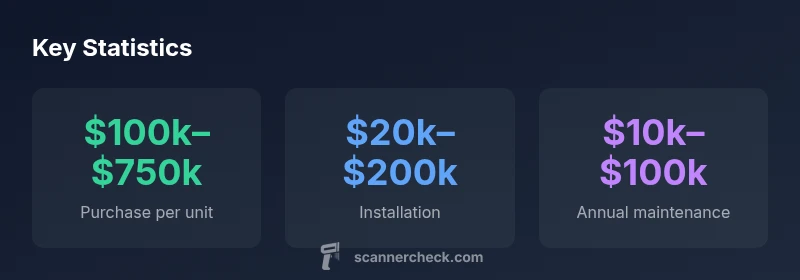
| Purchase price (per unit) | "$100k–$750k" | Model, features, and vendor; higher throughput can cost more |
| Installation & integration | "$20k–$200k" | Site prep, network integration, security-system compatibility |
| Maintenance & service (annual) | "$10k–$100k" | SLA terms, hardware wear, software updates |
| Total cost of ownership (5 years) | "$150k–$2M" | Scale, downtime, energy, licensing |
Common Questions
What factors most influence the price of a full body scanner?
The main drivers are model type (millimeter-wave vs. backscatter), throughput, feature set, installation complexity, and service agreements. Higher-throughput units with advanced analytics and privacy options tend to cost more, while basic configurations are less expensive.
The price is driven by model type, throughput, and service plans.
Are there financing or leasing options for full body scanners?
Many vendors offer financing or leasing arrangements. When evaluating, compare total cost of ownership, including maintenance, licensing, and upgrade cycles, rather than focusing only on the upfront price.
Leasing options are often available; review total costs over the device life.
What ongoing costs should I plan for?
Expect annual maintenance, software licenses, potential upgrades, energy usage, and remote monitoring or analytics fees. These recurring costs can substantially affect five- to ten-year budgets.
Keep yearly maintenance and licenses in your budget.
How do I compare vendors fairly?
Create a standard RFP, compare total cost of ownership, SLAs, training packages, interoperability with existing systems, and historical performance data from references.
Use a standard checklist and compare total costs, not just price.
Does the type of scanner affect price significantly?
Yes. Millimeter-wave units generally cost more but may offer higher throughput, better privacy options, and analytics integrations compared with some alternatives.
Type affects price and performance.
What is included in 'total cost of ownership' for these devices?
TCO includes purchase price, installation, maintenance, licensing, energy, staff training, and downtime costs. Planning for all these elements yields more accurate budgeting.
TCO covers price, setup, upkeep, licenses, energy, and downtime.
“Price is only one dimension of value. To make a solid decision, measure security outcomes, throughput, and total cost of ownership alongside sticker price.”
Key Takeaways
- Define deployment scale before budgeting
- Budget for total cost of ownership, not just price
- Ask about maintenance SLAs and licenses
- Consider modular options and phased rollouts
- Compare models by throughput and features, not price alone